 Woyɛ dino bɛn? Nsɛmmisa agoro
 Dino ko
 Dino mmirikatuo
 Dino agodie nketewa
 Stika nwoma
 Dino TOP nhyehyɛeɛ
 Ma me nwanwa!
Shenqiornis
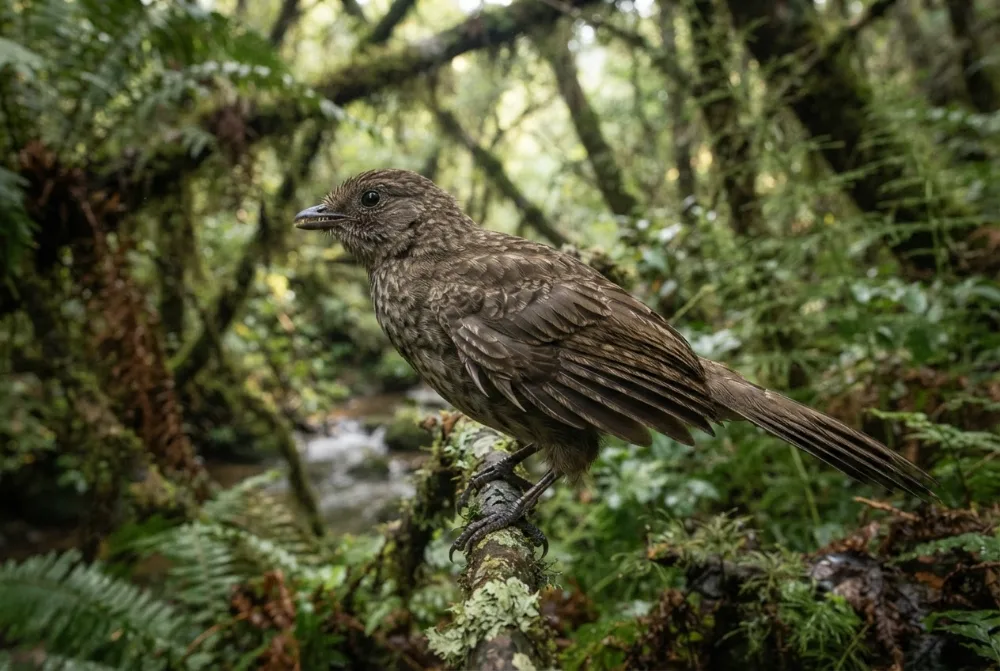
Shenqiornis was a small, toothed bird that lived in what is now China. It had a strong beak and sharp teeth, and it probably hunted insects and other small animals. Its skull was built like a reptile's, with two openings behind the eye.13
Berɛ bɛn na ɛtenaa ase?
Na ɛyɛ ntɛm sɛn?


Nsɛm a ɛyɛ anigye
Shenqiornis is known from a nearly complete skeleton with carbonized feather traces, found in China.2
It belonged to a group of ancient birds called enantiornithines, which had teeth and clawed wings.1
Shenqiornis had a large postorbital bone with a long, tapering jugal process, meaning its skull might have been fully diapsid (with two openings behind each eye) like some early birds.1
Its tooth shape is unique among enantiornithines and suggests it had a special diet, possibly eating different prey than its relatives.1
The fossils were found in rocks that are between about 161 and 121 million years old, from the Late Jurassic to the Early Cretaceous.2
Ma dino ho animdefoɔ
- Nyansahu din
- Shenqiornis
- Obi a ɔtoo din
- Wang et al. 20103
- Kuo
- Nnomaa a wɔdii kan
- Abusua / kuo kɛseɛ
- Bohaiornithidae3
- Nkyekyɛmu
- Theropoda > Avialae3
- Abotan no mfeɛ
- mfeɛ ɔpepem 162 kɔsi 121 (Oxfordian / Barremian)3
- Abotan nhyehyɛeɛ
- Qiaotou3
- Aman
- Kyaena3
- Fɔsil nkyerɛwee
- 1 wɔ The Paleobiology Database mu3
- Nhunumu
- Shenqiornis was named by Xuri Wang and colleagues in 2010. The type specimen, a nearly complete skeleton with feather traces, was found at Shenjitu in the Qiaotou Formation of northern Hebei, China.31
- Wɔda so gye ho akyinnye
- Scientists are not sure exactly what Shenqiornis ate. Its unusual teeth hint at a special diet, but no one knows for sure what that was.1
Baabi a nsɛm no firi
- New Species of Enantiornithes (Aves: Ornithothoraces) from the Qiaotou Formation in Northern Hebei, China (onlinelibrary.wiley.com)
- paleobiodb.org (paleobiodb.org)
- Shenqiornis in The Paleobiology Database (CC BY 4.0): mfeɛ, mmeaeɛ, abotan nhyehyɛeɛ, nkyekyɛmu.
Asɛm biara a ɛwɔ krataafa yi so wɔ nɔma a ɛkyerɛ baabi a ɛfiri. Sɛ yɛfom biribi a, kafra, yɛyɛ dino dɔfoɔ, yɛnyɛ nyansahu nsɛmma krataa. Ka kyerɛ yɛn wɔ [email protected] na yɛbɛsiesie.
 Ɔkɔm de Rex! Dino Wiki yɛ agya bi adwuma a ɔyɛɛ maa ne babarima a ɔdɔ dino. Ɛyɛ kwa, dawurubɔ biara nni mu, akyidifoɔ biara nni mu. Mpanimfoɔ bɛtumi ama Rex aduane kakra, na aboa ama Dino Wiki atena intanɛt so.Ma Rex aduane
 Archaeopteryx
 Hesperornis
 Ichthyornis
 Baptornis
 Jurapteryx
 Gobipteryx
 Stegosaurus
 Iguanodon
 Giganotosaurus
 Microraptor
 Deinonychus
 Baryonyx