 Woyɛ dino bɛn? Nsɛmmisa agoro
 Dino ko
 Dino mmirikatuo
 Dino agodie nketewa
 Stika nwoma
 Dino TOP nhyehyɛeɛ
 Ma me nwanwa!
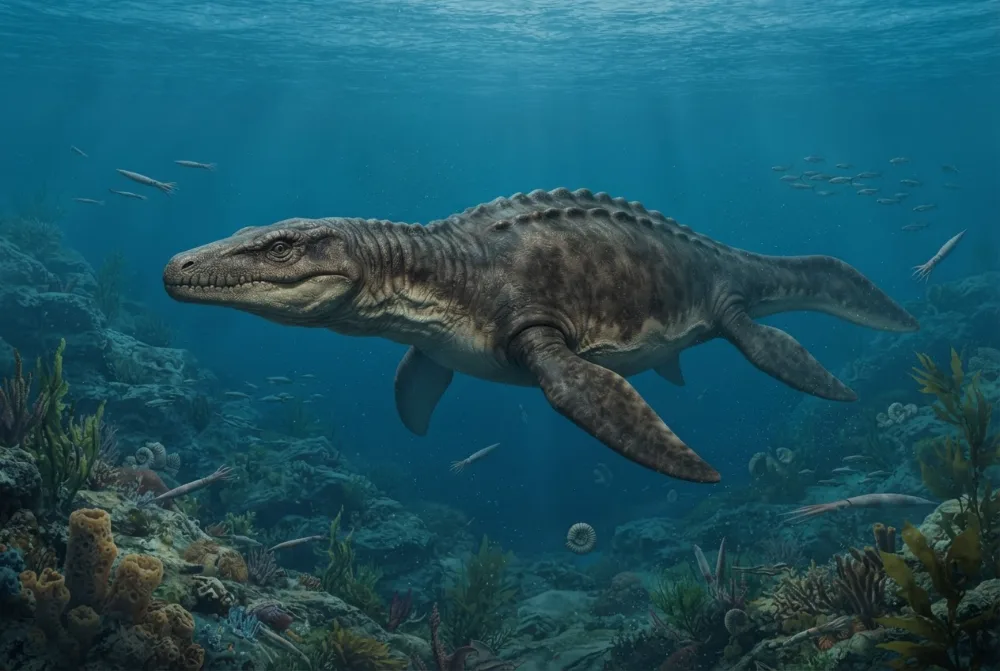
Simolestes
Simolestes was a pliosaur, a kind of short-necked plesiosaur that lived in the Jurassic seas. It had a short, high, and wide skull built to handle twisting forces when hunting. It probably ate squid-like animals and ammonites.1
Berɛ bɛn na ɛtenaa ase?
Na ne kɛseɛ yɛ sɛn?
Na ne tenten yɛ sɛn?
 ne tenten te sɛ nkraman 5 firi hwene kɔsi dua🍌ne tenten te sɛ kwadu 26 a wɔde abɔ toatoa so🏊anka ɔbɛtumi aguare nsuguarebea kɛseɛ (50 m) tenten wɔ sikɛn 6.4 mu
Simolestes kɛseɛ yɛ sɛn sɛ wode toto WO ho a?
Akontaa nko ara wɔ wo browser mu. Yɛnkora biribiara so, na yɛmmfa biribiara nkɔ baabiara.
Na ɛyɛ ntɛm sɛn?


Nsɛm a ɛyɛ anigye
Simolestes had salt-secreting glands, which helped it drink seawater and keep its salt balance.1
The type specimen of Simolestes vorax is an almost complete but crushed skeleton found in the Oxford Clay of England.1
Simolestes lived from the Middle to Late Jurassic, about 171 to 145 million years ago.1
Scientists think Simolestes might have hunted in deeper waters or at night, because its prey (cephalopods) move up at night to feed.1
The species Simolestes keileni from France was moved to a new genus called Lorrainosaurus in 2023.1
Nsɛm a wɔbisa bebree fa Simolestes ho
?How big was Simolestes?
The largest Simolestes vorax specimens reached about 4.6 metres (15 feet) long, based on a head to body ratio similar to Liopleurodon.1
?What did Simolestes eat?
Simolestes probably ate squid-like animals, belemnites, and ammonites. Its exact feeding habits are unclear, but it likely hunted in deeper waters or at night.1
?Was Simolestes a dinosaur?
No, Simolestes was a pliosaur, a type of short-necked plesiosaur, which is a marine reptile, not a dinosaur.1
?When did Simolestes live?
Simolestes lived during the Middle to Late Jurassic, about 171 to 145 million years ago.1
Ma dino ho animdefoɔ
- Nyansahu din
- Simolestes
- Obi a ɔtoo din
- Andrews 19092
- Kuo
- Plesiosɔɔ
- Abusua / kuo kɛseɛ
- Pliosauridae2
- Nkyekyɛmu
- Plesiosauria > Pliosauridae > Sauropterygia2
- Abotan no mfeɛ
- mfeɛ ɔpepem 169 kɔsi 143 (Bajocian / Tithonian)2
- Abotan nhyehyɛeɛ
- Umia, Oxford Clay, Marnes de Gravelotte (=La Gravclotte Marls)2
- Aman
- India, Engiresi, Frɛnse2
- Fɔsil nkyerɛwee
- 5 wɔ The Paleobiology Database mu2
- Nhunumu
- Simolestes was named by C. W. Andrews in 1909 based on a skeleton from the Oxford Clay of Peterborough, England.12
- Wɔda so gye ho akyinnye
- Scientists are unsure about the exact feeding habits of Simolestes, though the current consensus is that it ate cephalopods.1
Baabi a nsɛm no firi
- Simolestes (en.wikipedia.org)
- Simolestes in The Paleobiology Database (CC BY 4.0): mfeɛ, mmeaeɛ, abotan nhyehyɛeɛ, nkyekyɛmu.
Asɛm biara a ɛwɔ krataafa yi so wɔ nɔma a ɛkyerɛ baabi a ɛfiri. Sɛ yɛfom biribi a, kafra, yɛyɛ dino dɔfoɔ, yɛnyɛ nyansahu nsɛmma krataa. Ka kyerɛ yɛn wɔ [email protected] na yɛbɛsiesie.
 Ɔkɔm de Rex! Dino Wiki yɛ agya bi adwuma a ɔyɛɛ maa ne babarima a ɔdɔ dino. Ɛyɛ kwa, dawurubɔ biara nni mu, akyidifoɔ biara nni mu. Mpanimfoɔ bɛtumi ama Rex aduane kakra, na aboa ama Dino Wiki atena intanɛt so.Ma Rex aduane
 Elasmosaurus
 Pliosaurus
 Plesiosaurus
 Cimoliasaurus
 Colymbosaurus
 Trinacromerum
 Brachiosaurus
 Diplodocus
 Allosaurus
 Brontosaurus
 Compsognathus
 Camarasaurus