 Woyɛ dino bɛn? Nsɛmmisa agoro
 Dino ko
 Dino mmirikatuo
 Dino agodie nketewa
 Stika nwoma
 Dino TOP nhyehyɛeɛ
 Ma me nwanwa!
Sisteronia
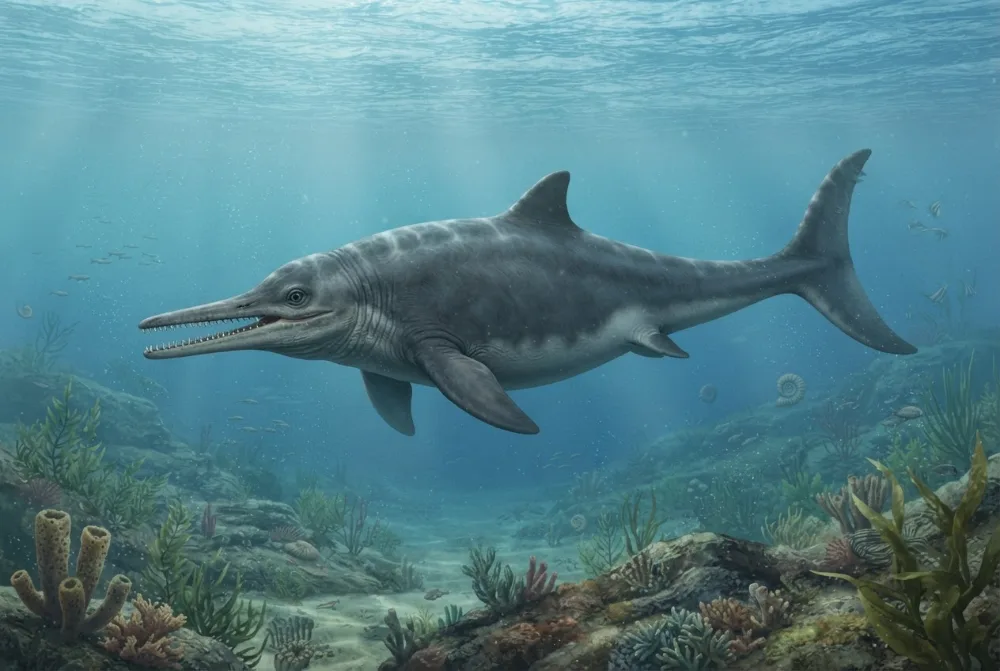
Sisteronia was a fast-swimming marine reptile that lived in the Cretaceous seas. It had sharp teeth for catching small fish and squid. Sisteronia was an ichthyosaur, not a dinosaur, and looked a bit like a modern dolphin.12
Berɛ bɛn na ɛtenaa ase?
Na ɛyɛ ntɛm sɛn?


Nsɛm a ɛyɛ anigye
Sisteronia had teeth that were rectangular in cross-section, which is unusual among ichthyosaurs.2
It lived during the Albian and early Cenomanian stages of the Cretaceous, about 112 to 100 million years ago.2
Sisteronia is known from fossils found in England, France, and Russia, showing it lived in the seas of western Europe.3
This ichthyosaur belonged to the group Platypterygiinae, which were the last surviving ichthyosaurs before they went extinct.2
The name Sisteronia comes from the town of Sisteron in France, near where some of its fossils were found.1
Sisteronia had a raised process on the floor of the foramen magnum (the hole in the skull for the spinal cord), a unique feature not seen in other ichthyosaurs.2
Ma dino ho animdefoɔ
- Nyansahu din
- Sisteronia
- Obi a ɔtoo din
- Fischer et al. 20143
- Kuo
- Iktiosɔɔ
- Abusua / kuo kɛseɛ
- Ophthalmosauridae3
- Nkyekyɛmu
- Ichthyosauria > Ichthyosauromorpha3
- Abotan no mfeɛ
- mfeɛ ɔpepem 113 kɔsi 94 (Albian / Cenomanian)3
- Abotan nhyehyɛeɛ
- Marnes bleues, West Melbury Marly Chalk, Gault3
- Aman
- Engiresi, Frɛnse, Rɔhyea3
- Fɔsil nkyerɛwee
- 6 wɔ The Paleobiology Database mu3
- Nhunumu
- Sisteronia was named by Fischer and colleagues in 2014, based on fossils from the Cambridge Greensand Member in England and the Vocontian Basin in France.31
- Wɔda so gye ho akyinnye
- Scientists are still debating exactly how diverse late Cretaceous ichthyosaurs were, and whether Sisteronia was part of a broader European hotspot of ichthyosaur diversity.1
Baabi a nsɛm no firi
- High Diversity in Cretaceous Ichthyosaurs from Europe Prior to Their Extinction (pmc.ncbi.nlm.nih.gov)
- Sisteronia (en.wikipedia.org)
- Sisteronia in The Paleobiology Database (CC BY 4.0): mfeɛ, mmeaeɛ, abotan nhyehyɛeɛ, nkyekyɛmu.
Asɛm biara a ɛwɔ krataafa yi so wɔ nɔma a ɛkyerɛ baabi a ɛfiri. Sɛ yɛfom biribi a, kafra, yɛyɛ dino dɔfoɔ, yɛnyɛ nyansahu nsɛmma krataa. Ka kyerɛ yɛn wɔ [email protected] na yɛbɛsiesie.
 Ɔkɔm de Rex! Dino Wiki yɛ agya bi adwuma a ɔyɛɛ maa ne babarima a ɔdɔ dino. Ɛyɛ kwa, dawurubɔ biara nni mu, akyidifoɔ biara nni mu. Mpanimfoɔ bɛtumi ama Rex aduane kakra, na aboa ama Dino Wiki atena intanɛt so.Ma Rex aduane
 Ichthyosaurus
 Platypterygius
 Stenopterygius
 Khudiakovia
 Ophthalmosaurus
 Chonespondylus
 Stegosaurus
 Iguanodon
 Archaeopteryx
 Giganotosaurus
 Microraptor
 Deinonychus