 Woyɛ dino bɛn? Nsɛmmisa agoro
 Dino ko
 Dino mmirikatuo
 Dino agodie nketewa
 Stika nwoma
 Dino TOP nhyehyɛeɛ
 Ma me nwanwa!
Tatenectes
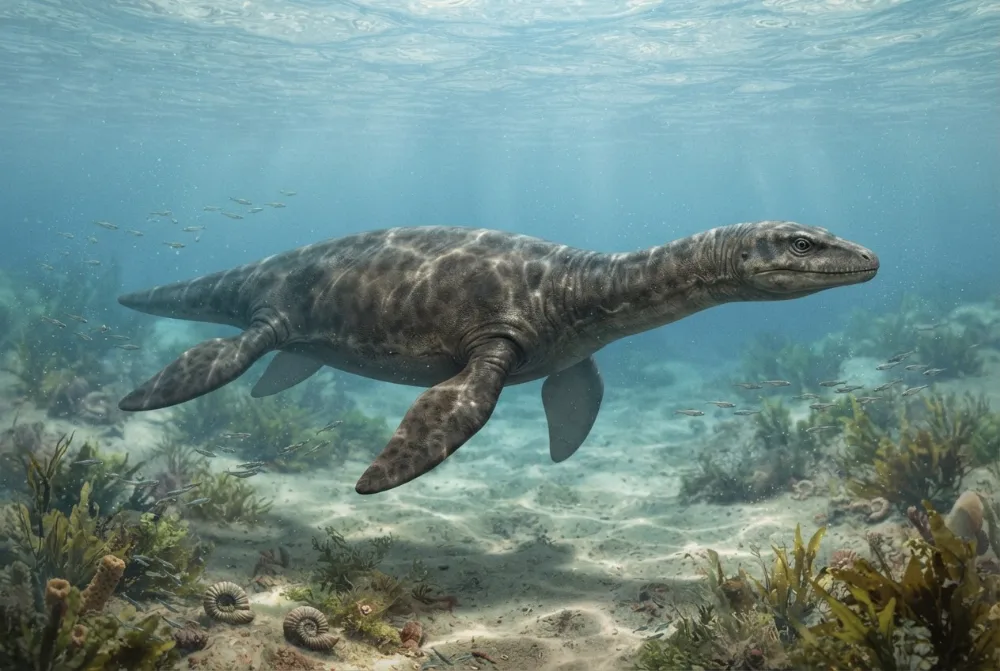
Tatenectes was a small plesiosaur that lived in a shallow sea that covered much of North America during the Jurassic Period. It had a flattened, boxy body and a long neck, and it swam using four flippers like paddles.1
Berɛ bɛn na ɛtenaa ase?
Na ne kɛseɛ yɛ sɛn?
Na ne tenten yɛ sɛn?
 ne tenten te sɛ nkraman 3 firi hwene kɔsi dua🍌ne tenten te sɛ kwadu 17 a wɔde abɔ toatoa so🏊anka ɔbɛtumi aguare nsuguarebea kɛseɛ (50 m) tenten wɔ sikɛn 6.4 mu
Tatenectes kɛseɛ yɛ sɛn sɛ wode toto WO ho a?
Akontaa nko ara wɔ wo browser mu. Yɛnkora biribiara so, na yɛmmfa biribiara nkɔ baabiara.
Na ɛyɛ ntɛm sɛn?


Nsɛm a ɛyɛ anigye
Tatenectes had a very unusual body shape for a plesiosaur: its torso was flattened and boxy, and its belly ribs were thickened, which helped it stay stable in turbulent water.1
The first fossil of Tatenectes was described in 1900 by Wilbur Clinton Knight, who thought it was a species of Cimoliosaurus. That original specimen has since been lost.1
Tatenectes lived in the Sundance Sea, a shallow inland sea that was less than 40 meters (130 feet) deep and covered parts of western North America during the Jurassic.1
Its teeth were small and thin, with long roots and low enamel ridges, perfect for catching slippery prey like fish and squid.1
Tatenectes shared its sea home with other marine reptiles, including the plesiosaur Pantosaurus and the large pliosaur Megalneusaurus.1
Scientists think Tatenectes could have used lung deflation to help it dive, just like some modern sea turtles do.1
Ma dino ho animdefoɔ
- Nyansahu din
- Tatenectes
- Obi a ɔtoo din
- O'Keefe and Wahl 20033
- Kuo
- Plesiosɔɔ
- Abusua / kuo kɛseɛ
- Cryptoclididae3
- Nkyekyɛmu
- Plesiosauria > Sauropterygia3
- Abotan no mfeɛ
- mfeɛ ɔpepem 162 kɔsi 155 (Oxfordian)3
- Abotan nhyehyɛeɛ
- Sundance3
- Aman
- Amerika3
- Fɔsil nkyerɛwee
- 3 wɔ The Paleobiology Database mu3
- Nhunumu
- The first fossil was described by Wilbur Clinton Knight in 1900 as a new species of Cimoliosaurus. In 2003, F. Robin O'Keefe and William Wahl Jr. gave it its own genus, Tatenectes, based on a new specimen found in Wyoming.12
- Wɔda so gye ho akyinnye
- Scientists are still debating whether the gastroliths (stomach stones) found in plesiosaurs like Tatenectes were used for ballast, digestion, or something else.1
Baabi a nsɛm no firi
- Tatenectes (en.wikipedia.org)
- "Preliminary Report on the Osteology and Relationships of a New Aberran" by F. Robin O’Keefe and William Wahl Jr. (mds.marshall.edu)
- Tatenectes in The Paleobiology Database (CC BY 4.0): mfeɛ, mmeaeɛ, abotan nhyehyɛeɛ, nkyekyɛmu.
Asɛm biara a ɛwɔ krataafa yi so wɔ nɔma a ɛkyerɛ baabi a ɛfiri. Sɛ yɛfom biribi a, kafra, yɛyɛ dino dɔfoɔ, yɛnyɛ nyansahu nsɛmma krataa. Ka kyerɛ yɛn wɔ [email protected] na yɛbɛsiesie.
 Ɔkɔm de Rex! Dino Wiki yɛ agya bi adwuma a ɔyɛɛ maa ne babarima a ɔdɔ dino. Ɛyɛ kwa, dawurubɔ biara nni mu, akyidifoɔ biara nni mu. Mpanimfoɔ bɛtumi ama Rex aduane kakra, na aboa ama Dino Wiki atena intanɛt so.Ma Rex aduane
 Elasmosaurus
 Pliosaurus
 Plesiosaurus
 Cimoliasaurus
 Colymbosaurus
 Trinacromerum
 Brachiosaurus
 Diplodocus
 Allosaurus
 Brontosaurus
 Compsognathus
 Camarasaurus