 Woyɛ dino bɛn? Nsɛmmisa agoro
 Dino ko
 Dino mmirikatuo
 Dino agodie nketewa
 Stika nwoma
 Dino TOP nhyehyɛeɛ
 Ma me nwanwa!
Berɛ bɛn na ɛtenaa ase?

Na ne kɛseɛ yɛ sɛn?
Na ne tenten yɛ sɛn?
Na ne korɔn yɛ sɛn?
nsusuiɛ
 ne tenten te sɛ kaa 4 a wɔde agyina toatoa so🍌ne tenten te sɛ kwadu 110 a wɔde abɔ toatoa so🏢ne korɔn bɛtumi ahwɛ mfɛnsere mu wɔ abansoro 2 so🏃anka ɔbɛtumi atu mmirika mita 100 wɔ sikɛn 30 mu (onipa a ɔyɛ ntɛm sen biara hia 9.6)
Uragasaurus kɛseɛ yɛ sɛn sɛ wode toto WO ho a?
Akontaa nko ara wɔ wo browser mu. Yɛnkora biribiara so, na yɛmmfa biribiara nkɔ baabiara.
Na ɛyɛ ntɛm sɛn?


Nsɛm a ɛyɛ anigye
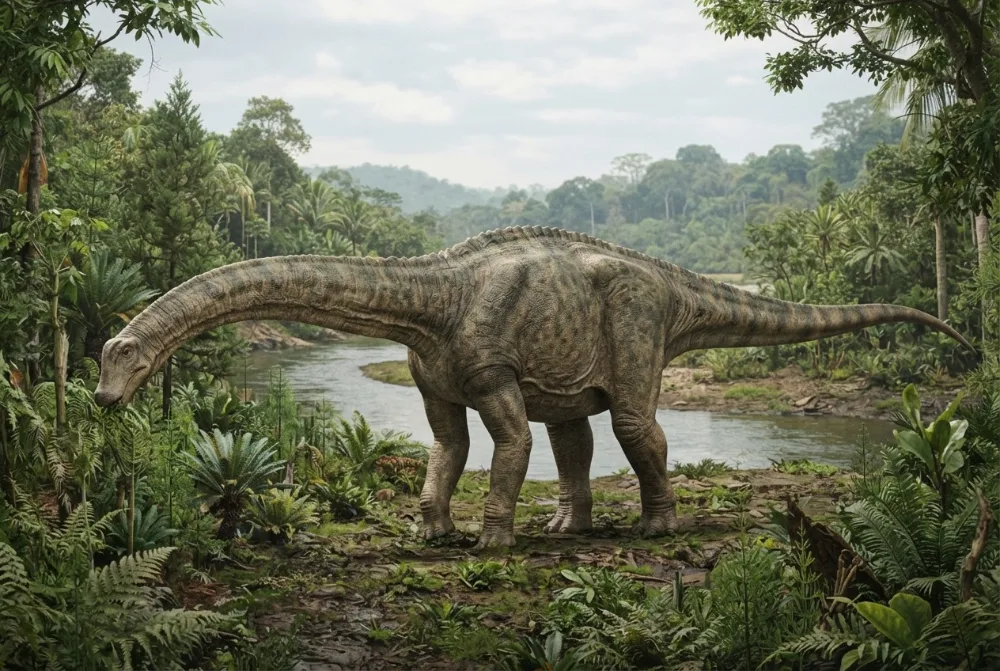
Uragasaurus is known from just one well-preserved backbone bone from the front of the back, called an anterior dorsal vertebra.1
The backbone had a Y-shaped pattern of bony ridges that is unique to this dinosaur.1
CT scans showed that the inside of the backbone was filled with tiny air spaces, a feature called camellate structure, which made the skeleton lighter.1
Uragasaurus lived during the latest Jurassic period, about 149 to 137 million years ago.4
It belongs to a group called Mamenchisauridae, which were famous for their extremely long necks.1
This dinosaur was discovered in the Phu Kradung Formation, a rock layer that also contains fossils of sharks, turtles, and other dinosaurs.1
Uragasaurus is the first officially named mamenchisaurid dinosaur from Thailand.1
Nsɛm a wɔbisa bebree fa Uragasaurus ho
?How big was Uragasaurus?
Scientists do not know for sure because only one backbone bone has been found. Based on its relatives, it was probably a large, long-necked plant-eater.31
?What did Uragasaurus eat?
It was a plant-eater, like all sauropods. It probably ate ferns, cycads, and other plants that grew in its habitat.3
?When did Uragasaurus live?
It lived during the late Jurassic to early Cretaceous periods, about 150 to 130 million years ago.3
?Where was Uragasaurus found?
Its fossils were found in Kalasin Province, northeastern Thailand, in the Phu Kradung Formation.31
?Is Uragasaurus a dinosaur?
Yes, it is a dinosaur. It is a type of long-necked sauropod dinosaur called a mamenchisaurid.3
?Why is it called Uragasaurus?
The name means 'serpent lizard' in Sanskrit and Greek, because its family is famous for having very long, snake-like necks.3
Ma dino ho animdefoɔ
- Nyansahu din
- Uragasaurus
- Obi a ɔtoo din
- Nilpanapan et al. 20264
- Kuo
- Kɔn tenten
- Abusua / kuo kɛseɛ
- Mamenchisauridae4
- Nkyekyɛmu
- Sauropodomorpha > Sauropoda4
- Abotan no mfeɛ
- mfeɛ ɔpepem 149 kɔsi 137 (Tithonian / Berriasian)4
- Abotan nhyehyɛeɛ
- Phu Kradung4
- Aman
- Taeland4
- Fɔsil nkyerɛwee
- 1 wɔ The Paleobiology Database mu4
- Nhunumu
- Uragasaurus was named in 2026 by a team of scientists led by A. Nilpanapan. The fossil was found at the Phu Noi site in Kalasin Province, Thailand, and is kept at Mahasarakham University.14
- Wɔda so gye ho akyinnye
- Scientists are not sure exactly how old the rocks are that contained Uragasaurus, so its age is estimated as latest Jurassic, possibly into the earliest Cretaceous.1
Baabi a nsɛm no firi
- A new mamenchisaurid sauropod from the Lower Phu Kradung Formation, Upper Jurassic of northeastern Thailand | Scientific Reports (nature.com)
- Uragasaurus kalasinensis: New dinosaur discovered in Thailand - BBC News (bbc.co.uk)
- Uragasaurus (en.wikipedia.org)
- Uragasaurus in The Paleobiology Database (CC BY 4.0): mfeɛ, mmeaeɛ, abotan nhyehyɛeɛ, nkyekyɛmu.
Asɛm biara a ɛwɔ krataafa yi so wɔ nɔma a ɛkyerɛ baabi a ɛfiri. Sɛ yɛfom biribi a, kafra, yɛyɛ dino dɔfoɔ, yɛnyɛ nyansahu nsɛmma krataa. Ka kyerɛ yɛn wɔ [email protected] na yɛbɛsiesie.
 Ɔkɔm de Rex! Dino Wiki yɛ agya bi adwuma a ɔyɛɛ maa ne babarima a ɔdɔ dino. Ɛyɛ kwa, dawurubɔ biara nni mu, akyidifoɔ biara nni mu. Mpanimfoɔ bɛtumi ama Rex aduane kakra, na aboa ama Dino Wiki atena intanɛt so.Ma Rex aduane
 Brachiosaurus
 Diplodocus
 Brontosaurus
 Argentinosaurus
 Camarasaurus
 Morosaurus
 Stegosaurus
 Iguanodon
 Archaeopteryx
 Giganotosaurus
 Microraptor
 Deinonychus