 Woyɛ dino bɛn? Nsɛmmisa agoro
 Dino ko
 Dino mmirikatuo
 Dino agodie nketewa
 Stika nwoma
 Dino TOP nhyehyɛeɛ
 Ma me nwanwa!
Vinialesaurus
Vinialesaurus was a plesiosaur, a long-necked marine reptile that swam in warm seas during the Jurassic Period. It had a short skull with big eyes and nostrils, and it used its sharp teeth to catch fish and other sea creatures.41
Berɛ bɛn na ɛtenaa ase?
Na ne kɛseɛ yɛ sɛn?
Na ne tenten yɛ sɛn?
Na ne mu yɛ duru sɛn?
 ne tenten te sɛ nkraman 4 firi hwene kɔsi dua🍌ne tenten te sɛ kwadu 22 a wɔde abɔ toatoa so🍉ne mu duru te sɛ watamɛlɔn 50🧸ne mu duru te sɛ nkɔkɔaa sukuu mmofra 13🎒ne mu duru te sɛ sukuu mmofra 8🏊anka ɔbɛtumi aguare nsuguarebea kɛseɛ (50 m) tenten wɔ sikɛn 6.2 mu
Vinialesaurus kɛseɛ yɛ sɛn sɛ wode toto WO ho a?
Akontaa nko ara wɔ wo browser mu. Yɛnkora biribiara so, na yɛmmfa biribiara nkɔ baabiara.
Na ɛyɛ ntɛm sɛn?


Nsɛm a ɛyɛ anigye
Vinialesaurus is only known from a partial skull, lower jaws, and the first two neck bones.1
It had double internal nostrils, a feature that helps tell it apart from other plesiosaurs.2
The fossil was first described in 1949 as a subspecies of Cryptocleidus, but later scientists decided it was a new genus.1
Vinialesaurus lived about 161 to 156 million years ago, during the Oxfordian age of the Late Jurassic.4
It shared its ocean with pliosauroids, ichthyosaurs, crocodilians, and sea turtles.2
The name honors the town of Viñales in western Cuba, where the only known specimen was discovered.1
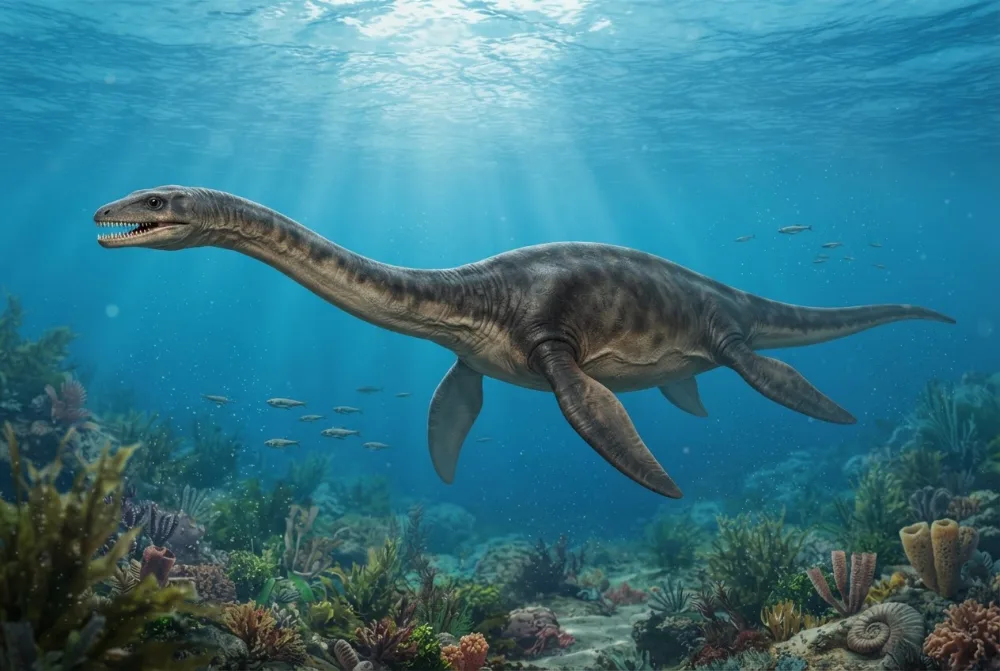
Ma dino ho animdefoɔ
- Nyansahu din
- Vinialesaurus
- Obi a ɔtoo din
- Gasparini et al. 20024
- Kuo
- Plesiosɔɔ
- Abusua / kuo kɛseɛ
- Cryptoclididae4
- Nkyekyɛmu
- Plesiosauria > Sauropterygia4
- Abotan no mfeɛ
- mfeɛ ɔpepem 159 kɔsi 155 (Oxfordian)4
- Abotan nhyehyɛeɛ
- Jagua4
- Aman
- Kuba4
- Fɔsil nkyerɛwee
- 1 wɔ The Paleobiology Database mu4
- Nhunumu
- The first fossil was found in the Jagua Formation of Cuba and described by Ricardo De la Torre and Luis Rojas in 1949 as Cryptocleidus? cuervoi caroli. In 2002, Zulma Gasparini and colleagues redescribed it and gave it the new genus name Vinialesaurus.14
- Wɔda so gye ho akyinnye
- Scientists are not sure exactly how big Vinialesaurus grew, because only the front part of the skull and neck are known.1
Baabi a nsɛm no firi
- Vinialesaurus (en.wikipedia.org)
- New plesiosaur from Cuba: Vinialesaurus (dml.reptilis.net)
- Vinialesaurus (kaweah.freedombox.rocks)
- Vinialesaurus in The Paleobiology Database (CC BY 4.0): mfeɛ, mmeaeɛ, abotan nhyehyɛeɛ, nkyekyɛmu.
Asɛm biara a ɛwɔ krataafa yi so wɔ nɔma a ɛkyerɛ baabi a ɛfiri. Sɛ yɛfom biribi a, kafra, yɛyɛ dino dɔfoɔ, yɛnyɛ nyansahu nsɛmma krataa. Ka kyerɛ yɛn wɔ [email protected] na yɛbɛsiesie.
 Ɔkɔm de Rex! Dino Wiki yɛ agya bi adwuma a ɔyɛɛ maa ne babarima a ɔdɔ dino. Ɛyɛ kwa, dawurubɔ biara nni mu, akyidifoɔ biara nni mu. Mpanimfoɔ bɛtumi ama Rex aduane kakra, na aboa ama Dino Wiki atena intanɛt so.Ma Rex aduane
 Elasmosaurus
 Pliosaurus
 Plesiosaurus
 Cimoliasaurus
 Colymbosaurus
 Trinacromerum
 Brachiosaurus
 Diplodocus
 Allosaurus
 Brontosaurus
 Compsognathus
 Camarasaurus