 Woyɛ dino bɛn? Nsɛmmisa agoro
 Dino ko
 Dino mmirikatuo
 Dino agodie nketewa
 Stika nwoma
 Dino TOP nhyehyɛeɛ
 Ma me nwanwa!
Wapuskanectes
Wapuskanectes was an ancient marine reptile that swam in the seas of Alberta, Canada, about 112 million years ago. It was an early elasmosaur, a type of plesiosaur with a very long neck. This creature was a powerful swimmer and a meat-eater.1
Berɛ bɛn na ɛtenaa ase?
Na ɛyɛ ntɛm sɛn?


Nsɛm a ɛyɛ anigye
Wapuskanectes is the oldest known elasmosaur from North America, living about 112 million years ago.1
Its name comes from the Cree word 'Wapuska', meaning a body of water with whitecaps, and the Greek word 'nectes', meaning swimmer.1
The species name, betsynichollsae, honors Dr. Elizabeth 'Betsy' Nicholls, a famous curator of marine reptiles.1
Some Wapuskanectes fossils were found with gastroliths, or stomach stones, which may have helped them digest food.1
The gastroliths were mostly black, polished chert pebbles, and the largest one weighed 14.5 grams.1
One fossil, TMP 2012.50.1, was discovered when a grader plowed through its neck, destroying the skull and most of the neck.1
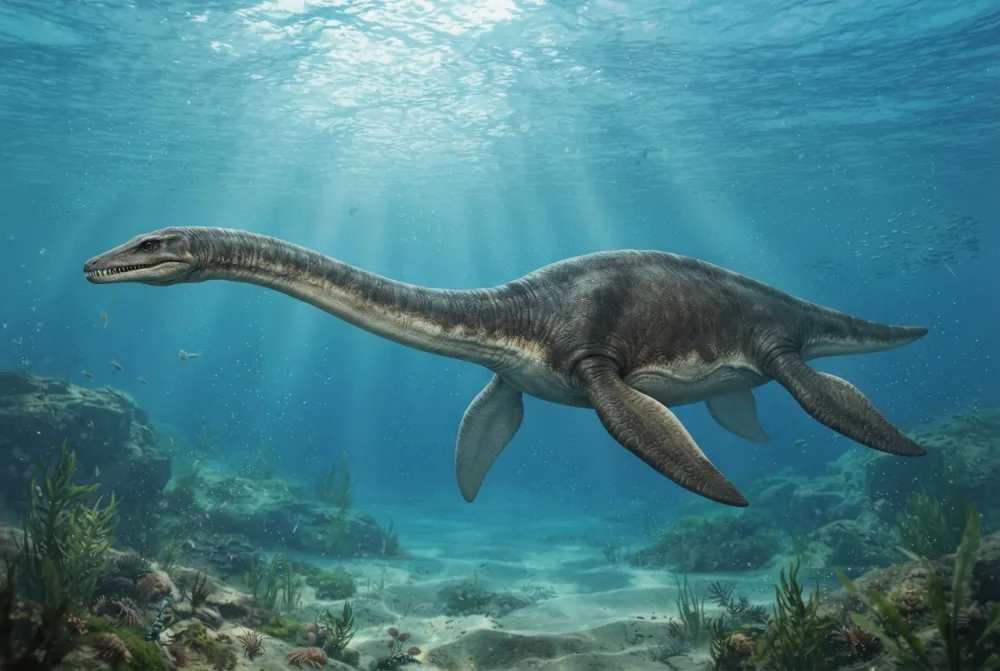
Ma dino ho animdefoɔ
- Nyansahu din
- Wapuskanectes
- Obi a ɔtoo din
- Druckenmiller and Russell 20062
- Kuo
- Plesiosɔɔ
- Abusua / kuo kɛseɛ
- Elasmosauridae2
- Nkyekyɛmu
- Plesiosauria > Elasmosauridae > Sauropterygia2
- Abotan no mfeɛ
- mfeɛ ɔpepem 113 kɔsi 110 (Albian)2
- Abotan nhyehyɛeɛ
- Clearwater2
- Aman
- Kanada2
- Fɔsil nkyerɛwee
- 1 wɔ The Paleobiology Database mu2
- Nhunumu
- Wapuskanectes was named by Patrick S. Druckenmiller and Anthony P. Russell in 2006. The first fossil was found in an open-pit oilsand mine near Fort McMurray, Alberta, Canada.1
- Wɔda so gye ho akyinnye
- Scientists are still debating exactly how Wapuskanectes used its gastroliths, whether for grinding food or for ballast.1
Baabi a nsɛm no firi
- Wapuskanectes (en.wikipedia.org)
- Wapuskanectes in The Paleobiology Database (CC BY 4.0): mfeɛ, mmeaeɛ, abotan nhyehyɛeɛ, nkyekyɛmu.
Asɛm biara a ɛwɔ krataafa yi so wɔ nɔma a ɛkyerɛ baabi a ɛfiri. Sɛ yɛfom biribi a, kafra, yɛyɛ dino dɔfoɔ, yɛnyɛ nyansahu nsɛmma krataa. Ka kyerɛ yɛn wɔ [email protected] na yɛbɛsiesie.
 Ɔkɔm de Rex! Dino Wiki yɛ agya bi adwuma a ɔyɛɛ maa ne babarima a ɔdɔ dino. Ɛyɛ kwa, dawurubɔ biara nni mu, akyidifoɔ biara nni mu. Mpanimfoɔ bɛtumi ama Rex aduane kakra, na aboa ama Dino Wiki atena intanɛt so.Ma Rex aduane
 Elasmosaurus
 Pliosaurus
 Plesiosaurus
 Cimoliasaurus
 Colymbosaurus
 Trinacromerum
 Stegosaurus
 Iguanodon
 Archaeopteryx
 Giganotosaurus
 Microraptor
 Deinonychus