 Woyɛ dino bɛn? Nsɛmmisa agoro
 Dino ko
 Dino mmirikatuo
 Dino agodie nketewa
 Stika nwoma
 Dino TOP nhyehyɛeɛ
 Ma me nwanwa!
Xiangornis
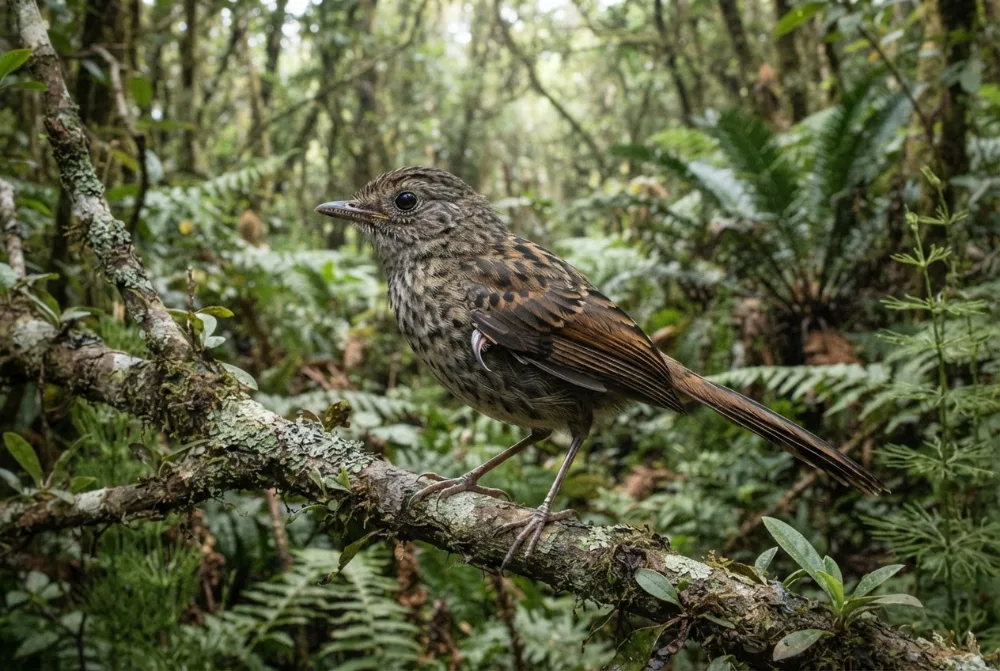
Xiangornis was an ancient bird that lived about 120 million years ago. It had a mix of features from two big groups of early birds, making it a mysterious and special creature. Its wing bones were already fused together like in modern birds, which helped it fly strongly.12
Berɛ bɛn na ɛtenaa ase?
Na ɛyɛ ntɛm sɛn?


Nsɛm a ɛyɛ anigye
Xiangornis belongs to a group called Enantiornithes, which were the most common birds during the Cretaceous period.31
Its wing bones (carpometacarpus) were completely fused together, both near the body and far from it, just like in modern birds.12
Xiangornis had a large extensor process on its wing, a bony bump that helped attach muscles and ligaments for strong flight.12
This bird shows that some features thought to belong only to modern birds actually evolved earlier and separately in enantiornithines.12
Xiangornis lived during the Aptian age, about 121 to 113 million years ago, in what is now Liaoning, China.3
Ma dino ho animdefoɔ
- Nyansahu din
- Xiangornis
- Obi a ɔtoo din
- Hu et al. 20124
- Kuo
- Nnomaa a wɔdii kan
- Abusua / kuo kɛseɛ
- Enantiornithes4
- Nkyekyɛmu
- Theropoda > Avialae4
- Abotan no mfeɛ
- mfeɛ ɔpepem 121 kɔsi 113 (Aptian)4
- Abotan nhyehyɛeɛ
- Jiufotang4
- Aman
- Kyaena4
- Fɔsil nkyerɛwee
- 1 wɔ The Paleobiology Database mu4
- Nhunumu
- Xiangornis was named by Hu and colleagues in 2012 based on a partial skeleton found in the Jiufotang Formation of Liaoning, China. The fossil includes wing and shoulder bones.31
- Wɔda so gye ho akyinnye
- Scientists are still debating whether Xiangornis is truly an enantiornithine or if it blurs the line between enantiornithines and ornithuromorphs (the group that includes modern birds).12
Baabi a nsɛm no firi
- A new enantiornithine bird from the Lower Cretaceous of Western Liaoning, China, and its implications for early avian evolution (tandfonline.com)
- A new enantiornithine bird from the Lower Cretaceous of Western Liaoning, China, and its implications for early avian evolution (ivpp.cas.cn)
- PBDB Taxon (paleobiodb.org)
- Xiangornis in The Paleobiology Database (CC BY 4.0): mfeɛ, mmeaeɛ, abotan nhyehyɛeɛ, nkyekyɛmu.
Asɛm biara a ɛwɔ krataafa yi so wɔ nɔma a ɛkyerɛ baabi a ɛfiri. Sɛ yɛfom biribi a, kafra, yɛyɛ dino dɔfoɔ, yɛnyɛ nyansahu nsɛmma krataa. Ka kyerɛ yɛn wɔ [email protected] na yɛbɛsiesie.
 Ɔkɔm de Rex! Dino Wiki yɛ agya bi adwuma a ɔyɛɛ maa ne babarima a ɔdɔ dino. Ɛyɛ kwa, dawurubɔ biara nni mu, akyidifoɔ biara nni mu. Mpanimfoɔ bɛtumi ama Rex aduane kakra, na aboa ama Dino Wiki atena intanɛt so.Ma Rex aduane
 Archaeopteryx
 Hesperornis
 Ichthyornis
 Baptornis
 Jurapteryx
 Gobipteryx
 Stegosaurus
 Iguanodon
 Giganotosaurus
 Microraptor
 Deinonychus
 Baryonyx