 Woyɛ dino bɛn? Nsɛmmisa agoro
 Dino ko
 Dino mmirikatuo
 Dino agodie nketewa
 Stika nwoma
 Dino TOP nhyehyɛeɛ
 Ma me nwanwa!
Yixianornis
Yixianornis was a bird that lived 120 million years ago in what is now China. It was about the size of a chicken and had broad, rounded wings that helped it fly through dense forests. Its tail feathers could fan out like a modern bird's tail.1
Berɛ bɛn na ɛtenaa ase?
Na ne kɛseɛ yɛ sɛn?
Na ne tenten yɛ sɛn?
Na ne korɔn yɛ sɛn?
Na ne mu yɛ duru sɛn?
Yixianornis kɛseɛ yɛ sɛn sɛ wode toto WO ho a?
Akontaa nko ara wɔ wo browser mu. Yɛnkora biribiara so, na yɛmmfa biribiara nkɔ baabiara.
Na ɛyɛ ntɛm sɛn?


Nsɛm a ɛyɛ anigye
Yixianornis is one of the best-preserved bird fossils from the Jehol group, with bones that are mostly uncrushed and clear impressions of wing and tail feathers.1
Its tail feathers were arranged in a graduated series, with the outer feathers anchored closer to the base of the tail, giving it a rounded silhouette.1
Yixianornis had a rectrical bulb, a muscle that allows tail feathers to be fanned out during flight and retracted when at rest, just like in modern birds.1
The tips of its jaws were toothless and had small pits and grooves, possibly indicating the presence of a beak.1
Its flight feathers were very broad and rounded, not narrow and pointed like in many other early birds.1
Scientists think Yixianornis was diurnal, meaning it was active during the day, similar to most modern birds.1
Yixianornis is the most primitive bird known to have an essentially modern pygostyle and fan of tail feathers.1
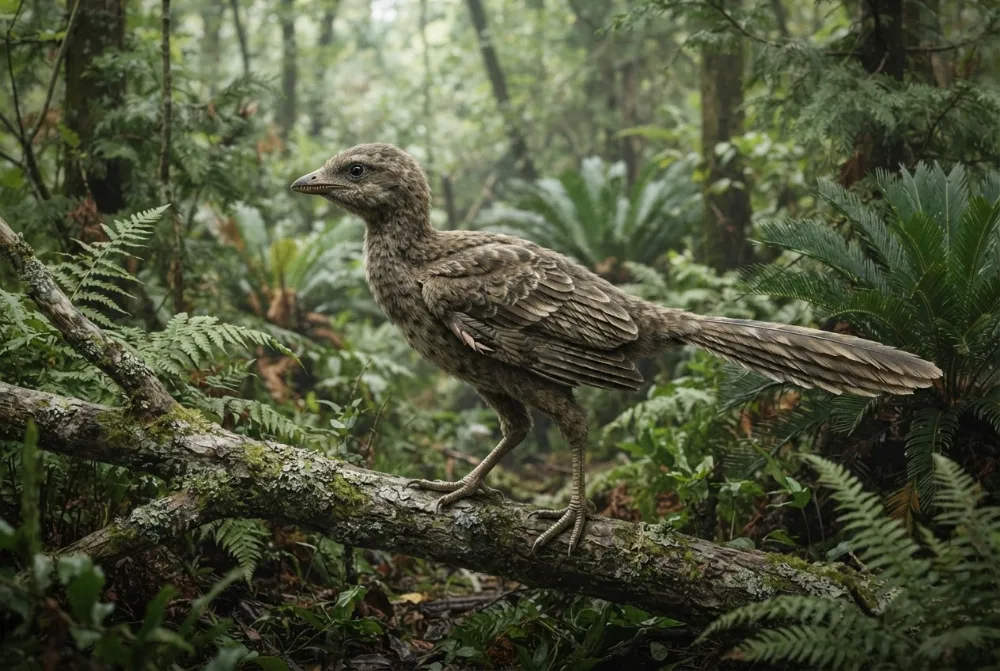
Ma dino ho animdefoɔ
- Nyansahu din
- Yixianornis
- Obi a ɔtoo din
- Zhou and Zhang 20012
- Kuo
- Nnomaa a wɔdii kan
- Abusua / kuo kɛseɛ
- Hongshanornithidae2
- Nkyekyɛmu
- Theropoda > Avialae2
- Abotan no mfeɛ
- mfeɛ ɔpepem 121 kɔsi 113 (Aptian)2
- Abotan nhyehyɛeɛ
- Jiufotang2
- Aman
- Kyaena2
- Fɔsil nkyerɛwee
- 1 wɔ The Paleobiology Database mu2
- Nhunumu
- Yixianornis was named by Zhou Zhonghe and Zhang Fucheng in 2001 based on a nearly complete fossil with feather impressions found in the Jiufotang Formation of Liaoning, China.12
- Wɔda so gye ho akyinnye
- Scientists are still debating whether Yixianornis had a beak at the tips of its jaws, because the pits and grooves could also be from other features.1
Baabi a nsɛm no firi
- Yixianornis (en.wikipedia.org)
- Yixianornis in The Paleobiology Database (CC BY 4.0): mfeɛ, mmeaeɛ, abotan nhyehyɛeɛ, nkyekyɛmu.
Asɛm biara a ɛwɔ krataafa yi so wɔ nɔma a ɛkyerɛ baabi a ɛfiri. Sɛ yɛfom biribi a, kafra, yɛyɛ dino dɔfoɔ, yɛnyɛ nyansahu nsɛmma krataa. Ka kyerɛ yɛn wɔ [email protected] na yɛbɛsiesie.
 Ɔkɔm de Rex! Dino Wiki yɛ agya bi adwuma a ɔyɛɛ maa ne babarima a ɔdɔ dino. Ɛyɛ kwa, dawurubɔ biara nni mu, akyidifoɔ biara nni mu. Mpanimfoɔ bɛtumi ama Rex aduane kakra, na aboa ama Dino Wiki atena intanɛt so.Ma Rex aduane
 Archaeopteryx
 Hesperornis
 Ichthyornis
 Baptornis
 Jurapteryx
 Gobipteryx
 Stegosaurus
 Iguanodon
 Giganotosaurus
 Microraptor
 Deinonychus
 Baryonyx