 Woyɛ dino bɛn? Nsɛmmisa agoro
 Dino ko
 Dino mmirikatuo
 Dino agodie nketewa
 Stika nwoma
 Dino TOP nhyehyɛeɛ
 Ma me nwanwa!
Berɛ bɛn na ɛtenaa ase?

Na ne kɛseɛ yɛ sɛn?
Na ne tenten yɛ sɛn?
Na ne korɔn yɛ sɛn?
nsusuiɛ
Na ne mu yɛ duru sɛn?
 ne tenten te sɛ fie agyinamoa 4 firi hwene kɔsi dua🍌ne tenten te sɛ kwadu 11 a wɔde abɔ toatoa so🍌ne mu duru te sɛ kwadu 120🏃anka ɔbɛtumi atu mmirika mita 100 wɔ sikɛn 10 mu (onipa a ɔyɛ ntɛm sen biara hia 9.6)
Yuanyanglong kɛseɛ yɛ sɛn sɛ wode toto WO ho a?
Akontaa nko ara wɔ wo browser mu. Yɛnkora biribiara so, na yɛmmfa biribiara nkɔ baabiara.
Na ɛyɛ ntɛm sɛn?


Nsɛm a ɛyɛ anigye
Yuanyanglong is the first Early Cretaceous oviraptorosaur named from the Gobi Desert region, while other Gobi relatives come from later rocks.1
The name Yuanyanglong comes from the Mandarin word for lovebirds, because the two fossil skeletons were found together on the same block.1
The species name bainian means 'a hundred years' in Chinese, celebrating 100 years since the first oviraptorosaurs were named in 1924.1
Scientists found two partial skeletons, one with a poorly preserved skull and the other with parts of the hips, legs, and arms.1
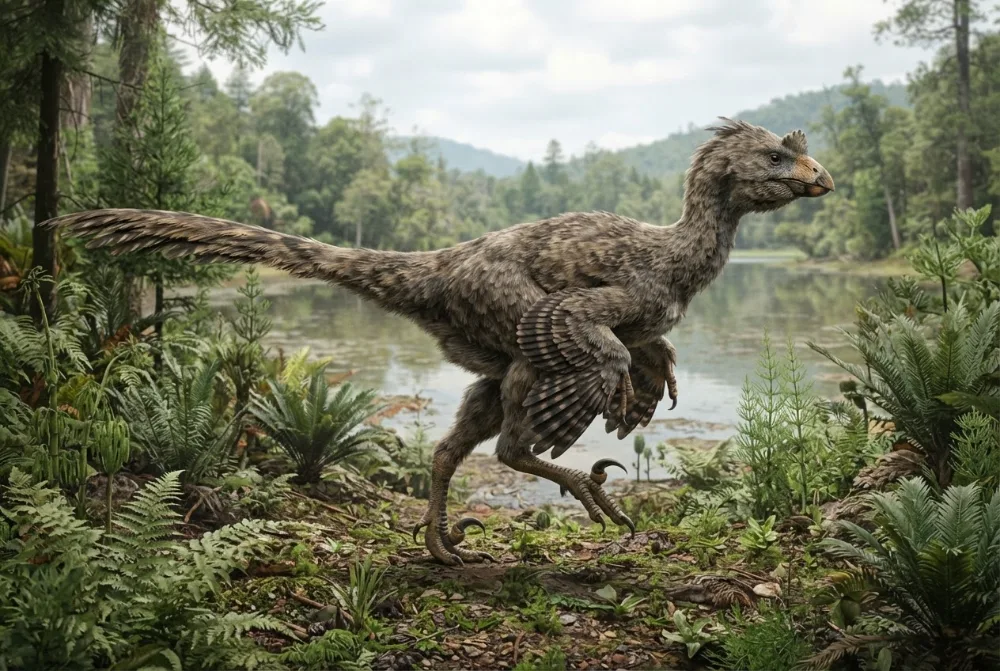
Yuanyanglong is a basal oviraptorosaur, meaning it branched off early in the group's family tree, before many other oviraptorosaurs.1
Nsɛm a wɔbisa bebree fa Yuanyanglong ho
?How big was Yuanyanglong?
It was a relatively small dinosaur, though its exact size is not given in the sources. It is described as a 'smaller' oviraptorosaur based on the two partial skeletons found.3
?What did Yuanyanglong eat?
It was an omnivore, meaning it ate both plants and small animals. Scientists found gastroliths (stomach stones) in its body cavity, which helped it grind up food.43
?Could Yuanyanglong run fast?
It had long legs and narrow feet, which usually help with running, but its hip bone had a very short area for leg muscles to attach. Scientists think it was probably not a fast runner and may have been better at wading in water like a modern wading bird.3
?Why was it called Yuanyanglong?
The name means 'lovebird dragon' in Chinese, because the two fossil skeletons were found lying together on the same rock block, like a pair of lovebirds.1
Ma dino ho animdefoɔ
- Nyansahu din
- Yuanyanglong
- Obi a ɔtoo din
- Hao et al. 20254
- Kuo
- Dino nwonwa a wɔwɔ ntakra
- Abusua / kuo kɛseɛ
- Oviraptorosauria4
- Nkyekyɛmu
- Theropoda > Oviraptorosauria4
- Abotan no mfeɛ
- mfeɛ ɔpepem 121 kɔsi 100 (Aptian / Albian)4
- Abotan nhyehyɛeɛ
- Miaogou4
- Aman
- Kyaena4
- Fɔsil nkyerɛwee
- 1 wɔ The Paleobiology Database mu4
- Nhunumu
- The fossils were discovered in 2021 in the Miaogou Formation in Inner Mongolia, China. In 2024, Hao and colleagues announced the new genus and species Yuanyanglong bainian, and the full description was published in 2025.1
- Wɔda so gye ho akyinnye
- Scientists are still debating exactly where Yuanyanglong sits on the oviraptorosaur family tree, since its skeleton is incomplete.1
Baabi a nsɛm no firi
- Yuanyanglong (en.wikipedia.org)
- Yuanyanglong bainian | Dinosaur Database by DinoAnimals.com (dinoanimals.com)
- 内蒙古发现窃蛋龙类恐龙新属种——百年鸳鸯龙----中国科学院古脊椎动物与古人类研究所 (ivpp.ac.cn)
- Yuanyanglong in The Paleobiology Database (CC BY 4.0): mfeɛ, mmeaeɛ, abotan nhyehyɛeɛ, nkyekyɛmu.
Asɛm biara a ɛwɔ krataafa yi so wɔ nɔma a ɛkyerɛ baabi a ɛfiri. Sɛ yɛfom biribi a, kafra, yɛyɛ dino dɔfoɔ, yɛnyɛ nyansahu nsɛmma krataa. Ka kyerɛ yɛn wɔ [email protected] na yɛbɛsiesie.
 Ɔkɔm de Rex! Dino Wiki yɛ agya bi adwuma a ɔyɛɛ maa ne babarima a ɔdɔ dino. Ɛyɛ kwa, dawurubɔ biara nni mu, akyidifoɔ biara nni mu. Mpanimfoɔ bɛtumi ama Rex aduane kakra, na aboa ama Dino Wiki atena intanɛt so.Ma Rex aduane
 Therizinosaurus
 Oviraptor
 Chirostenotes
 Citipes
 Leptorhynchos
 Avimimus
 Stegosaurus
 Iguanodon
 Archaeopteryx
 Giganotosaurus
 Microraptor
 Deinonychus