 Woyɛ dino bɛn? Nsɛmmisa agoro
 Dino ko
 Dino mmirikatuo
 Dino agodie nketewa
 Stika nwoma
 Dino TOP nhyehyɛeɛ
 Ma me nwanwa!
Berɛ bɛn na ɛtenaa ase?

Na ne kɛseɛ yɛ sɛn?
Na ne tenten yɛ sɛn?
Na ne korɔn yɛ sɛn?
Na ne mu yɛ duru sɛn?
Yungavolucris kɛseɛ yɛ sɛn sɛ wode toto WO ho a?
Akontaa nko ara wɔ wo browser mu. Yɛnkora biribiara so, na yɛmmfa biribiara nkɔ baabiara.
Na ɛyɛ ntɛm sɛn?


Nsɛm a ɛyɛ anigye
Yungavolucris is known only from a few foot bones, called tarsometatarsals. The most complete one is just over 4 centimeters (1.5 inches) long.1
Its foot bones were very wide, about twice as wide as those of its relatives Lectavis and Soroavisaurus, which lived at the same time and place.1
The outer toe bone (metatarsal IV) was very thin but as long as the middle toe bone, and the middle toe bone was bent outward, which is unusual.1
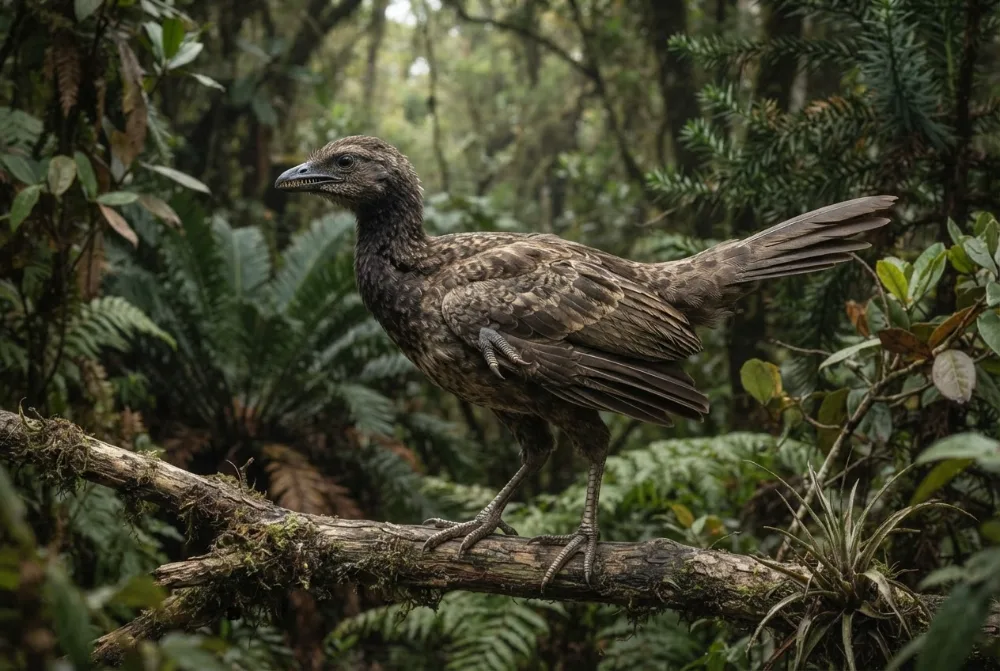
If its legs were short and wide, Yungavolucris might have been a slow, heavy bird that could not fly, about the size of a large chicken.1
Yungavolucris lived alongside other enantiornithean birds like Lectavis and Soroavisaurus, but it had much stouter feet than them.1
Nsɛm a wɔbisa bebree fa Yungavolucris ho
?Was Yungavolucris a dinosaur?
Yes, Yungavolucris was a bird, and birds are a type of dinosaur called avialan dinosaurs. It lived about 70 to 66 million years ago.1
?How big was Yungavolucris?
Nobody knows for sure, but if its legs were short and wide, it might have been about 50 cm long, 25 cm tall at the hip, and weighed about 1.75 kg, about the size of a large chicken.1
?Could Yungavolucris fly?
Maybe not. If its legs were both short and wide, it might have been a heavy, sluggish bird that could not fly, like a large chicken.1
Atosɛm sɛefoɔ
Atosɛm: Some people think Yungavolucris was a dinosaur, but it was actually a bird.
Nokorɛ: Yungavolucris was a type of enantiornithean, which is a group of ancient birds. Birds are related to dinosaurs, but they are not the same as non-avian dinosaurs.1
Ma dino ho animdefoɔ
- Nyansahu din
- Yungavolucris
- Obi a ɔtoo din
- Chiappe 19933
- Kuo
- Nnomaa a wɔdii kan
- Abusua / kuo kɛseɛ
- Enantiornithes3
- Nkyekyɛmu
- Theropoda > Avialae3
- Abotan no mfeɛ
- mfeɛ ɔpepem 72 kɔsi 66 (Maastrichtian)3
- Abotan nhyehyɛeɛ
- Lecho3
- Aman
- Argentina3
- Fɔsil nkyerɛwee
- 1 wɔ The Paleobiology Database mu3
- Nhunumu
- Yungavolucris was named by Luis M. Chiappe in 1993. The fossils were found in the Lecho Formation in Argentina, at a site called Estancia El Brete.12
- Wɔda so gye ho akyinnye
- Scientists are not sure how Yungavolucris is related to other enantiornithean birds. Some studies place it close to avisaurids, but others do not, and it might even be the same species as another bird from the same site.1
Baabi a nsɛm no firi
- Yungavolucris (en.wikipedia.org)
- PBDB Taxon (paleobiodb.org)
- Yungavolucris in The Paleobiology Database (CC BY 4.0): mfeɛ, mmeaeɛ, abotan nhyehyɛeɛ, nkyekyɛmu.
Asɛm biara a ɛwɔ krataafa yi so wɔ nɔma a ɛkyerɛ baabi a ɛfiri. Sɛ yɛfom biribi a, kafra, yɛyɛ dino dɔfoɔ, yɛnyɛ nyansahu nsɛmma krataa. Ka kyerɛ yɛn wɔ [email protected] na yɛbɛsiesie.
 Ɔkɔm de Rex! Dino Wiki yɛ agya bi adwuma a ɔyɛɛ maa ne babarima a ɔdɔ dino. Ɛyɛ kwa, dawurubɔ biara nni mu, akyidifoɔ biara nni mu. Mpanimfoɔ bɛtumi ama Rex aduane kakra, na aboa ama Dino Wiki atena intanɛt so.Ma Rex aduane
 Archaeopteryx
 Hesperornis
 Ichthyornis
 Baptornis
 Jurapteryx
 Gobipteryx
 Tyrannosaurus
 Triceratops
 Velociraptor
 Spinosaurus
 Ankylosaurus
 Parasaurolophus