 Woyɛ dino bɛn? Nsɛmmisa agoro
 Dino ko
 Dino mmirikatuo
 Dino agodie nketewa
 Stika nwoma
 Dino TOP nhyehyɛeɛ
 Ma me nwanwa!
Zapalasaurus
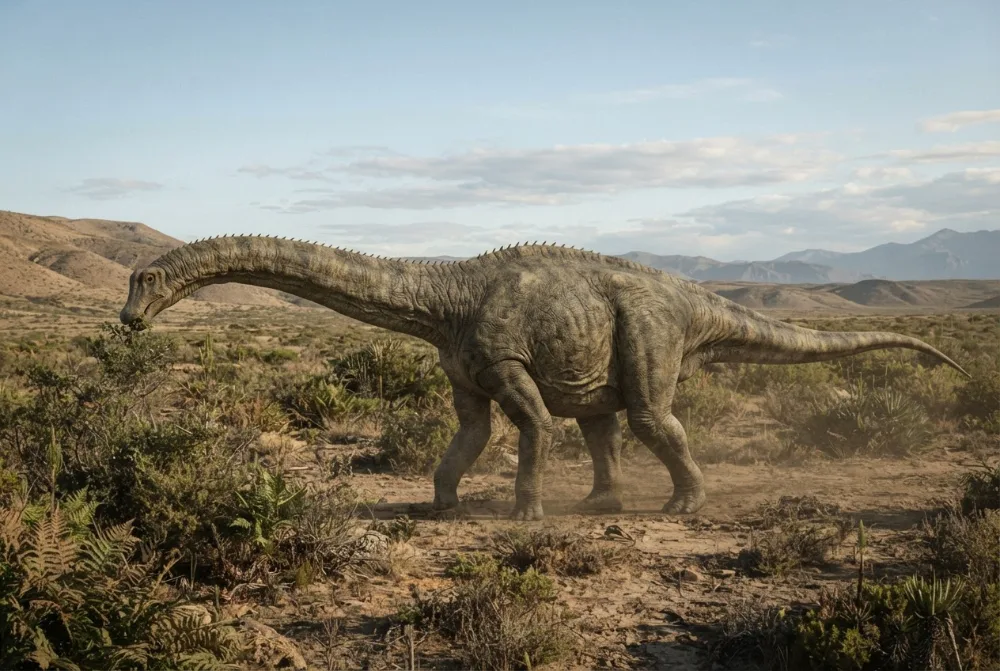
Zapalasaurus was a long-necked plant-eater that lived in what is now Patagonia, Argentina, about 130 to 120 million years ago. It walked on four sturdy legs and used its long neck to reach leaves and ferns without moving its body much. This dinosaur was a early relative of the famous Diplodocus.1
Berɛ bɛn na ɛtenaa ase?
Na ɛyɛ ntɛm sɛn?


Nsɛm a ɛyɛ anigye
The first fossils of Zapalasaurus were found in 1995 at a place called Puesto Morales, and more bones were dug up in 2004.1
Zapalasaurus is named after the city of Zapala, which is about 80 kilometres (50 miles) north of where its bones were discovered.1
Unlike some other long-necked dinosaurs, Zapalasaurus probably fed at ground level, while other sauropods in the same area ate plants higher up.1
Its tail vertebrae double in length from front to back, a feature shared with the more advanced diplodocines.2
Zapalasaurus belonged to a group called rebbachisaurids, which were early cousins of Diplodocus and lived mainly in the Early Cretaceous.31
The species name bonapartei honors the famous Argentine paleontologist José Bonaparte, who helped collect the first bones.1
Nsɛm a wɔbisa bebree fa Zapalasaurus ho
?How big was Zapalasaurus?
Scientists do not know its exact size because only a partial skeleton has been found. It was a medium-sized sauropod, but no length or weight estimates have been published.1
?What did Zapalasaurus eat?
Zapalasaurus was a plant-eater. It used its long neck to browse a wide variety of low-growing plants and greens without having to walk very far.1
?When did Zapalasaurus live?
Zapalasaurus lived during the Early Cretaceous, about 130 to 120 million years ago.1
?Did Zapalasaurus have feathers?
No. Zapalasaurus was a sauropod dinosaur, and there is no evidence that any sauropod had feathers.1
Ma dino ho animdefoɔ
- Nyansahu din
- Zapalasaurus
- Obi a ɔtoo din
- Salgado et al. 20063
- Kuo
- Kɔn tenten
- Abusua / kuo kɛseɛ
- Rebbachisauridae3
- Nkyekyɛmu
- Sauropodomorpha > Sauropoda > Diplodocoidea3
- Abotan no mfeɛ
- mfeɛ ɔpepem 126 kɔsi 120 (Barremian / Aptian)3
- Abotan nhyehyɛeɛ
- La Amarga3
- Aman
- Argentina3
- Fɔsil nkyerɛwee
- 1 wɔ The Paleobiology Database mu3
- Nhunumu
- Zapalasaurus was first described in 2006 by a team led by Leonardo Salgado. The bones were collected by scientists from the Bernardino Rivadavia Natural Sciences Museum and the Juan A. Olsacher Museum, with help from José Bonaparte.1
- Wɔda so gye ho akyinnye
- Scientists are not sure exactly how big Zapalasaurus grew, because only a partial skeleton has been found.1
Baabi a nsɛm no firi
- Zapalasaurus (en.wikipedia.org)
- Translated by Michael D’Emic University of Michigan (naturalhistory.si.edu)
- Zapalasaurus in The Paleobiology Database (CC BY 4.0): mfeɛ, mmeaeɛ, abotan nhyehyɛeɛ, nkyekyɛmu.
Asɛm biara a ɛwɔ krataafa yi so wɔ nɔma a ɛkyerɛ baabi a ɛfiri. Sɛ yɛfom biribi a, kafra, yɛyɛ dino dɔfoɔ, yɛnyɛ nyansahu nsɛmma krataa. Ka kyerɛ yɛn wɔ [email protected] na yɛbɛsiesie.
 Ɔkɔm de Rex! Dino Wiki yɛ agya bi adwuma a ɔyɛɛ maa ne babarima a ɔdɔ dino. Ɛyɛ kwa, dawurubɔ biara nni mu, akyidifoɔ biara nni mu. Mpanimfoɔ bɛtumi ama Rex aduane kakra, na aboa ama Dino Wiki atena intanɛt so.Ma Rex aduane
 Brachiosaurus
 Diplodocus
 Brontosaurus
 Argentinosaurus
 Camarasaurus
 Morosaurus
 Stegosaurus
 Iguanodon
 Archaeopteryx
 Giganotosaurus
 Microraptor
 Deinonychus