 Home
 All dinos
 Dino groups
 Explore
 Dinos by country
 Dino vs dino
 How big were they?
 Dinos A to Z
 Who ate what?
 What dino are you? Quiz
 Dino games
 Dino battle
 Dino race
 Dino mini-games
 Sticker album
 Dino TOP lists
 Timeline
 Surprise me!
 Language: English

Antarctopelta
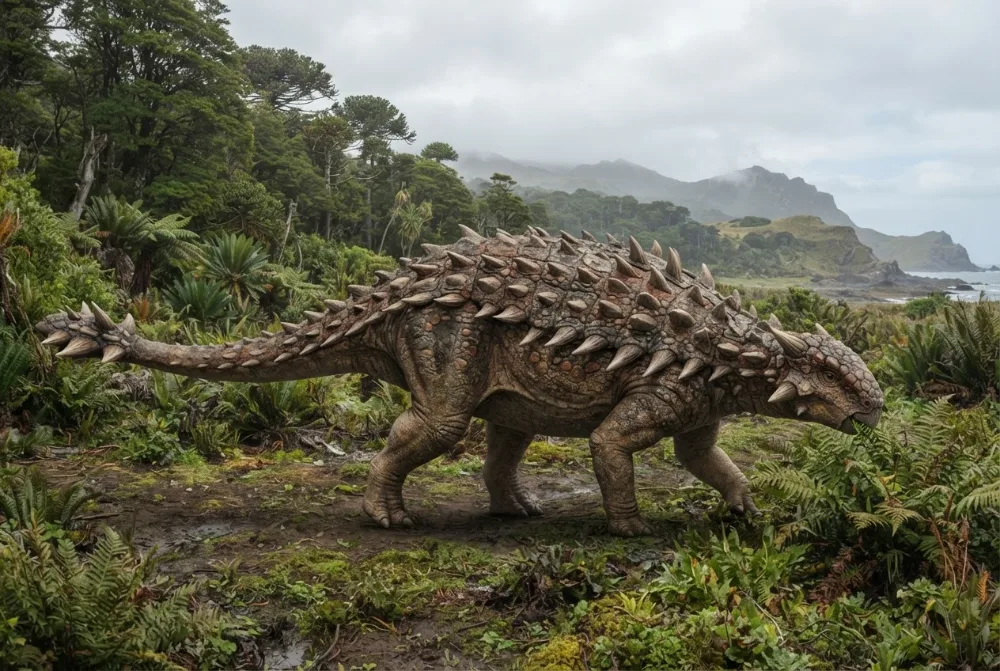
Antarctopelta was an armoured dinosaur that lived in Antarctica during the Late Cretaceous. It was covered in bony plates and spikes, and its tail ended in a weapon made of fused spikes that looked like an Aztec club. It was a slow-moving plant-eater that used its armour for protection.1
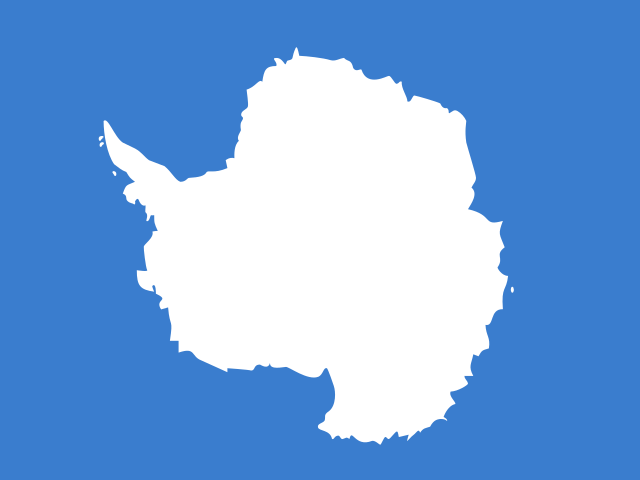 Antarctica
When did it live?
Antarctopelta: 84 to 72 million years ago
How big was it?
How long was it?
How tall was it?
estimate
How heavy was it?
 as long as 6 dogs nose to tail🍌as long as 33 bananas end to end🍉as heavy as 70 watermelons🧸as heavy as 18 kindergarten kids🎒as heavy as 11 school kids🏃could run 100 metres in 16 seconds (the fastest human needs 9.6)
How big was Antarctopelta compared to YOU?
Just maths in your browser. Nothing is saved or sent anywhere.
How fast was it?


Fun facts
Antarctopelta was the first dinosaur ever discovered in Antarctica, but it was only the second one to be named, after Cryolophosaurus.1
Its tail had a special weapon called a macuahuitl, made of flat, spiky bones fused together. It looked like an Aztec club and was used for defence.1
Scientists found six different types of armour plates on Antarctopelta, including large flat ones and tall keeled spikes.1
Antarctopelta lived in a warm, ice-free Antarctica with dense forests of conifers, cycads, and ginkgos. It still had to survive long dark winters.1
The only known skeleton was discovered in 1986 by Argentine geologists Eduardo Olivero and Robert Scasso, but it took ten years to dig out because of frozen ground and bad weather.1
Antarctopelta shared its home with the small plant-eater Trinisaura, as well as marine reptiles like mosasaurs and plesiosaurs.1
Most asked questions about Antarctopelta
?How big was Antarctopelta?
About 4 meters (13 feet) long from snout to tail tip. One scientist estimated it could have been up to 6 meters (20 feet) long and weighed 350 kilograms (770 pounds).1
?What did Antarctopelta eat?
It was a plant-eater. Its jaws had small, leaf-shaped teeth for chewing plants.1
?Did Antarctopelta have feathers?
No. It was an armoured dinosaur covered in bony plates and spikes, not feathers.1
?When did Antarctopelta live?
It lived during the late Campanian stage of the Late Cretaceous period, about 73.4 million years ago.1
?Was Antarctopelta a dinosaur?
Yes, it was a type of armoured dinosaur called an ankylosaur.1
?Could Antarctopelta swim?
Scientists are not sure, but its body was stocky and built for walking on land, not swimming. Its fossils were found with a shark tooth, suggesting it may have floated out to sea after death.1
Myth buster
Myth: Some people think Antarctopelta had a tail club like a typical ankylosaur.
Truth: Antarctopelta actually had a macuahuitl, a flat fan of spikes at the end of its tail, not a round club.1
For dino experts
- Scientific name
- Antarctopelta
- Named by
- Salgado and Gasparini 20062
- Group
- Armoured dinos
- Family / clade
- Parankylosauria2
- Classification
- Ornithischia > Ankylosauria > Thyreophora2
- Age of the rocks
- 84 to 72 million years (Campanian)2
- Rock formations
- Snow Hill Island2
- Countries
- Antarctica2
- Fossil records
- 1 in the Paleobiology Database2
- Discovery
- Antarctopelta was discovered in January 1986 by Argentine geologists Eduardo Olivero and Robert Scasso on James Ross Island, Antarctica. It was named in 2006 by paleontologists Leonardo Salgado and Zulma Gasparini, who called it Antarctopelta oliveroi after Olivero.1
- Still debated
- Scientists are still debating whether Antarctopelta was more closely related to nodosaurids or ankylosaurids, because it has features of both groups.1
Where the facts come from
- Antarctopelta (en.wikipedia.org)
- Antarctopelta in The Paleobiology Database (CC BY 4.0): age, places, rock formations, classification.
Every fact on this page has a number that points to its source. If we got something wrong, sorry, we are dino fans, not a science journal. Tell us at hello@dinowiki.app and we will fix it.
 Rex is hungry! Dino Wiki is a dad's project for his dino-loving son, free with no ads and no cookies. Grown-ups can feed Rex a snack to help keep it online.Feed Rex
 Ankylosaurus
 Sauropelta
 Pinacosaurus
 Scutellosaurus
 Struthiosaurus
 Euoplocephalus
 Tyrannosaurus
 Triceratops
 Velociraptor
 Spinosaurus
 Parasaurolophus
 Pteranodon