 Home
 All dinos
 Dino groups
 Explore
 Dinos by country
 Dino vs dino
 How big were they?
 Dinos A to Z
 Who ate what?
 What dino are you? Quiz
 Dino games
 Dino battle
 Dino race
 Dino mini-games
 Sticker album
 Dino TOP lists
 Timeline
 Surprise me!
 Language: English
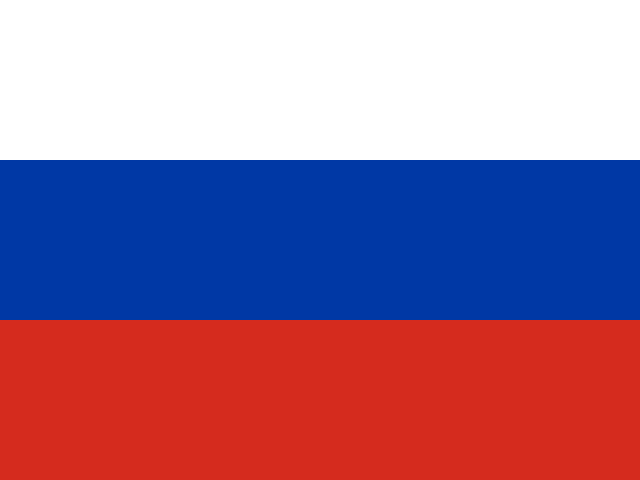 Russia
When did it live?
Daurosaurus: 168 to 165 million years ago

How big was it?
How long was it?
How tall was it?
estimate
How heavy was it?
 as long as 3 house cats nose to tail🍌as long as 8 bananas end to endabout as heavy as a house cat🍌as heavy as 17 bananas🏃could run 100 metres in 16 seconds (the fastest human needs 9.6)
How big was Daurosaurus compared to YOU?
Just maths in your browser. Nothing is saved or sent anywhere.
How fast was it?


Fun facts
Daurosaurus is known from a partial skeleton that includes preserved soft parts, which is very rare for dinosaurs.1
It had skin scales that split into bristles, a feature that scientists think may be an early step toward feathers.2
The fossil site was once a lake, and the dinosaur lived in a landscape with lakes and changing plant life.2
Scientists think Daurosaurus may have lived in groups, because the fossil record suggests it was gregarious.1
The age of the rocks where Daurosaurus was found was first thought to be Late Jurassic, but later studies showed it is actually Middle Jurassic, about 168 to 165 million years old.2
Daurosaurus is one of several small plant-eating dinosaurs found at the same site, along with Kulindapteryx and Kulindadromeus.2
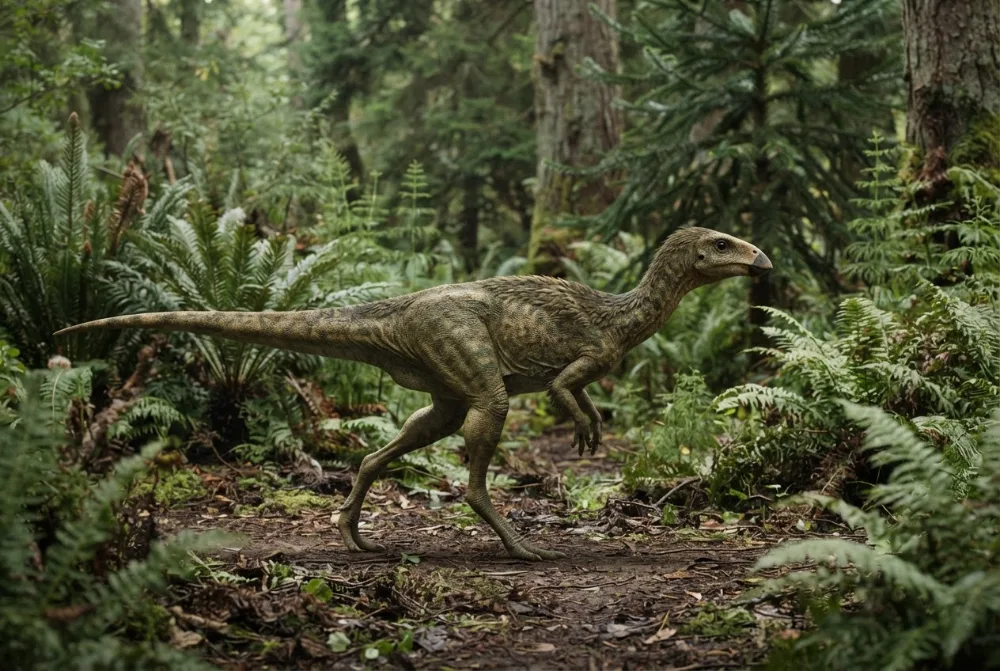
Most asked questions about Daurosaurus
?How big was Daurosaurus?
Daurosaurus was a small dinosaur. Its adult length is estimated at 1 metre, so it was quite small.4
?What did Daurosaurus eat?
Daurosaurus was a herbivore, meaning it ate plants. It had a beak for cropping plant material.4
?Did Daurosaurus have feathers?
Daurosaurus had skin scales that split into bristles, which scientists think may be an early step toward feathers. This is similar to the feather-like structures found on its relative Kulindadromeus.34
?When did Daurosaurus live?
Daurosaurus lived during the Late Bathonian stage of the Middle Jurassic, about 168 to 165 million years ago.4
?Where was Daurosaurus found?
Daurosaurus was found in the Ukureyskaya Formation in Zabaykal'ye, Russia. Its fossil was discovered at a site called Kulinda.4
?Did Daurosaurus live in groups?
Yes, the fossil record suggests Daurosaurus was gregarious, meaning it likely lived in groups.4
Myth buster
Myth: Some people think all dinosaurs with bristles or filaments were birds or ancestors of birds.
Truth: Daurosaurus was a plant-eating dinosaur, not a bird, but its bristle-like scales show that such features appeared in many dinosaur groups, not just bird relatives.2
For dino experts
- Scientific name
- Daurosaurus
- Named by
- Alifanov and Saveliev 20144
- Group
- Beaked plant-eaters
- Family / clade
- Hypsilophodontidae4
- Classification
- Ornithischia > Ornithopoda4
- Age of the rocks
- 168 to 165 million years (Bathonian)4
- Rock formations
- Ukureyskaya4
- Countries
- Russia4
- Fossil records
- 1 in the Paleobiology Database4
- Discovery
- Daurosaurus was named by Russian scientists Vladimir Alifanov and Sergei Saveliev in 2014, based on a partial skeleton found at the Kulinda site in Transbaikalia, Russia.12
- Still debated
- Scientists debate whether Daurosaurus is a valid species, because some researchers think the name is doubtful (a nomen dubium) due to incomplete remains.1
Where the facts come from
- PBDB Taxon (paleobiodb.org)
- Two new ornithischian dinosaurs (Hypsilophodontia, Ornithopoda) from the Late Jurassic of Russia (researchgate.net)
- en.wikipedia.org Kulindadromeus (en.wikipedia.org)
- Daurosaurus in The Paleobiology Database (CC BY 4.0): age, places, rock formations, classification.
Every fact on this page has a number that points to its source. If we got something wrong, sorry, we are dino fans, not a science journal. Tell us at hello@dinowiki.app and we will fix it.
 Rex is hungry! Dino Wiki is a dad's project for his dino-loving son, free with no ads and no cookies. Grown-ups can feed Rex a snack to help keep it online.Feed Rex
 Iguanodon
 Tenontosaurus
 Thescelosaurus
 Zalmoxes
 Camptosaurus
 Rhabdodon
 Ichthyosaurus
 Khudiakovia
 Ophthalmosaurus
 Pterodactylus
 Peloneustes
 Rhamphocephalus