
Sektensaurus
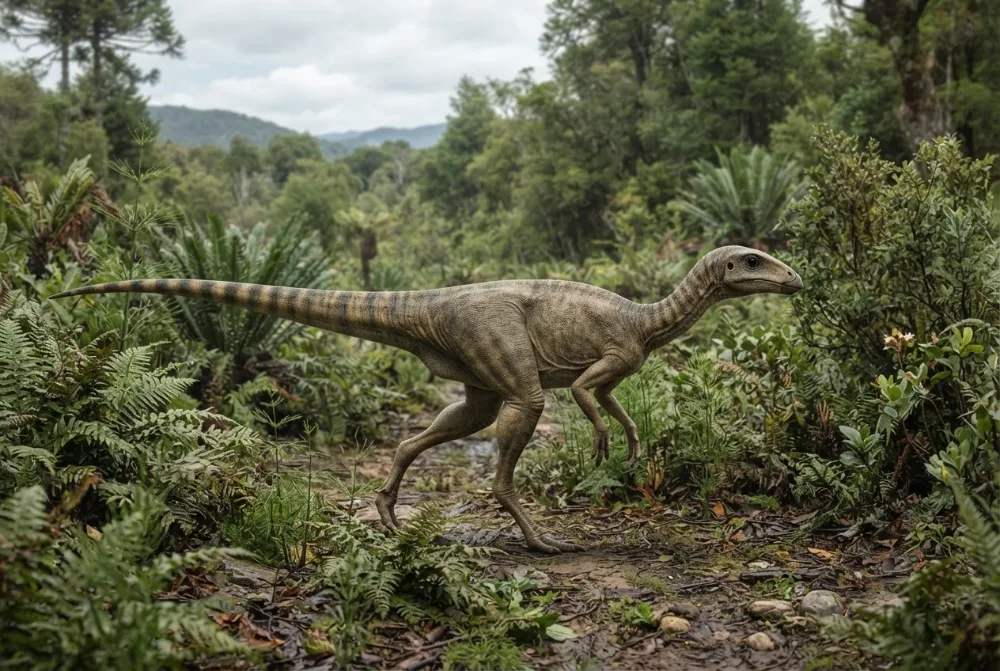
Sektensaurus was a medium-sized, plant-eating dinosaur that lived on an island in what is now Patagonia, Argentina. It walked on two legs and used its beak to munch on tough plants. It is one of the few dinosaurs known from this part of the world near the end of the Age of Dinosaurs.14
When did it live?
How big was it?
How long was it?
How tall was it?
at the hips
How heavy was it?
How big was Sektensaurus compared to YOU?
Just maths in your browser. Nothing is saved or sent anywhere.
Fun facts
Sektensaurus is the first non-hadrosauroid ornithopod found in central Patagonia, meaning it was not a duck-billed dinosaur but a close relative.1
Its name comes from the Tehuelche word 'sekten' meaning 'island', because its fossils were found on an island that appears when the lake level is low.1
The fossils were discovered in 1993 by a palaeontologist named Marcello Luna, but the dinosaur wasn't named until 2019.1
Scientists think Sektensaurus lived about 68 to 66 million years ago, right before the big extinction that killed the non-bird dinosaurs.1
The skeleton was found in a small area, just 3 metres (about 10 feet) across, and all the bones belonged to one adult animal.1
Some bones that were first thought to be from the arm and leg were later re-identified, showing that scientists can change their minds about fossils.1
Most asked questions about Sektensaurus

Ask Rex about Sektensaurus
Rex only answers questions about this page. 3 questions a day.
Rex is an AI and can make mistakes. He runs on servers in the EU and questions are never saved. Never type your name or other personal things.
Myth buster
Myth: Some people think Sektensaurus was a duck-billed dinosaur like Edmontosaurus.
Truth: Sektensaurus was an ornithopod, but it was not a hadrosauroid (duck-billed). It was a more primitive type, possibly an elasmarian.1
For dino experts
- Scientific name
- Sektensaurus
- Named by
- Ibiricu et al. 20194
- Group
- Beaked plant-eaters
- Family / clade
- Elasmaria4
- Classification
- Ornithischia > Ornithopoda > Iguanodontia4
- Age of the rocks
- 84 to 66 million years (Campanian / Maastrichtian)4
- Rock formations
- Lago Colhué Huapi4
- Countries
- Argentina4
- Fossil records
- 2 in the Paleobiology Database4
- Discovery
- The first fossils were found in 1993 by Marcello Luna on an island in Lago Colhué Huapi, Argentina. More bones were collected in 2017, and the dinosaur was named Sektensaurus sanjuanboscoi in 2019 by Ibiricu and colleagues.1
- Still debated
- Scientists are not sure if Sektensaurus was an elasmarian, a group of small ornithopods, because the fossils are incomplete and some bones were re-identified.1
Where the facts come from
- Sektensaurus (en.wikipedia.org)
- Sektensaurus sanjuanboscoi (es.wikipedia.org)
- Sektensaurus sanjuanboscoi | Dinosaur Database by DinoAnimals.com (dinoanimals.com)
- Sektensaurus in The Paleobiology Database (CC BY 4.0): age, places, rock formations, classification.
Every fact on this page has a number that points to its source. If we got something wrong, sorry, we are dino fans, not a science journal. Tell us at [email protected] and we will fix it.
 Rex is hungry! Dino Wiki is a dad's project for his dino-loving son, free with no ads. Grown-ups can feed Rex a snack to help keep it online.Feed Rex
 Iguanodon
 Tenontosaurus
 Thescelosaurus
 Zalmoxes
 Camptosaurus
 Rhabdodon
 Tyrannosaurus
 Triceratops
 Velociraptor
 Spinosaurus
 Ankylosaurus
 Parasaurolophus