 Home
 All dinos
 Dino groups
 Explore
 Dinos by country
 Dino vs dino
 How big were they?
 Dinos A to Z
 Who ate what?
 What dino are you? Quiz
 Dino games
 Dino battle
 Dino race
 Dino mini-games
 Sticker album
 Dino TOP lists
 Timeline
 Surprise me!
 Language: English

Trinisaura
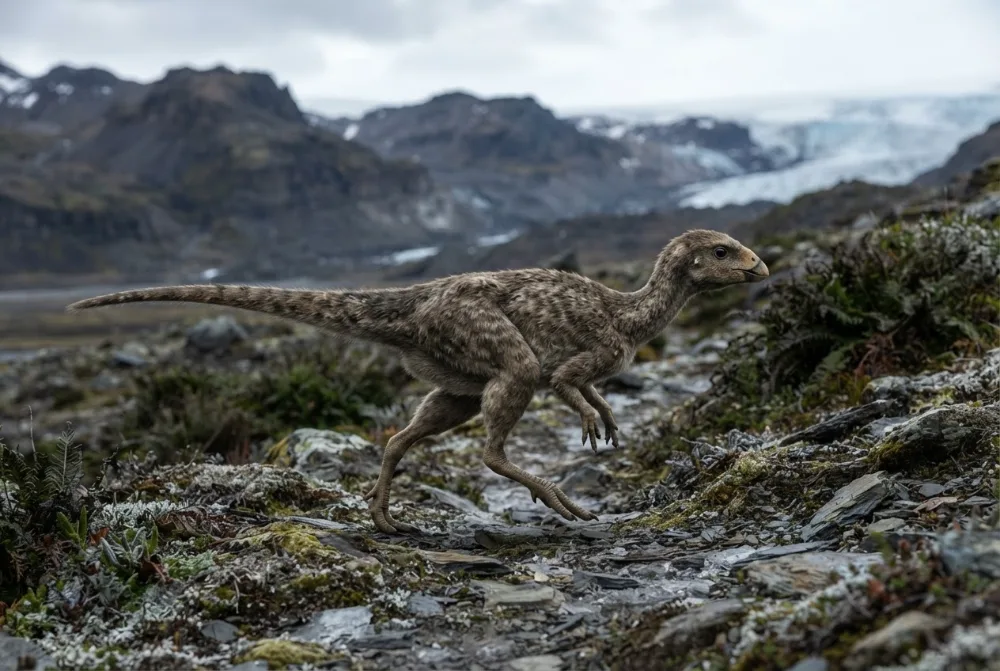
Trinisaura was a small, speedy plant-eater that lived in Antarctica about 73 million years ago. It had a long tail for balance and a little beak for nibbling plants. It is one of the few dinosaurs found on the continent that is frozen today!1
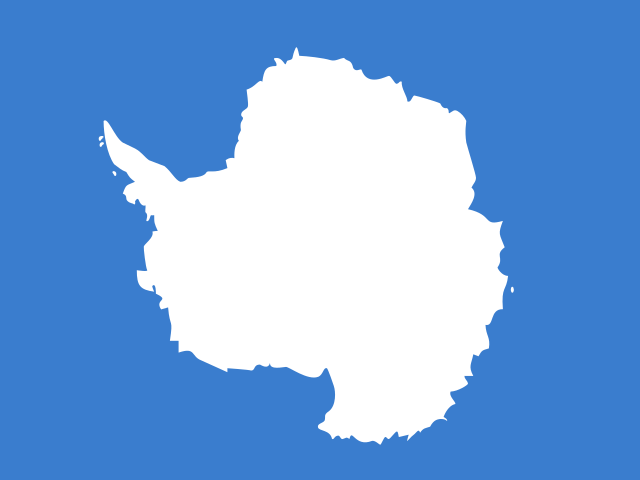 Antarctica
When did it live?
Trinisaura: 84 to 72 million years ago
How big was it?
How long was it?
 as long as 3 house cats nose to tail🍌as long as 8 bananas end to end🏃could run 100 metres in 8.8 seconds (the fastest human needs 9.6)
How big was Trinisaura compared to YOU?
Just maths in your browser. Nothing is saved or sent anywhere.
How fast was it?


Fun facts
Trinisaura is one of the few dinosaurs known from Antarctica, and it was much smaller than its relative Morrosaurus, which was about 4 metres (13 feet) long.1
The only known skeleton is from a young, not fully grown individual, so scientists think adults might have been a bit bigger.1
Its fossils were found in rocks from the Snow Hill Island Formation, which were laid down in a shallow sea environment.12
Trinisaura had a spike-like process on its shoulder blade and a strongly bowed upper arm bone, which are unique features among ornithopods.2
It was lightly built with long hindlimbs and short forelimbs, so it probably ran on two legs.1
Trinisaura belongs to a group called Elasmaria, which includes other small, agile herbivores from South America and Antarctica.1
Most asked questions about Trinisaura
?How big was Trinisaura?
About 1.5 metres (4.9 feet) long, which is similar in size to a small pony. That's much smaller than its relative Morrosaurus, which was around 4 metres (13 feet) long.13
?What did Trinisaura eat?
It was a herbivore, meaning it ate plants. It had a small beak for nibbling vegetation and teeth to help chew.1
?Could Trinisaura run fast?
Yes, it was very lightly built with long legs and a long tail for balance, so it was a capable runner. Scientists think it could run faster than many other plant-eating dinosaurs.1
?Where did Trinisaura live?
It lived in Antarctica, on what is now James Ross Island, about 73 million years ago. Back then Antarctica was warmer and covered in forests.1
Myth buster
Myth: Some people think dinosaurs never lived in Antarctica.
Truth: Trinisaura and other dinosaurs like Antarctopelta show that dinosaurs did live in Antarctica during the Cretaceous, when the climate was warmer.1
For dino experts
- Scientific name
- Trinisaura
- Named by
- Coria et al. 20134
- Group
- Beaked plant-eaters
- Family / clade
- Elasmaria4
- Classification
- Ornithischia > Ornithopoda > Iguanodontia4
- Age of the rocks
- 84 to 72 million years (Campanian)4
- Rock formations
- Snow Hill Island4
- Countries
- Antarctica4
- Fossil records
- 1 in the Paleobiology Database4
- Discovery
- The fossils were collected in 2008 by paleontologists Juan Moly and Rodolfo Coria during an Antarctic expedition. They were described and named in 2013 by Coria and colleagues.1
- Still debated
- Scientists are not sure exactly how Trinisaura is related to other ornithopods. Some studies place it in Elasmaria, while others suggest it belongs to a different group called Rhabdodontoidea.1
Where the facts come from
- Trinisaura (en.wikipedia.org)
- api.naturalis.fcnym.unlp.edu.ar (api.naturalis.fcnym.unlp.edu.ar)
- A new ornithopod (Dinosauria; Ornithischia) from Antarctica (ri.conicet.gov.ar)
- Trinisaura in The Paleobiology Database (CC BY 4.0): age, places, rock formations, classification.
Every fact on this page has a number that points to its source. If we got something wrong, sorry, we are dino fans, not a science journal. Tell us at hello@dinowiki.app and we will fix it.
 Rex is hungry! Dino Wiki is a dad's project for his dino-loving son, free with no ads and no cookies. Grown-ups can feed Rex a snack to help keep it online.Feed Rex
 Iguanodon
 Tenontosaurus
 Thescelosaurus
 Zalmoxes
 Camptosaurus
 Rhabdodon
 Tyrannosaurus
 Triceratops
 Velociraptor
 Spinosaurus
 Ankylosaurus
 Parasaurolophus