 Kwizi ya Ndiwe dino uti?
 Nkhondo ya madino
 Mpikisano wa madino
 Masewera ang'onoang'ono a madino
 Chimbale cha zomata
 Mindandanda ya TOP ya madino
 Ndidabwitse!
Anabisetia
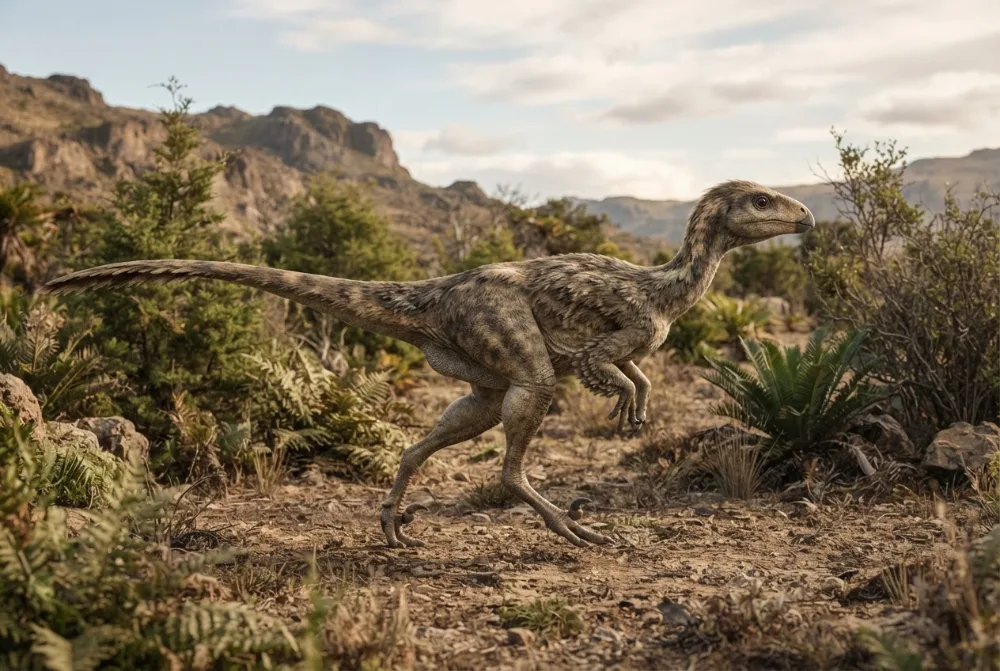
Anabisetia was a small, plant-eating dinosaur that walked on two legs. It lived in what is now Argentina, about 95 to 92 million years ago, during the Late Cretaceous Period.1
Ankakhala liti?
Anali wamkulu bwanji?
Anali wautali bwanji?
Msinkhu wake unali wautali bwanji?
Ankalemera bwanji?
 wautali ngati amphaka a pakhomo 4 otsatizana mphuno ndi mchira🍌wautali ngati nthochi 11 zotsatizana🍉wolemera ngati mavwende 4🏃akanatha kuthamanga mamita 100 m'masekondi 9.2 (munthu waliwiro kwambiri amafunika 9.6)
Anabisetia anali wamkulu bwanji poyerekeza ndi IWEYO?
Ndi masamu chabe mu msakatuli wako. Palibe chimene chimasungidwa kapena kutumizidwa kwina kulikonse.
Anali ndi liwiro lotani?


Mfundo zosangalatsa
Anabisetia is known from four specimens, and together they show almost the whole skeleton except for the skull.1
The shoulder blade of Anabisetia had an extension called the acromial process that was the largest ever found in its group, the Euornithopoda.1
In its hand, the fifth metacarpal bone was flattened with straight edges, instead of being rounded like in most other dinosaurs.1
The hip bone, or ilium, had a front blade that made up more than half of the total ilium length and extended in front of the prepubis.1
At the back of the head, the connection with the neck, called the occipital condyle, pointed downwards.1
The fossils were found in rocks of the Cerro Lisandro Formation, which preserve a swamp that existed from about 95 to 92 million years ago.1
Mafunso ofunsidwa kwambiri okhudza Anabisetia
?How big was Anabisetia?
About 2 metres (6.6 feet) long and weighed around 20 kilograms (44 pounds).1
?What did Anabisetia eat?
It was a plant-eater, or herbivore, with teeth specialized for grinding vegetation.1
?When did Anabisetia live?
It lived about 95 to 92 million years ago, during the Late Cretaceous Period.1
?Where was Anabisetia found?
Its fossils were found in the Neuquén Province of Argentina, in South America.1
Kwa akatswiri a madino
- Dzina la sayansi
- Anabisetia
- Anapatsidwa dzina ndi
- Coria and Calvo 20024
- Gulu
- Odya zomera a milomo
- Banja / kladi
- Elasmaria4
- Magawidwe a sayansi
- Ornithischia > Ornithopoda > Iguanodontia4
- Zaka za miyala
- zaka 94 mpaka 90 miliyoni (Turonian)4
- Mapangidwe a miyala
- Cerro Lisandro4
- Mayiko
- Argentina4
- Zolemba za mafosili
- 2 mu The Paleobiology Database4
- Kupezeka
- The fossils were discovered in 1985 by a local farmer named Roberto Saldivia Blanco, who brought them to scientists in 1993. Argentine paleontologists Rodolfo Coria and Jorge Orlando Calvo named Anabisetia in 2002.1
- Akukambiranabe
- Scientists are not sure exactly where Anabisetia fits in the dinosaur family tree. It may be closely related to Gasparinisaura, but the lack of skull material makes it hard to place with precision.1
Kumene mfundo zimachokera
- Anabisetia (en.wikipedia.org)
- Dinosaurios del Neuquén - Dinosaurios del Neuquén – Anabisetia saldiviai → Más Neuquén (masneuquen.com)
- Anabisetia | Part of the Ornithopod Family of Dinosaurs (dinosaurmadness.com)
- Anabisetia in The Paleobiology Database (CC BY 4.0): zaka, malo, mapangidwe a miyala, magawidwe a sayansi.
Mfundo iliyonse patsamba lino ili ndi nambala yosonyeza kumene yachokera. Ngati talakwitsa kanthu, pepa, ndife okonda madino, osati magazini ya sayansi. Tiuze pa [email protected] ndipo tikonza.
 Rex ali ndi njala! Dino Wiki ndi ntchito ya bambo kwa mwana wawo wamwamuna wokonda madainoso, yaulere popanda zotsatsa ndi zokazonda. Akuluakulu angadyetse Rex zokhwasula-khwasula kuti tsambali lipitirize kupezeka pa intaneti.Dyetsa Rex
 Iguanodon
 Tenontosaurus
 Thescelosaurus
 Zalmoxes
 Camptosaurus
 Rhabdodon
 Tyrannosaurus
 Triceratops
 Velociraptor
 Spinosaurus
 Ankylosaurus
 Parasaurolophus