 Kwizi ya Ndiwe dino uti?
 Nkhondo ya madino
 Mpikisano wa madino
 Masewera ang'onoang'ono a madino
 Chimbale cha zomata
 Mindandanda ya TOP ya madino
 Ndidabwitse!
Ankakhala liti?

Anali wamkulu bwanji?
Anali wautali bwanji?
Msinkhu wake unali wautali bwanji?
kuyerekeza
 wautali ngati amphaka a pakhomo 2.5 otsatizana mphuno ndi mchira🍌wautali ngati nthochi 7 zotsatizana🪑wamng'ono moti angayende pansi pa mpando🏃akanatha kuthamanga mamita 100 m'masekondi 12 (munthu waliwiro kwambiri amafunika 9.6)
Lycorhinus anali wamkulu bwanji poyerekeza ndi IWEYO?
Ndi masamu chabe mu msakatuli wako. Palibe chimene chimasungidwa kapena kutumizidwa kwina kulikonse.
Anali ndi liwiro lotani?


Mfundo zosangalatsa
Lycorhinus was first thought to be a mammal-like reptile called a cynodont, not a dinosaur, when it was named in 1924.1
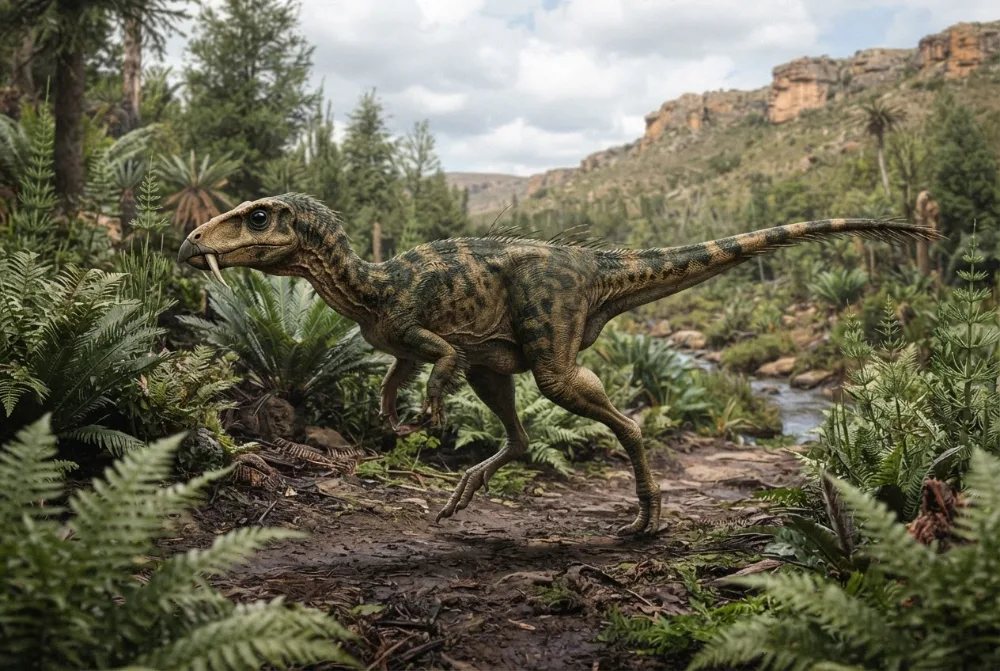
It had a beak at the front of its mouth, like a parrot, but also had long, fang-like canine teeth.1
Lycorhinus was only about 1.2 metres (4 feet) long, about the size of a large dog.1
Scientists once thought a different dinosaur called Lanasaurus was a separate species, but now they think it was the same as Lycorhinus.13
Its fossils were found in the Upper Elliot Formation, which is made of red mudstone from ancient rivers and deserts.1
Lycorhinus lived alongside the long-necked dinosaur Massospondylus and the early crocodile relative Protosuchus.1
Mafunso ofunsidwa kwambiri okhudza Lycorhinus
?What did Lycorhinus eat?
Lycorhinus was a plant-eater. Its teeth show wear from chewing tough plants, and scientists think it may have also eaten fruits, roots, and nuts, like modern peccaries do.1
?How big was Lycorhinus?
Lycorhinus was about 1.2 metres (4 feet) long, which is about the size of a large dog.12
Wothetsa nthano zabodza
Nthano: Because Lycorhinus had long canine teeth, some people think it was a meat-eater.
Zoona: Lycorhinus was actually a plant-eater. Its teeth show wear from chewing plants, and its beak helped it crop vegetation.1
Kwa akatswiri a madino
- Dzina la sayansi
- Lycorhinus
- Anapatsidwa dzina ndi
- Haughton 19243
- Gulu
- Odya zomera a milomo
- Banja / kladi
- Heterodontosauridae3
- Magawidwe a sayansi
- Ornithischia > Heterodontosauridae3
- Zaka za miyala
- zaka 201 mpaka 184 miliyoni (Hettangian / Pliensbachian)3
- Mapangidwe a miyala
- Elliot, Clarens3
- Mayiko
- South Africa, Lesotho3
- Zolemba za mafosili
- 5 mu The Paleobiology Database3
- Amadziwikanso kuti
- Lanasaurus (mayina akale tsopano amawerengedwa ngati nyama yomweyi)3
- Kupezeka
- Lycorhinus was named in 1924 by South African paleontologist Sidney H. Haughton, based on a partial jaw found in the Upper Elliot Formation of South Africa.13
- Akukambiranabe
- Scientists are not sure exactly how Lycorhinus used its long canine teeth, whether for defense, digging, or eating tough plants.1
Kumene mfundo zimachokera
- Lycorhinus (en.wikipedia.org)
- Lycorhinus | Natural History Museum (nhm.ac.uk)
- Lycorhinus in The Paleobiology Database (CC BY 4.0): zaka, malo, mapangidwe a miyala, magawidwe a sayansi.
Mfundo iliyonse patsamba lino ili ndi nambala yosonyeza kumene yachokera. Ngati talakwitsa kanthu, pepa, ndife okonda madino, osati magazini ya sayansi. Tiuze pa [email protected] ndipo tikonza.
 Rex ali ndi njala! Dino Wiki ndi ntchito ya bambo kwa mwana wawo wamwamuna wokonda madainoso, yaulere popanda zotsatsa ndi zokazonda. Akuluakulu angadyetse Rex zokhwasula-khwasula kuti tsambali lipitirize kupezeka pa intaneti.Dyetsa Rex
 Iguanodon
 Tenontosaurus
 Thescelosaurus
 Zalmoxes
 Camptosaurus
 Rhabdodon
 Dilophosaurus
 Stenopterygius
 Dorygnathus
 Lufengosaurus
 Scutellosaurus
 Yunnanosaurus