 Kwizi ya Ndiwe dino uti?
 Nkhondo ya madino
 Mpikisano wa madino
 Masewera ang'onoang'ono a madino
 Chimbale cha zomata
 Mindandanda ya TOP ya madino
 Ndidabwitse!
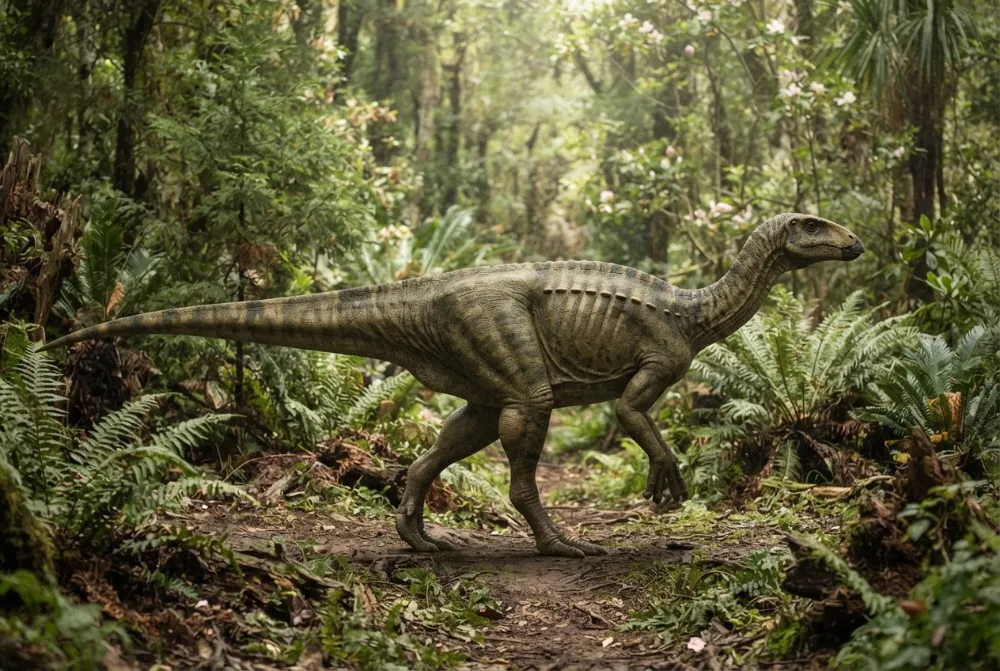
Macrogryphosaurus
Macrogryphosaurus was a big, gentle plant-eater that wandered the forests of ancient Argentina. It had a long neck and tail, and bony plates along its ribs that might have helped it breathe or stayed stiff. This dinosaur is the largest known member of its group, the elasmarian ornithopods.1
Ankakhala liti?
Anali wamkulu bwanji?
Anali wautali bwanji?
Msinkhu wake unali wautali bwanji?
kuyerekeza
Ankalemera bwanji?
 wautali ngati agalu 6 otsatizana mphuno ndi mchira🍌wautali ngati nthochi 33 zotsatizana🍉wolemera ngati mavwende 60🧸wolemera ngati ana a sukulu ya mkaka 16🎒wolemera ngati ana a sukulu 9🏃akanatha kuthamanga mamita 100 m'masekondi 8.8 (munthu waliwiro kwambiri amafunika 9.6)
Macrogryphosaurus anali wamkulu bwanji poyerekeza ndi IWEYO?
Ndi masamu chabe mu msakatuli wako. Palibe chimene chimasungidwa kapena kutumizidwa kwina kulikonse.
Anali ndi liwiro lotani?


Mfundo zosangalatsa
Macrogryphosaurus had bony plates along its ribs, called intercostal plates, which made its torso stiff and bird-like.1
It is the largest known elasmarian dinosaur, reaching about 6 metres (20 feet) long.1
Its name means 'big enigmatic lizard', because scientists were puzzled by its features.1
Macrogryphosaurus had a long neck and a tail similar to a coelurosaur, a group of theropod dinosaurs, which is unusual for an ornithopod.1
Fossils of Macrogryphosaurus were discovered by a young boy named Rafael Moyano in 1999 near Lake Mari Menuco in Argentina.1
Only one nearly complete skeleton of Macrogryphosaurus has been found, so scientists are still learning about it.1
Mafunso ofunsidwa kwambiri okhudza Macrogryphosaurus
?How big was Macrogryphosaurus?
It was about 6 metres (20 feet) long, though one estimate says 5 metres (16 feet) and 300 kg (660 lb). It is the largest known elasmarian dinosaur.1
?What did Macrogryphosaurus eat?
It was a plant-eater, so it ate plants. The Paleobiology Database lists it as a ground-dwelling herbivore.3
?When did Macrogryphosaurus live?
It lived about 89 million years ago, during the Late Cretaceous Period, in what is now Argentina.1
?Why did Macrogryphosaurus have plates on its ribs?
Scientists are not sure. The plates, called intercostal plates, made its torso stiff and bird-like, but their exact purpose is still a mystery.1
Wothetsa nthano zabodza
Nthano: Some people think Macrogryphosaurus was a slow, heavy dinosaur.
Zoona: Actually, it was lightly built and graceful, with a slender body compared to many other big ornithopods.1
Kwa akatswiri a madino
- Dzina la sayansi
- Macrogryphosaurus
- Anapatsidwa dzina ndi
- Calvo et al. 20073
- Gulu
- Odya zomera a milomo
- Banja / kladi
- Elasmaria3
- Magawidwe a sayansi
- Ornithischia > Ornithopoda > Iguanodontia3
- Zaka za miyala
- zaka 90 mpaka 86 miliyoni (Coniacian)3
- Mapangidwe a miyala
- Sierra Barrosa3
- Mayiko
- Argentina3
- Zolemba za mafosili
- 1 mu The Paleobiology Database3
- Kupezeka
- Macrogryphosaurus was discovered in 1999 by a boy named Rafael Moyano near Lake Mari Menuco in Argentina. Scientists Jorge Calvo, Juan Porfiri, and Fernando Novas named it in 2007.1
- Akukambiranabe
- Scientists are still debating how many species of Macrogryphosaurus existed, and whether some other ornithopod fossils belong to this genus.1
Kumene mfundo zimachokera
- Macrogryphosaurus (en.wikipedia.org)
- Macrogryphosaurus Calvo et al. 2007 - Encyclopedia of Life (eol.org)
- Macrogryphosaurus in The Paleobiology Database (CC BY 4.0): zaka, malo, mapangidwe a miyala, magawidwe a sayansi.
Mfundo iliyonse patsamba lino ili ndi nambala yosonyeza kumene yachokera. Ngati talakwitsa kanthu, pepa, ndife okonda madino, osati magazini ya sayansi. Tiuze pa [email protected] ndipo tikonza.
 Rex ali ndi njala! Dino Wiki ndi ntchito ya bambo kwa mwana wawo wamwamuna wokonda madainoso, yaulere popanda zotsatsa ndi zokazonda. Akuluakulu angadyetse Rex zokhwasula-khwasula kuti tsambali lipitirize kupezeka pa intaneti.Dyetsa Rex
 Iguanodon
 Tenontosaurus
 Thescelosaurus
 Zalmoxes
 Camptosaurus
 Rhabdodon
 Tyrannosaurus
 Triceratops
 Velociraptor
 Spinosaurus
 Ankylosaurus
 Parasaurolophus