 Kwizi ya Ndiwe dino uti?
 Nkhondo ya madino
 Mpikisano wa madino
 Masewera ang'onoang'ono a madino
 Chimbale cha zomata
 Mindandanda ya TOP ya madino
 Ndidabwitse!
Ankakhala liti?

Anali wamkulu bwanji?
Anali wautali bwanji?
Msinkhu wake unali wautali bwanji?
kuyerekeza
Pegomastax anali wamkulu bwanji poyerekeza ndi IWEYO?
Ndi masamu chabe mu msakatuli wako. Palibe chimene chimasungidwa kapena kutumizidwa kwina kulikonse.
Anali ndi liwiro lotani?


Mfundo zosangalatsa
Pegomastax had a very deep, parrot-like beak at the front of its jaw, which helped it bite into tough plants.1
Its skull was only about 73 mm (2.9 inches) long, smaller than a chicken's skull.1
Pegomastax lived alongside many other dinosaurs, including the long-necked Massospondylus and the small ornithischian Lesothosaurus.1
The only fossil of Pegomastax is a partial skull with a well-preserved lower jaw and teeth, found in the upper Elliot Formation.1
Scientists think Pegomastax may have been most closely related to a South American dinosaur called Manidens.1
Pegomastax had a mobile predentary bone in its lower jaw, which helped it move its beak up and down while chewing.1
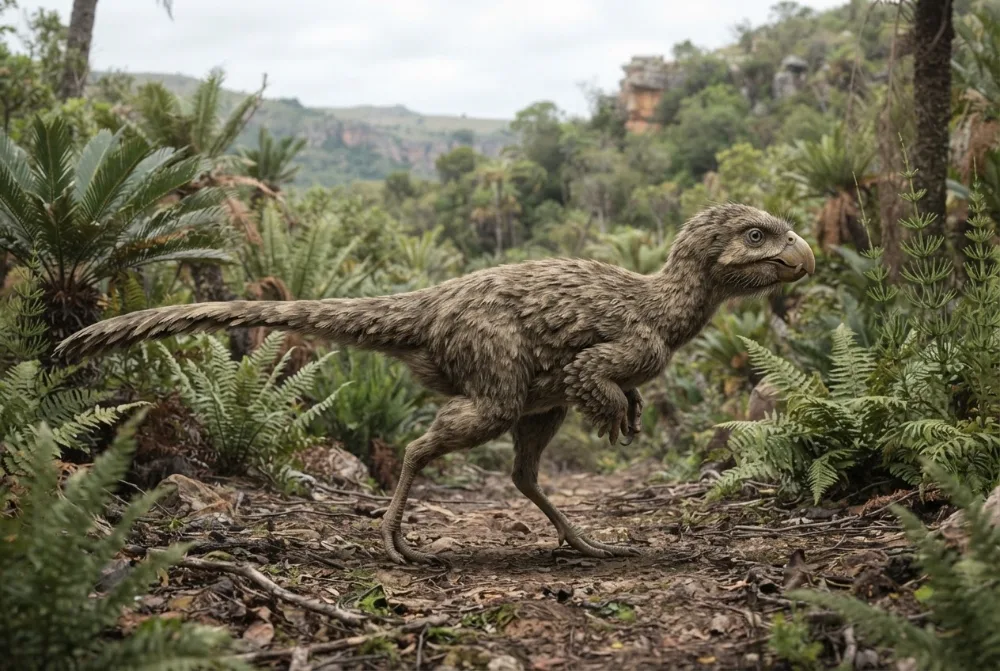
Mafunso ofunsidwa kwambiri okhudza Pegomastax
?Did Pegomastax have feathers?
Scientists think it was covered in porcupine-like quills, not feathers.4
?What did Pegomastax eat?
It was a plant-eater. It used its beak and cheek teeth like scissors to shear tough plants.14
?Why did Pegomastax have fangs?
It used its fangs for self-defense and competing for mates, like some modern plant-eating deer and peccaries.4
?When did Pegomastax live?
It lived during the Early Jurassic, about 200 to 190 million years ago.1
?Where was Pegomastax found?
Its only fossil was found in the upper Elliot Formation in South Africa.1
Kwa akatswiri a madino
- Dzina la sayansi
- Pegomastax
- Anapatsidwa dzina ndi
- Sereno 20126
- Gulu
- Odya zomera a milomo
- Banja / kladi
- Heterodontosauridae6
- Magawidwe a sayansi
- Ornithischia > Heterodontosauridae6
- Zaka za miyala
- zaka 201 mpaka 193 miliyoni (Hettangian / Sinemurian)6
- Mapangidwe a miyala
- Elliot6
- Mayiko
- South Africa6
- Zolemba za mafosili
- 1 mu The Paleobiology Database6
- Kupezeka
- Pegomastax was named by American paleontologist Paul Sereno in 2012, based on a partial skull discovered in the 1966 to 1967 expedition to the Transkei District of Cape Province, South Africa.1
- Akukambiranabe
- Scientists are still debating whether the large canine teeth of Pegomastax were used for defense, display, or occasional omnivory.1
Kumene mfundo zimachokera
- Pegomastax (en.wikipedia.org)
- PBDB Taxon (paleobiodb.org)
- Dwarf species of fanged dinosaur emerges from southern Africa | University of Chicago News (news.uchicago.edu)
- New Fanged Dwarf Dinosaur Found—"Would Be Nice Pet" | National Geographic (nationalgeographic.com)
- Dwarf 'vampire' dinosaur was a plant eater - BBC News (bbc.com)
- Pegomastax in The Paleobiology Database (CC BY 4.0): zaka, malo, mapangidwe a miyala, magawidwe a sayansi.
Mfundo iliyonse patsamba lino ili ndi nambala yosonyeza kumene yachokera. Ngati talakwitsa kanthu, pepa, ndife okonda madino, osati magazini ya sayansi. Tiuze pa [email protected] ndipo tikonza.
 Rex ali ndi njala! Dino Wiki ndi ntchito ya bambo kwa mwana wawo wamwamuna wokonda madainoso, yaulere popanda zotsatsa ndi zokazonda. Akuluakulu angadyetse Rex zokhwasula-khwasula kuti tsambali lipitirize kupezeka pa intaneti.Dyetsa Rex
 Iguanodon
 Tenontosaurus
 Thescelosaurus
 Zalmoxes
 Camptosaurus
 Rhabdodon
 Dilophosaurus
 Stenopterygius
 Dorygnathus
 Lufengosaurus
 Scutellosaurus
 Yunnanosaurus