 Kwizi ya Ndiwe dino uti?
 Nkhondo ya madino
 Mpikisano wa madino
 Masewera ang'onoang'ono a madino
 Chimbale cha zomata
 Mindandanda ya TOP ya madino
 Ndidabwitse!
Sektensaurus
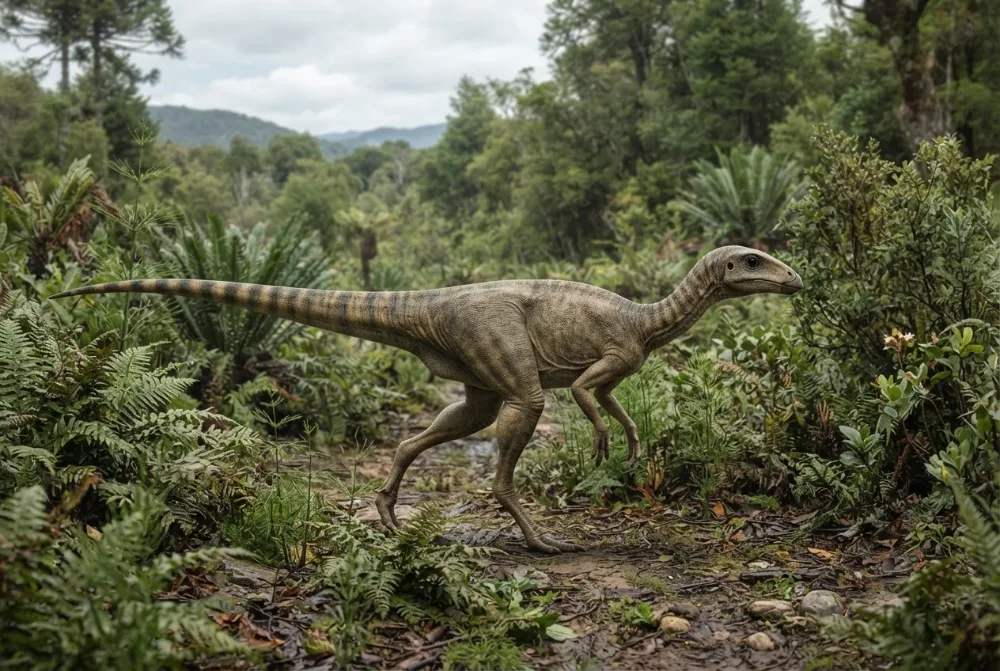
Sektensaurus was a medium-sized, plant-eating dinosaur that lived on an island in what is now Patagonia, Argentina. It walked on two legs and used its beak to munch on tough plants. It is one of the few dinosaurs known from this part of the world near the end of the Age of Dinosaurs.14
Ankakhala liti?
Anali wamkulu bwanji?
Anali wautali bwanji?
Msinkhu wake unali wautali bwanji?
Ankalemera bwanji?
 wautali ngati agalu 5 otsatizana mphuno ndi mchira🍌wautali ngati nthochi 29 zotsatizana🍉wolemera ngati mavwende 66🧸wolemera ngati ana a sukulu ya mkaka 17🎒wolemera ngati ana a sukulu 10🏃akanatha kuthamanga mamita 100 m'masekondi 8.6 (munthu waliwiro kwambiri amafunika 9.6)
Sektensaurus anali wamkulu bwanji poyerekeza ndi IWEYO?
Ndi masamu chabe mu msakatuli wako. Palibe chimene chimasungidwa kapena kutumizidwa kwina kulikonse.
Anali ndi liwiro lotani?


Mfundo zosangalatsa
Sektensaurus is the first non-hadrosauroid ornithopod found in central Patagonia, meaning it was not a duck-billed dinosaur but a close relative.1
Its name comes from the Tehuelche word 'sekten' meaning 'island', because its fossils were found on an island that appears when the lake level is low.1
The fossils were discovered in 1993 by a palaeontologist named Marcello Luna, but the dinosaur wasn't named until 2019.1
Scientists think Sektensaurus lived about 68 to 66 million years ago, right before the big extinction that killed the non-bird dinosaurs.1
The skeleton was found in a small area, just 3 metres (about 10 feet) across, and all the bones belonged to one adult animal.1
Some bones that were first thought to be from the arm and leg were later re-identified, showing that scientists can change their minds about fossils.1
Mafunso ofunsidwa kwambiri okhudza Sektensaurus
Wothetsa nthano zabodza
Nthano: Some people think Sektensaurus was a duck-billed dinosaur like Edmontosaurus.
Zoona: Sektensaurus was an ornithopod, but it was not a hadrosauroid (duck-billed). It was a more primitive type, possibly an elasmarian.1
Kwa akatswiri a madino
- Dzina la sayansi
- Sektensaurus
- Anapatsidwa dzina ndi
- Ibiricu et al. 20194
- Gulu
- Odya zomera a milomo
- Banja / kladi
- Elasmaria4
- Magawidwe a sayansi
- Ornithischia > Ornithopoda > Iguanodontia4
- Zaka za miyala
- zaka 84 mpaka 66 miliyoni (Campanian / Maastrichtian)4
- Mapangidwe a miyala
- Lago Colhué Huapi4
- Mayiko
- Argentina4
- Zolemba za mafosili
- 2 mu The Paleobiology Database4
- Kupezeka
- The first fossils were found in 1993 by Marcello Luna on an island in Lago Colhué Huapi, Argentina. More bones were collected in 2017, and the dinosaur was named Sektensaurus sanjuanboscoi in 2019 by Ibiricu and colleagues.1
- Akukambiranabe
- Scientists are not sure if Sektensaurus was an elasmarian, a group of small ornithopods, because the fossils are incomplete and some bones were re-identified.1
Kumene mfundo zimachokera
- Sektensaurus (en.wikipedia.org)
- Sektensaurus sanjuanboscoi (es.wikipedia.org)
- Sektensaurus sanjuanboscoi | Dinosaur Database by DinoAnimals.com (dinoanimals.com)
- Sektensaurus in The Paleobiology Database (CC BY 4.0): zaka, malo, mapangidwe a miyala, magawidwe a sayansi.
Mfundo iliyonse patsamba lino ili ndi nambala yosonyeza kumene yachokera. Ngati talakwitsa kanthu, pepa, ndife okonda madino, osati magazini ya sayansi. Tiuze pa [email protected] ndipo tikonza.
 Rex ali ndi njala! Dino Wiki ndi ntchito ya bambo kwa mwana wawo wamwamuna wokonda madainoso, yaulere popanda zotsatsa ndi zokazonda. Akuluakulu angadyetse Rex zokhwasula-khwasula kuti tsambali lipitirize kupezeka pa intaneti.Dyetsa Rex
 Iguanodon
 Tenontosaurus
 Thescelosaurus
 Zalmoxes
 Camptosaurus
 Rhabdodon
 Tyrannosaurus
 Triceratops
 Velociraptor
 Spinosaurus
 Ankylosaurus
 Parasaurolophus