 Ati daayinoo kami? Qormaata
 Lola daayinoo
 Dorgommii daayinoo
 Taphoota daayinoo xixiqqoo
 Albamii istiikarii
 Tarreewwan TOP daayinoo
 Na dinqisiisi!
Platypterygius
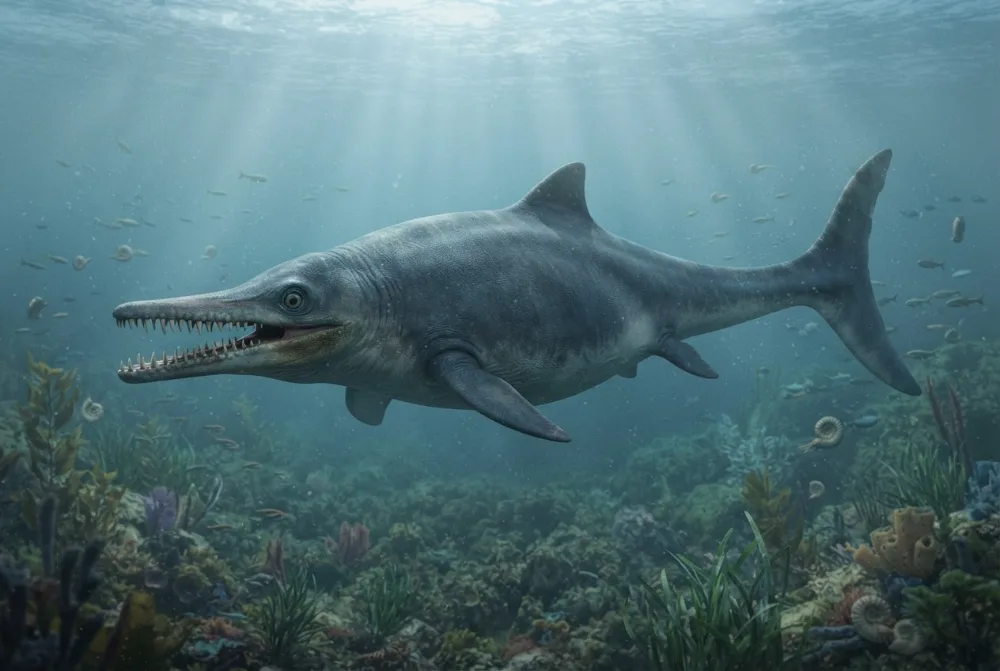
Platypterygius was a giant marine reptile that swam in the seas during the time of the dinosaurs. It looked a bit like a dolphin but had a long snout full of sharp teeth. It was a fast hunter that ate fish, sea turtles, and even baby birds.1
Yoom jiraate?
Hammam guddaa ture?
Hammam dheeraa ture?
 akka saree 7 funyaan hanga eegeetti dheeraa🍌akka muuzii 39 walitti hiriiran dheeraa🏊dheerina bishaan daakaa guddaa (50 m) sekondii 4.4 keessatti daakuu danda'a
SI wajjin yoo wal bira qabamu, Platypterygius hammam guddaa ture?
Herrega qofa barbaadduu kee keessatti. Wanti tokkollee hin olkaa'amu, eessayyuu hin ergamu.
Hammam saffisaa ture?


Odeeffannoowwan bashannansiisoo
Platypterygius means 'flat fin' because its flippers were wide and flat, like paddles.1
It lived from about 161 to 94 million years ago, during the Jurassic and Cretaceous periods.3
Fossils of Platypterygius have been found on every continent except Antarctica.3
Some Platypterygius fossils have baby sea turtles and bird bones in their stomachs, showing what it ate.1
Scientists think Platypterygius was a fast swimmer that chased prey in the open ocean.3
The name Platypterygius has been used for many different ichthyosaurs, and some scientists think it might include several different species.1
Gaaffiiwwan waa'ee Platypterygius baay'ee gaafataman
?How big was Platypterygius?
Different species reached different sizes. Platypterygius platydactylus was about 5 metres (16 ft) long, while Platypterygius australis was about 7 metres (23 ft) long.1
?What did Platypterygius eat?
It was a large predator that ate fish, squid, and other marine animals. One fossil even had baby sea turtles and bird bones in its stomach.12
?Is Platypterygius a dinosaur?
No, it is not a dinosaur. It is an ichthyosaur, a marine reptile that lived in the sea at the same time as dinosaurs.12
?When did Platypterygius live?
Platypterygius lived during the Cretaceous period, from about 141 million years ago to 65 million years ago.2
Ogeeyyii daayinootiif
- Maqaa saayinsii
- Platypterygius
- Kan maqaa baase
- von Huene 19223
- Garee
- Ikteyoosaroota
- Maatii / kilaadii
- Ophthalmosauridae3
- Ramaddii
- Ichthyosauria > Ichthyosauromorpha3
- Umurii dhagaawwanii
- waggaa miliyoona 162 hanga 94 (Oxfordian / Cenomanian)3
- Caasaawwan dhagaa
- Toolebuc, Zapata, Marnes bleues3
- Biyyoota
- Awustiraaliyaa, Faransaay, Ameerikaa, Chiilee, Raashiyaa, Jarmanii3
- Galmee fosilii
- 62 The Paleobiology Database keessa3
- Maqaan biraa
- Longirostria, Myobradypterygius, Myopterygius, Plutoniosaurus, Tenuirostria (maqaawwan durii amma akka bineensa tokkootti lakkaa'amu)3
- Argannoo
- Platypterygius was named by German paleontologist Friedrich von Huene in 1922. The first fossils were found in Germany.3
- Ammallee falmisiisaa
- Scientists are not sure which species really belong to Platypterygius, because many different ichthyosaurs have been lumped into this group.1
Odeeffannoon eessaa dhufa
- Platypterygius (en.wikipedia.org)
- Dinosaurs - Platypterygius longmani - The Australian Museum (australian.museum)
- Platypterygius in The Paleobiology Database (CC BY 4.0): umurii, bakkeewwan, caasaawwan dhagaa, ramaddii.
Odeeffannoon fuula kana irra jiru hundi lakkoofsa madda isaa agarsiisu qaba. Yoo waa dogoggorre, dhiifama, nuti jaallattoota daayinoo malee joornaalii saayinsii miti. [email protected] irratti nutti himi, nus ni sirreessina.
 Rex beela'eera! Dino Wiki pirojektii abbaa tokkoo kan ilma isaa daayinoo jaallatuuf hojjetame, bilisa, beeksisa malee fi hordoftuu malee. Ga'eessonni akka inni interneetii irra turuuf Rexiif nyaata xiqqoo kennuu danda'u.Rex soori
 Ichthyosaurus
 Stenopterygius
 Khudiakovia
 Ophthalmosaurus
 Chonespondylus
 Cymbospondylus
 Stegosaurus
 Iguanodon
 Archaeopteryx
 Giganotosaurus
 Microraptor
 Deinonychus