 Ati daayinoo kami? Qormaata
 Lola daayinoo
 Dorgommii daayinoo
 Taphoota daayinoo xixiqqoo
 Albamii istiikarii
 Tarreewwan TOP daayinoo
 Na dinqisiisi!
Plioplatecarpus
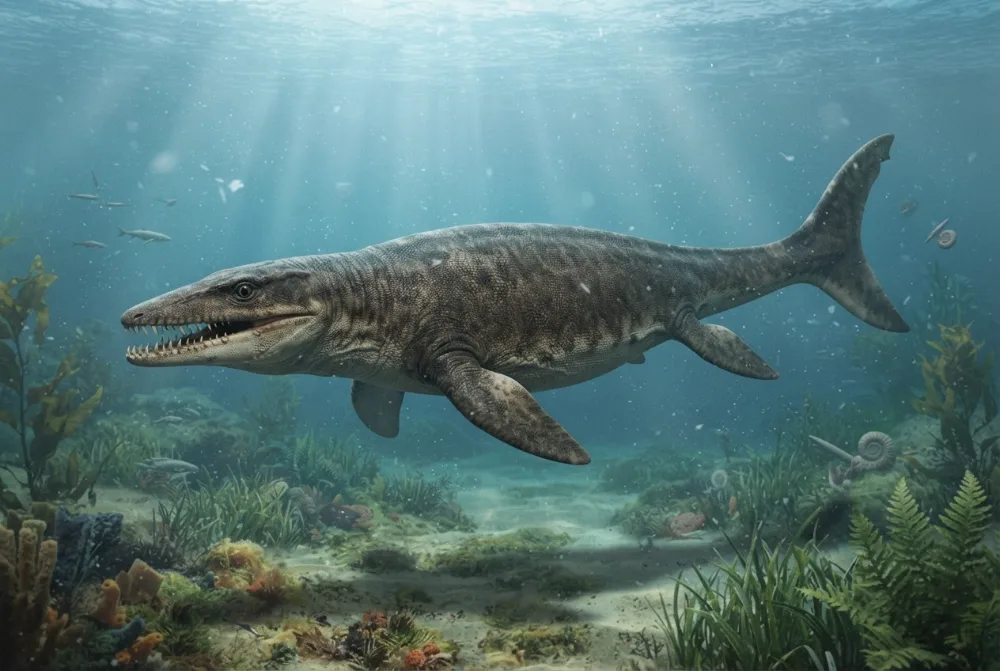
Plioplatecarpus was a medium-sized mosasaur, a giant marine lizard that lived in the late Cretaceous seas. It had big eyes and fewer, sharply curved teeth than other mosasaurs, perfect for grabbing small, slippery prey. Fossils of this ocean hunter have been found all over the world, from North America to Europe and even Antarctica.14
Yoom jiraate?
Hammam guddaa ture?
Hammam dheeraa ture?
 akka saree 6 funyaan hanga eegeetti dheeraa🍌akka muuzii 33 walitti hiriiran dheeraa🏊dheerina bishaan daakaa guddaa (50 m) sekondii 4.7 keessatti daakuu danda'a
SI wajjin yoo wal bira qabamu, Plioplatecarpus hammam guddaa ture?
Herrega qofa barbaadduu kee keessatti. Wanti tokkollee hin olkaa'amu, eessayyuu hin ergamu.
Hammam saffisaa ture?


Odeeffannoowwan bashannansiisoo
Plioplatecarpus had bigger eyes than most other mosasaurs, which may have helped it see in dark, deep water.1
Its teeth were fewer but strongly curved backward, so it could grab small prey very precisely.1
Some scientists think Plioplatecarpus could swim into rivers and estuaries, not just the open ocean.1
Plioplatecarpus used its front flippers for underwater flight, like a bird flaps its wings, to move through weedy or coral reef areas.2
The first Plioplatecarpus fossil was found in Belgium and named by Louis Dollo in 1882.1
Plioplatecarpus lived about 82 to 66 million years ago, during the late Cretaceous period.1
Gaaffiiwwan waa'ee Plioplatecarpus baay'ee gaafataman
?How big was Plioplatecarpus?
About 5.5 to 6 metres long, depending on the species.1
?What did Plioplatecarpus eat?
It ate small, slippery prey like fish and squid, grabbing them with its sharply curved teeth.13
?Could Plioplatecarpus swim in freshwater?
Some scientists think it could, because a fossil was found in a non-marine deposit, suggesting it entered rivers and estuaries.1
?When did Plioplatecarpus live?
It lived in the late Cretaceous period, about 82 to 68 million years ago.1
Seenaa sobaa diigaa
Seenaa sobaa: Plioplatecarpus was a dinosaur.
Dhugaa: Plioplatecarpus was a mosasaur, a type of marine lizard that lived in the sea, not a dinosaur.1
Ogeeyyii daayinootiif
- Maqaa saayinsii
- Plioplatecarpus
- Kan maqaa baase
- Dollo 18824
- Garee
- Moosaasaroota
- Maatii / kilaadii
- Mosasauridae4
- Ramaddii
- Mosasauroidea4
- Umurii dhagaawwanii
- waggaa miliyoona 100 hanga 62 (Cenomanian / Danian)4
- Caasaawwan dhagaa
- Bearpaw Shale, Pierre Shale, Fox Hills4
- Biyyoota
- Ameerikaa, Kanaadaa, Antaarktikaa, Iswiidin, Deenmaark, Raashiyaa4
- Galmee fosilii
- 28 The Paleobiology Database keessa4
- Argannoo
- The first Plioplatecarpus fossil was found in Belgium and named by paleontologist Louis Dollo in 1882. Later, fossils from North America that were first called Mosasaurus were reclassified as Plioplatecarpus.1
- Ammallee falmisiisaa
- Scientists still debate whether some North American Plioplatecarpus fossils belong to separate species or are just variations of the same species found in Europe.2
Odeeffannoon eessaa dhufa
- Plioplatecarpus (en.wikipedia.org)
- Plioplatecarpus (Reptilia, Mosasauridae) from the Upper (biblio.naturalsciences.be)
- Plioplatecarpus (prehistoric-wildlife.com)
- Plioplatecarpus in The Paleobiology Database (CC BY 4.0): umurii, bakkeewwan, caasaawwan dhagaa, ramaddii.
Odeeffannoon fuula kana irra jiru hundi lakkoofsa madda isaa agarsiisu qaba. Yoo waa dogoggorre, dhiifama, nuti jaallattoota daayinoo malee joornaalii saayinsii miti. [email protected] irratti nutti himi, nus ni sirreessina.
 Rex beela'eera! Dino Wiki pirojektii abbaa tokkoo kan ilma isaa daayinoo jaallatuuf hojjetame, bilisa, beeksisa malee fi hordoftuu malee. Ga'eessonni akka inni interneetii irra turuuf Rexiif nyaata xiqqoo kennuu danda'u.Rex soori
 Mosasaurus
 Prognathodon
 Tylosaurus
 Platecarpus
 Clidastes
 Globidens
 Tyrannosaurus
 Triceratops
 Velociraptor
 Spinosaurus
 Ankylosaurus
 Parasaurolophus