 Uri dinozore iyihe? Umukino w'ibibazo
 Intambara ya dinozore
 Isiganwa rya dinozore
 Imikino mito ya dinozore
 Alubumu ya sitikeri
 Intonde za TOP za dinozore
 Ntungura!
Cycnorhamphus
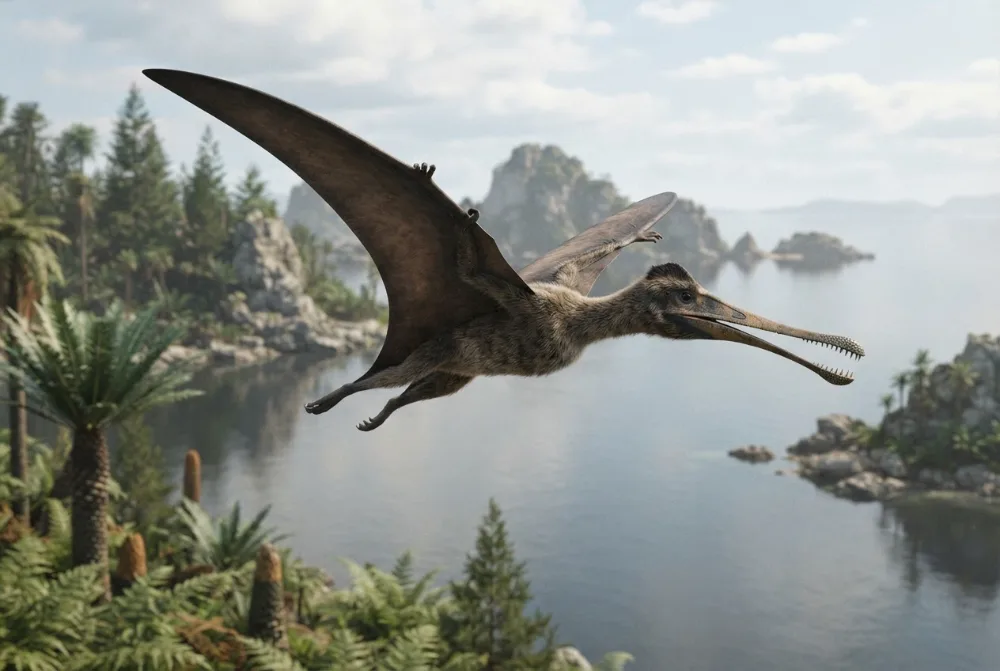
Cycnorhamphus was a pterosaur, a flying reptile that lived during the Late Jurassic. It had a strange beak with peg-like teeth at the tips and curved jaws that left a gap. Scientists think it might have used its beak to crush hard-shelled animals like mollusks.1
Yabayeho ryari?
Yanganaga ite?
Amababa yayo yari arambuye angana iki?
 ndende nk'injangwe 2,5 zo mu rugo zikurikiranye⚽yashoboraga kuguruka ikambuka ikibuga cyose cy'umupira w'amaguru mu masegonda 9,5
Cycnorhamphus yanganaga ite ugereranyije NAWE?
Ni imibare gusa ibarirwa muri mushakisha yawe. Nta kintu kibikwa cyangwa cyoherezwa ahandi.
Yihutaga ite?


Utuntu dushimishije
Cycnorhamphus lived about 152 million years ago during the Late Jurassic.1
Its name means 'swan beak' because of the shape of its snout.1
The first fossil was found in Germany in 1855 and named Pterodactylus suevicus by Friedrich August Quenstedt.1
A well-preserved skull nicknamed 'The Painten Pelican' helped scientists understand its unusual jaw.1
Adult Cycnorhamphus had blunter, stouter teeth at the tips of their jaws than juveniles.1
The jaws had a gap behind the teeth, and soft tissue structures filled that gap in the upper jaw.1
Some scientists think Cycnorhamphus used its beak like openbill storks to crush hard invertebrates.1
Ibibazo bibazwa cyane kuri Cycnorhamphus
?How big was Cycnorhamphus?
Cycnorhamphus had a wingspan of about 1.5 metres (4.9 feet).4
?What did Cycnorhamphus eat?
Scientists think it probably ate shellfish, using its beak to crush hard invertebrates like mollusks, similar to openbill storks.14
?Why did Cycnorhamphus have a gap in its jaws?
Nobody knows for sure. Ideas include trapping jellyfish, opening seashells, or just for show.4
?Is Cycnorhamphus a dinosaur?
No, Cycnorhamphus is a pterosaur, a flying reptile that lived during the Late Jurassic, not a dinosaur.1
Gusenya ibinyoma
Ibivugwa: Cycnorhamphus had long jaws with many teeth like other pterosaurs.
Ukuri: It actually had short, peg-like teeth only at the tips of its jaws, with a curved gap behind them.1
Ku bazobereye muri dinozore
- Izina rya siyansi
- Cycnorhamphus
- Yiswe na
- Seeley 18705
- Itsinda
- Ibikururanda biguruka
- Umuryango / ishami
- Lophocratia5
- Ishyirwa mu byiciro
- Pterosauria > Pterodactyloidea5
- Imyaka y'amabuye
- imyaka miliyoni 152 kugeza 145 (Kimmeridgian / Tithonian)5
- Inzego z'amabuye
- Nusplingen Limestone, Liegende Bankkalk, Solnhofen5
- Ibihugu
- Ubudage5
- Ibisigazwa byanditswe
- 3 muri The Paleobiology Database5
- Ivumburwa
- The first fossil was found near Nusplingen in Germany and named Pterodactylus suevicus by Friedrich August Quenstedt in 1855. In 1870, Harry Govier Seeley gave it the new genus name Cycnorhamphus.1
- Biracyagibwaho impaka
- Scientists are still unsure exactly how Cycnorhamphus used its unusual beak and jaw gap.1
Aho amakuru yakuwe
- Cycnorhamphus (en.wikipedia.org)
- PBDB Taxon (paleobiodb.org)
- Cycnorhamphus, Pterofiltrus (reptileevolution.com)
- Cycnorhamphus - Thomas Henry Huxley Paleozoological Gardens (hpz.zhejiangopterus.org)
- Cycnorhamphus in The Paleobiology Database (CC BY 4.0): imyaka, ahantu, inzego z'amabuye, ishyirwa mu byiciro.
Buri kintu kiri kuri uru rupapuro gifite nimero yerekana aho cyakuwe. Niba hari icyo twibeshye, tubabarire, turi abakunzi ba dinozore, ntituri ikinyamakuru cya siyansi. Tubwire kuri [email protected] tuzagikosora.
 Rex arashonje! Dino Wiki ni umushinga wa papa umwe yakoreye umuhungu we ukunda dinozore, ni ubuntu, nta matangazo kandi nta bigukurikirana. Abantu bakuru bashobora guha Rex akantu ko kurya kugira ngo Dino Wiki ikomeze kuboneka kuri interineti.Gaburira Rex
 Pteranodon
 Quetzalcoatlus
 Dorygnathus
 Rhamphorhynchus
 Anhanguera
 Pterodactylus
 Brachiosaurus
 Diplodocus
 Allosaurus
 Brontosaurus
 Compsognathus
 Camarasaurus