 Uri dinozore iyihe? Umukino w'ibibazo
 Intambara ya dinozore
 Isiganwa rya dinozore
 Imikino mito ya dinozore
 Alubumu ya sitikeri
 Intonde za TOP za dinozore
 Ntungura!
Dysalotosaurus
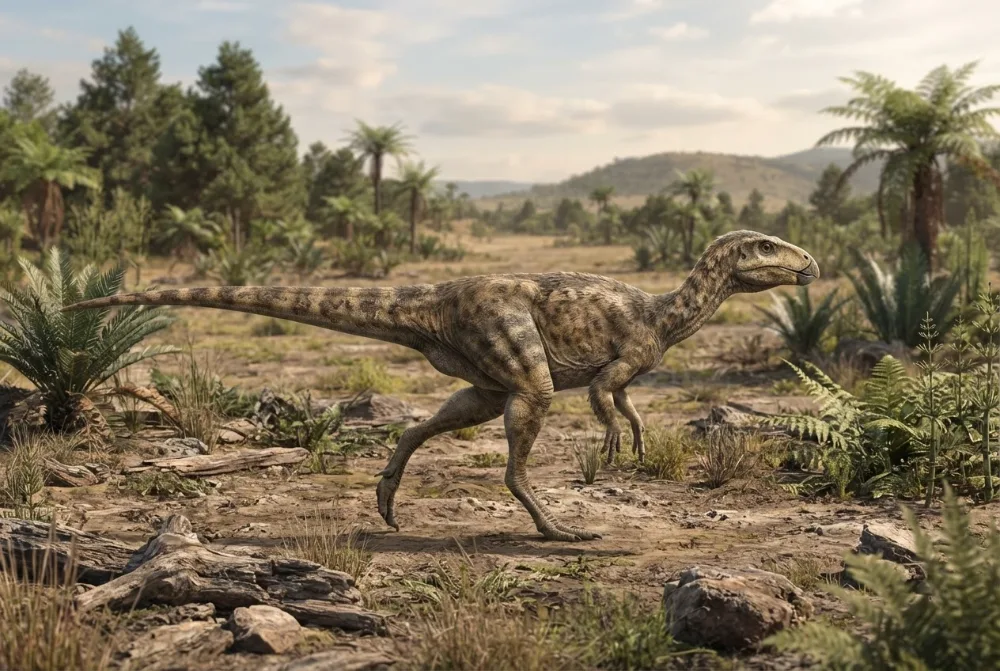
Dysalotosaurus was a small, fast plant-eater that lived in Africa during the Late Jurassic. It ran on two strong legs and had a long tail to help it balance. Thousands of its bones have been found together, suggesting it lived in big herds.1
Yabayeho ryari?
Yanganaga ite?
Yari ndende ite?
Ubutumburuke bwayo bwanganaga iki?
igereranya
Yari iremereye ite?
 ndende nk'imbwa 2,5 zikurikiranye🍌ndende nk'imineke 14 ikurikiranye🍉iremereye nk'imbuto 16 za watermelon🧸iremereye nk'abana 4 bo mu ishuri ry'incuke🎒iremereye nk'abanyeshuri 2,5🏃yashoboraga kwiruka metero 100 mu masegonda 7,8 (umuntu wihuta kurusha abandi akenera 9,6)
Dysalotosaurus yanganaga ite ugereranyije NAWE?
Ni imibare gusa ibarirwa muri mushakisha yawe. Nta kintu kibikwa cyangwa cyoherezwa ahandi.
Yihutaga ite?


Utuntu dushimishije
Dysalotosaurus lived about 152 to 149 million years ago, during the Kimmeridgian stage of the Late Jurassic.2
Thousands of Dysalotosaurus bones have been found in Tanzania, and scientists think a whole herd died together in a single event.1
Dysalotosaurus had a life expectancy of about 20 years and lived in mixed-age herds.1
Young Dysalotosaurus had different teeth than adults, suggesting they ate a mix of plants and small animals before becoming full herbivores.1
Dysalotosaurus held its head pointing straight forward when not feeding, based on CT scans of its braincase.1
All known Dysalotosaurus specimens were not yet fully grown when they died.1
Ibibazo bibazwa cyane kuri Dysalotosaurus
?How big was Dysalotosaurus?
Dysalotosaurus was about 2.5 metres (8.2 ft) long and weighed around 80 kilograms (180 lb).1
?What did Dysalotosaurus eat?
It was a plant-eater, but young Dysalotosaurus may have also eaten small animals before becoming full herbivores.1
?Did Dysalotosaurus live in herds?
Yes, thousands of bones found together suggest it lived in big herds, and a whole herd may have died together.1
?How fast could Dysalotosaurus run?
Its long, powerful hind legs suggest it was a fast runner, but no exact speed is known.1
Ku bazobereye muri dinozore
- Izina rya siyansi
- Dysalotosaurus
- Yiswe na
- Virchow 19193
- Itsinda
- Izirya ibimera zifite umunwa w'inyoni
- Umuryango / ishami
- Dryosauridae3
- Ishyirwa mu byiciro
- Ornithischia > Ornithopoda > Iguanodontia3
- Imyaka y'amabuye
- imyaka miliyoni 152 kugeza 149 (Kimmeridgian)3
- Inzego z'amabuye
- Tendaguru3
- Ibihugu
- Tanzaniya3
- Ibisigazwa byanditswe
- 1 muri The Paleobiology Database3
- Ivumburwa
- Dysalotosaurus was named by Hans Virchow in 1919. The fossils were found between 1909 and 1913 in Tanzania, Africa. The species name honors German army officer Paul von Lettow-Vorbeck.1
- Biracyagibwaho impaka
- Scientists still debate whether Dysalotosaurus was a separate genus or the same as Dryosaurus.1
Aho amakuru yakuwe
- Dysalotosaurus (en.wikipedia.org)
- PBDB Taxon (paleobiodb.org)
- Dysalotosaurus in The Paleobiology Database (CC BY 4.0): imyaka, ahantu, inzego z'amabuye, ishyirwa mu byiciro.
Buri kintu kiri kuri uru rupapuro gifite nimero yerekana aho cyakuwe. Niba hari icyo twibeshye, tubabarire, turi abakunzi ba dinozore, ntituri ikinyamakuru cya siyansi. Tubwire kuri [email protected] tuzagikosora.
 Rex arashonje! Dino Wiki ni umushinga wa papa umwe yakoreye umuhungu we ukunda dinozore, ni ubuntu, nta matangazo kandi nta bigukurikirana. Abantu bakuru bashobora guha Rex akantu ko kurya kugira ngo Dino Wiki ikomeze kuboneka kuri interineti.Gaburira Rex
 Iguanodon
 Tenontosaurus
 Thescelosaurus
 Zalmoxes
 Camptosaurus
 Rhabdodon
 Brachiosaurus
 Diplodocus
 Allosaurus
 Brontosaurus
 Compsognathus
 Camarasaurus