 Uri dinozore iyihe? Umukino w'ibibazo
 Intambara ya dinozore
 Isiganwa rya dinozore
 Imikino mito ya dinozore
 Alubumu ya sitikeri
 Intonde za TOP za dinozore
 Ntungura!
Efraasia
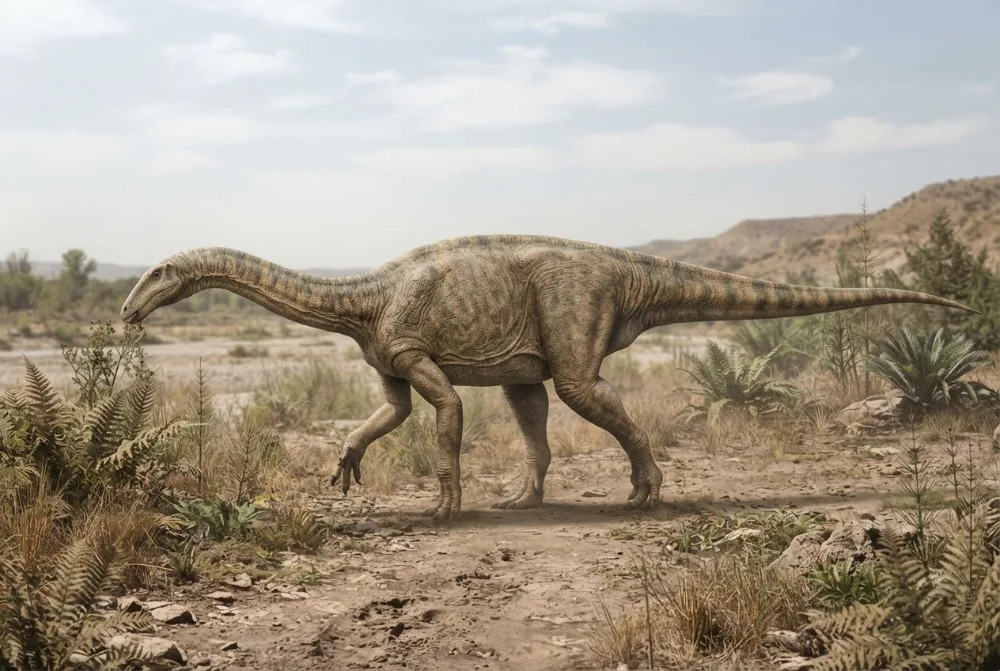
Efraasia was a long-necked plant-eater that lived in what is now Germany about 210 million years ago. It was a medium-sized dinosaur, about 6 to 7 metres long, and could walk on two or four legs. Its name honors the scientist Eberhard Fraas, who collected the first fossils.1
Yabayeho ryari?
Yanganaga ite?
Yari ndende ite?
Ubutumburuke bwayo bwanganaga iki?
igereranya
 ndende nk'imbwa 7 zikurikiranye🍌ndende nk'imineke 39 ikurikiranye🏃yashoboraga kwiruka metero 100 mu masegonda 12 (umuntu wihuta kurusha abandi akenera 9,6)
Efraasia yanganaga ite ugereranyije NAWE?
Ni imibare gusa ibarirwa muri mushakisha yawe. Nta kintu kibikwa cyangwa cyoherezwa ahandi.
Yihutaga ite?


Utuntu dushimishije
Efraasia was once thought to be a small dinosaur only 2 to 3 metres long, but scientists later realized those fossils were from juveniles. Adults grew to about 6.5 metres.1
Its fossils were first mistaken for three different dinosaur species: Teratosaurus minor, Sellosaurus fraasi, and Paleosaurus diagnosticus. In 2003, scientists combined them into one species: Efraasia minor.1
Efraasia had long fingers and a flexible thumb, which it may have used to grasp food. Its wrists were shaped so it could walk on all fours easily.1
The first Efraasia fossils were discovered by a stonemason named Albert Burrer in a quarry near Pfaffenhofen, Germany, between 1906 and 1914.1
Efraasia is a basal sauropodomorph, meaning it is an early relative of the giant long-necked sauropods like Brachiosaurus and Diplodocus.1
Some scientists think Efraasia was an obligate biped, meaning it could only walk on two legs, because its lower arm could not rotate to point its hands downward.1
Ibibazo bibazwa cyane kuri Efraasia
?What did Efraasia eat?
Efraasia was a herbivore, meaning it ate plants. It thrived on the lush vegetation of its time.12
?How big was Efraasia?
Efraasia was a medium sized dinosaur, about 6 to 7 metres long. It weighed between 300 and 600 kilograms.12
Gusenya ibinyoma
Ibivugwa: Efraasia was a meat-eating dinosaur.
Ukuri: Early researchers thought it was a predator, but in 1965 scientists proved it was a plant-eating sauropodomorph.1
Ku bazobereye muri dinozore
- Izina rya siyansi
- Efraasia
- Yiswe na
- Galton 19733
- Itsinda
- Izifite amajosi maremare
- Umuryango / ishami
- Sauropodomorpha3
- Ishyirwa mu byiciro
- Sauropodomorpha3
- Imyaka y'amabuye
- imyaka miliyoni 227 kugeza 206 (Norian)3
- Inzego z'amabuye
- Löwenstein3
- Ibihugu
- Ubudage3
- Ibisigazwa byanditswe
- 5 muri The Paleobiology Database3
- Ivumburwa
- The first fossils were found by Albert Burrer in a quarry near Pfaffenhofen, Germany, starting in 1906. They were later studied by Friedrich von Huene and Eberhard Fraas. The genus Efraasia was named by Peter Galton in 1973 in honor of Fraas.1
- Biracyagibwaho impaka
- Scientists still debate whether Efraasia walked on two legs or four. Some think its wrists allowed it to walk on all fours, while others argue it was an obligate biped.1
Aho amakuru yakuwe
- Efraasia (en.wikipedia.org)
- Efraasia | Exploring the Late Triassic Herbivorous Giant (thedinosaurs.org)
- Efraasia in The Paleobiology Database (CC BY 4.0): imyaka, ahantu, inzego z'amabuye, ishyirwa mu byiciro.
Buri kintu kiri kuri uru rupapuro gifite nimero yerekana aho cyakuwe. Niba hari icyo twibeshye, tubabarire, turi abakunzi ba dinozore, ntituri ikinyamakuru cya siyansi. Tubwire kuri [email protected] tuzagikosora.
 Rex arashonje! Dino Wiki ni umushinga wa papa umwe yakoreye umuhungu we ukunda dinozore, ni ubuntu, nta matangazo kandi nta bigukurikirana. Abantu bakuru bashobora guha Rex akantu ko kurya kugira ngo Dino Wiki ikomeze kuboneka kuri interineti.Gaburira Rex
 Brachiosaurus
 Diplodocus
 Brontosaurus
 Argentinosaurus
 Camarasaurus
 Morosaurus
 Nothosaurus
 Coelophysis
 Podokesaurus
 Simosaurus
 Eudimorphodon
 Herrerasaurus