 Uri dinozore iyihe? Umukino w'ibibazo
 Intambara ya dinozore
 Isiganwa rya dinozore
 Imikino mito ya dinozore
 Alubumu ya sitikeri
 Intonde za TOP za dinozore
 Ntungura!
Fruitadens
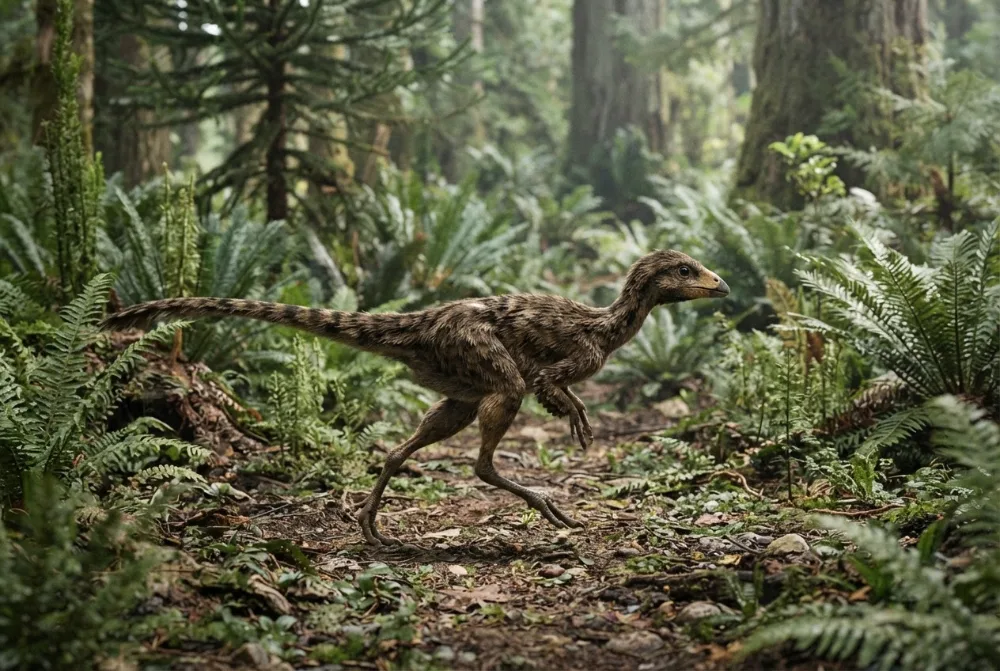
Fruitadens was one of the tiniest plant-eating dinosaurs ever found. It was only as long as a big cat and weighed less than a bag of sugar. This little dinosaur lived in what is now the western United States during the Late Jurassic period.12
Yabayeho ryari?
Yanganaga ite?
Yari ndende ite?
Ubutumburuke bwayo bwanganaga iki?
igereranya
Yari iremereye ite?
Fruitadens yanganaga ite ugereranyije NAWE?
Ni imibare gusa ibarirwa muri mushakisha yawe. Nta kintu kibikwa cyangwa cyoherezwa ahandi.
Yihutaga ite?


Utuntu dushimishije
Fruitadens is the smallest known ornithischian dinosaur, a group that includes many plant-eaters.12
Its lower jaw had an enlarged canine-like tooth, with a gap in the upper jaw for it to fit.1
Unlike many other dinosaurs, Fruitadens had replacement teeth growing in its jaws, like modern mammals.1
The fossils were first found in the 1970s and 1980s by teams from the Natural History Museum of Los Angeles County.1
Fruitadens lived alongside snails, clams, turtles, and early mammals in a floodplain environment.1
Its leg bones were hollow, like those of small meat-eating dinosaurs, which helped keep it light.1
Ibibazo bibazwa cyane kuri Fruitadens
?How big was Fruitadens?
Fruitadens was very small, about 65 to 75 cm long and weighed 0.5 to 0.75 kg. That is about as long as a large house cat and lighter than a bag of sugar.12
?What did Fruitadens eat?
Fruitadens was an omnivore, meaning it ate both plants and small animals. Scientists think it ate select plant material and possibly insects or other invertebrates.13
?When did Fruitadens live?
Fruitadens lived during the Late Jurassic period, about 150 million years ago. Its fossils were found in rocks that are around 150.3 to 150.2 million years old.1
?Where was Fruitadens found?
Fruitadens fossils were found in Colorado, USA, in an area called the Fruita Paleontological Area. The name Fruitadens means 'Fruita teeth' after the town of Fruita.1
?Did Fruitadens have teeth?
Yes, Fruitadens had teeth, including an enlarged canine-like tooth in its lower jaw and a small peg-like tooth in front of it. Unlike many other dinosaurs, it could replace its teeth like modern mammals.1
Ku bazobereye muri dinozore
- Izina rya siyansi
- Fruitadens
- Yiswe na
- Butler et al. 20104
- Itsinda
- Izirya ibimera zifite umunwa w'inyoni
- Umuryango / ishami
- Heterodontosauridae4
- Ishyirwa mu byiciro
- Ornithischia > Heterodontosauridae4
- Imyaka y'amabuye
- imyaka miliyoni 149 kugeza 143 (Tithonian)4
- Inzego z'amabuye
- Morrison4
- Ibihugu
- Amerika4
- Ibisigazwa byanditswe
- 4 muri The Paleobiology Database4
- Ivumburwa
- Fruitadens was named in 2010 by Richard Butler and colleagues. The fossils were found in the Fruita Paleontological Area of Colorado, USA, in rocks about 150 million years old.14
- Biracyagibwaho impaka
- Scientists are still debating exactly what Fruitadens ate, though it likely ate both plants and small animals.12
Aho amakuru yakuwe
- Fruitadens (en.wikipedia.org)
- Lower limits of ornithischian dinosaur body size inferred from a new Upper Jurassic heterodontosaurid from North America | Proceedings B | The Royal Society (royalsocietypublishing.org)
- Small-Bodied Dinosaur Fruitadens haagarorum from the (journals.plos.org)
- Fruitadens in The Paleobiology Database (CC BY 4.0): imyaka, ahantu, inzego z'amabuye, ishyirwa mu byiciro.
Buri kintu kiri kuri uru rupapuro gifite nimero yerekana aho cyakuwe. Niba hari icyo twibeshye, tubabarire, turi abakunzi ba dinozore, ntituri ikinyamakuru cya siyansi. Tubwire kuri [email protected] tuzagikosora.
 Rex arashonje! Dino Wiki ni umushinga wa papa umwe yakoreye umuhungu we ukunda dinozore, ni ubuntu, nta matangazo kandi nta bigukurikirana. Abantu bakuru bashobora guha Rex akantu ko kurya kugira ngo Dino Wiki ikomeze kuboneka kuri interineti.Gaburira Rex
 Iguanodon
 Tenontosaurus
 Thescelosaurus
 Zalmoxes
 Camptosaurus
 Rhabdodon
 Brachiosaurus
 Diplodocus
 Allosaurus
 Brontosaurus
 Compsognathus
 Camarasaurus