 Uri dinozore iyihe? Umukino w'ibibazo
 Intambara ya dinozore
 Isiganwa rya dinozore
 Imikino mito ya dinozore
 Alubumu ya sitikeri
 Intonde za TOP za dinozore
 Ntungura!
Gallodactylus
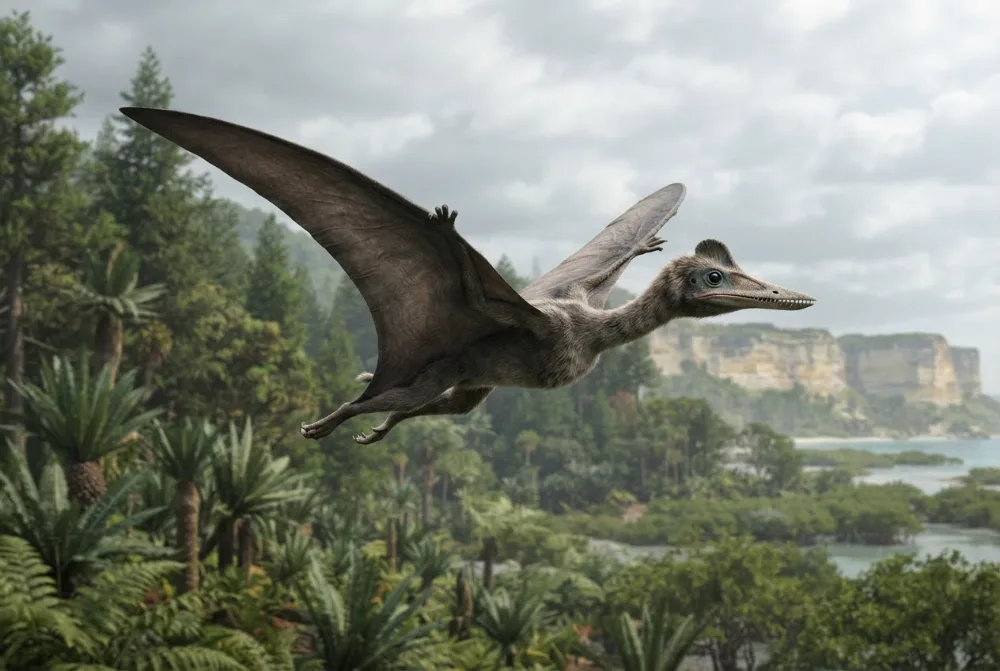
Gallodactylus was a flying reptile that lived near the sea. It had a long beak and probably scooped up fish for dinner. It was not a dinosaur, but a pterosaur.3
Yabayeho ryari?
Yihutaga ite?


Utuntu dushimishije
Gallodactylus lived about 149 to 145 million years ago, during the Late Jurassic period.1
Its name means 'rooster finger', because scientists thought its wing finger looked like a rooster's toe.3
Only one species is known: Gallodactylus canjuersensis.1
The only fossil of Gallodactylus is a partial skeleton found in a limestone quarry in France.1
Some scientists think Gallodactylus might actually be the same animal as Cycnorhamphus.1
Ibibazo bibazwa cyane kuri Gallodactylus
?How big was Gallodactylus?
No exact size is given in the sources, but it was a medium sized pterosaur with a wingspan estimated at about 1.5 metres (5 feet).23
?Did Gallodactylus have teeth?
Yes, it had peg-like teeth at the tips of its jaws, which were blunter and stouter in older individuals.2
Ku bazobereye muri dinozore
- Izina rya siyansi
- Gallodactylus
- Yiswe na
- Fabre 19763
- Itsinda
- Ibikururanda biguruka
- Umuryango / ishami
- Lophocratia3
- Ishyirwa mu byiciro
- Pterosauria > Pterodactyloidea3
- Imyaka y'amabuye
- imyaka miliyoni 149 kugeza 145 (Tithonian)3
- Ibihugu
- Ubufaransa3
- Ibisigazwa byanditswe
- 1 muri The Paleobiology Database3
- Ivumburwa
- Gallodactylus was named by French paleontologist Fabre in 1976, based on a partial skeleton found at the Canjuers-Les Bessons quarry in France.31
- Biracyagibwaho impaka
- Scientists are not sure if Gallodactylus is a separate genus or if it should be called Cycnorhamphus.1
Aho amakuru yakuwe
- PBDB Taxon (paleobiodb.org)
- Cycnorhamphus (Wikipedia) (Wikipedia)
- Gallodactylus in The Paleobiology Database (CC BY 4.0): imyaka, ahantu, inzego z'amabuye, ishyirwa mu byiciro.
Buri kintu kiri kuri uru rupapuro gifite nimero yerekana aho cyakuwe. Niba hari icyo twibeshye, tubabarire, turi abakunzi ba dinozore, ntituri ikinyamakuru cya siyansi. Tubwire kuri [email protected] tuzagikosora.
 Rex arashonje! Dino Wiki ni umushinga wa papa umwe yakoreye umuhungu we ukunda dinozore, ni ubuntu, nta matangazo kandi nta bigukurikirana. Abantu bakuru bashobora guha Rex akantu ko kurya kugira ngo Dino Wiki ikomeze kuboneka kuri interineti.Gaburira Rex
 Pteranodon
 Quetzalcoatlus
 Dorygnathus
 Rhamphorhynchus
 Anhanguera
 Pterodactylus
 Brachiosaurus
 Diplodocus
 Allosaurus
 Brontosaurus
 Compsognathus
 Camarasaurus