 Uri dinozore iyihe? Umukino w'ibibazo
 Intambara ya dinozore
 Isiganwa rya dinozore
 Imikino mito ya dinozore
 Alubumu ya sitikeri
 Intonde za TOP za dinozore
 Ntungura!
Kholumolumo
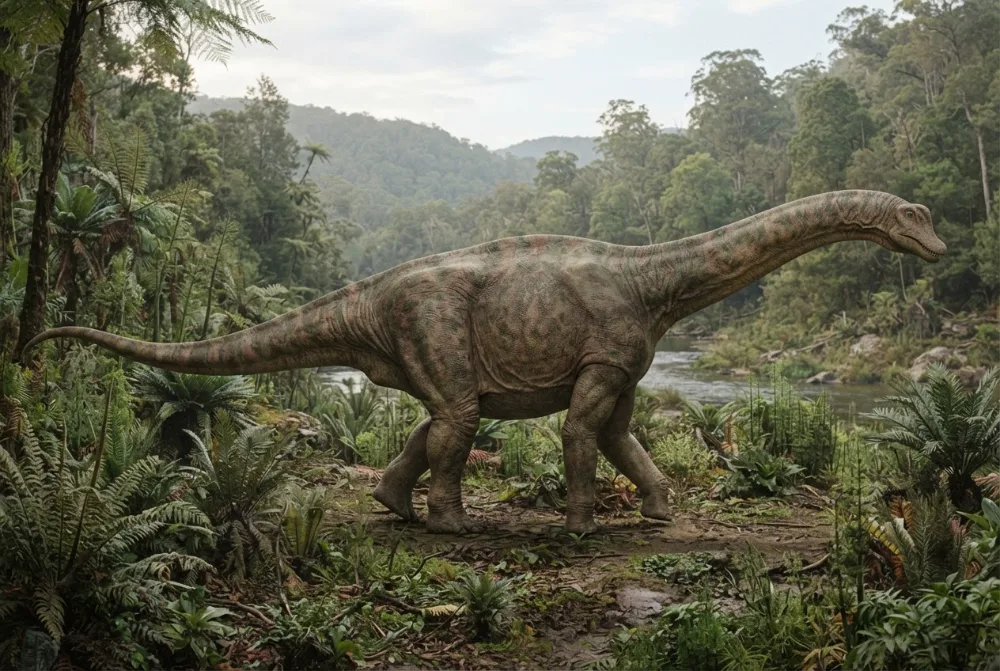
Kholumolumo was a huge, long-necked dinosaur that lived in what is now Lesotho. It was one of the biggest animals of its time, growing up to 9 metres long! Scientists think it walked on two legs and ate plants.12
Yabayeho ryari?
Yanganaga ite?
Yari ndende ite?
Ubutumburuke bwayo bwanganaga iki?
igereranya
Yari iremereye ite?
 ndende nk'imodoka 2 ziparitse ku murongo🍌ndende nk'imineke 50 ikurikiranye
 iremereye nk'imbwa 200🍉iremereye nk'imbuto 790 za watermelon🎒iremereye nk'ibyumba 5 by'amashuri byuzuye abana🐻❄️iremereye nk'idubu 9 zo mu rubura🏃yashoboraga kwiruka metero 100 mu masegonda 16 (umuntu wihuta kurusha abandi akenera 9,6)
Kholumolumo yanganaga ite ugereranyije NAWE?
Ni imibare gusa ibarirwa muri mushakisha yawe. Nta kintu kibikwa cyangwa cyoherezwa ahandi.
Yihutaga ite?


Utuntu dushimishije
Kholumolumo was one of the largest known animals of the Norian stage of the Late Triassic, about 210 million years ago.1
Its shinbone is very short and robust, with a circumference that is 53% of its length. That is a higher ratio than in most other early sauropodomorphs.1
The first bones were found in 1930 by a school principal named Samuel Motsoane, but the main discovery was made in 1955 near a trash heap called Thotobolo ea 'Ma-Beata.1
The fossils represent at least five, probably about ten, individual dinosaurs, making it the most complete sauropodomorph from the lower Elliot Formation.12
Kholumolumo was originally nicknamed 'Thotobolosaurus' which means 'trash heap lizard' because of where it was found.1
Ibibazo bibazwa cyane kuri Kholumolumo
?How big was Kholumolumo?
It grew up to 9 metres (30 ft) long. If it walked on two legs, it weighed about 1754 kg; if on all fours, about 3963 kg.1
?What did Kholumolumo eat?
Scientists think it was a herbivore, meaning it ate plants. This is based on its close relatives like Sarahsaurus.1
?When did Kholumolumo live?
It lived during the Late Triassic, about 210 million years ago, in the Norian stage.1
?Where was Kholumolumo found?
Its fossils were discovered near a trash heap called Thotobolo ea 'Ma-Beata in Maphutseng, Lesotho.1
Gusenya ibinyoma
Ibivugwa: Some people think Kholumolumo was a type of dragon or crocodile.
Ukuri: Kholumolumo was a dinosaur, specifically a sauropodomorph, and not a dragon or crocodile. Its name comes from a Sotho myth about a giant reptile.1
Ku bazobereye muri dinozore
- Izina rya siyansi
- Kholumolumo
- Yiswe na
- Peyre de Fabrègues and Allain 20203
- Itsinda
- Izifite amajosi maremare
- Umuryango / ishami
- Sauropodomorpha3
- Ishyirwa mu byiciro
- Sauropodomorpha3
- Imyaka y'amabuye
- imyaka miliyoni 227 kugeza 206 (Norian)3
- Inzego z'amabuye
- Elliot3
- Ibihugu
- Lesotho3
- Ibisigazwa byanditswe
- 1 muri The Paleobiology Database3
- Ivumburwa
- The first bones were found in 1930 by Samuel Motsoane. In 1955, missionaries Paul and François Ellenberger uncovered a bonebed near Maphutseng, Lesotho. The species was formally named Kholumolumo ellenbergerorum in 2020 by Claire Peyre de Fabrègues and Ronan Allain.1
- Biracyagibwaho impaka
- Scientists are not sure whether Kholumolumo walked on two legs or four legs. The weight estimate changes a lot depending on its posture.1
Aho amakuru yakuwe
- Kholumolumo (en.wikipedia.org)
- [dinosaur] Kholumolumo, new sauropodomorph from Upper Triassic of Lesotho (dml.reptilis.net)
- Kholumolumo in The Paleobiology Database (CC BY 4.0): imyaka, ahantu, inzego z'amabuye, ishyirwa mu byiciro.
Buri kintu kiri kuri uru rupapuro gifite nimero yerekana aho cyakuwe. Niba hari icyo twibeshye, tubabarire, turi abakunzi ba dinozore, ntituri ikinyamakuru cya siyansi. Tubwire kuri [email protected] tuzagikosora.
 Rex arashonje! Dino Wiki ni umushinga wa papa umwe yakoreye umuhungu we ukunda dinozore, ni ubuntu, nta matangazo kandi nta bigukurikirana. Abantu bakuru bashobora guha Rex akantu ko kurya kugira ngo Dino Wiki ikomeze kuboneka kuri interineti.Gaburira Rex
 Brachiosaurus
 Diplodocus
 Brontosaurus
 Argentinosaurus
 Camarasaurus
 Morosaurus
 Nothosaurus
 Coelophysis
 Podokesaurus
 Simosaurus
 Eudimorphodon
 Herrerasaurus