 Uri dinozore iyihe? Umukino w'ibibazo
 Intambara ya dinozore
 Isiganwa rya dinozore
 Imikino mito ya dinozore
 Alubumu ya sitikeri
 Intonde za TOP za dinozore
 Ntungura!
Microcleidus
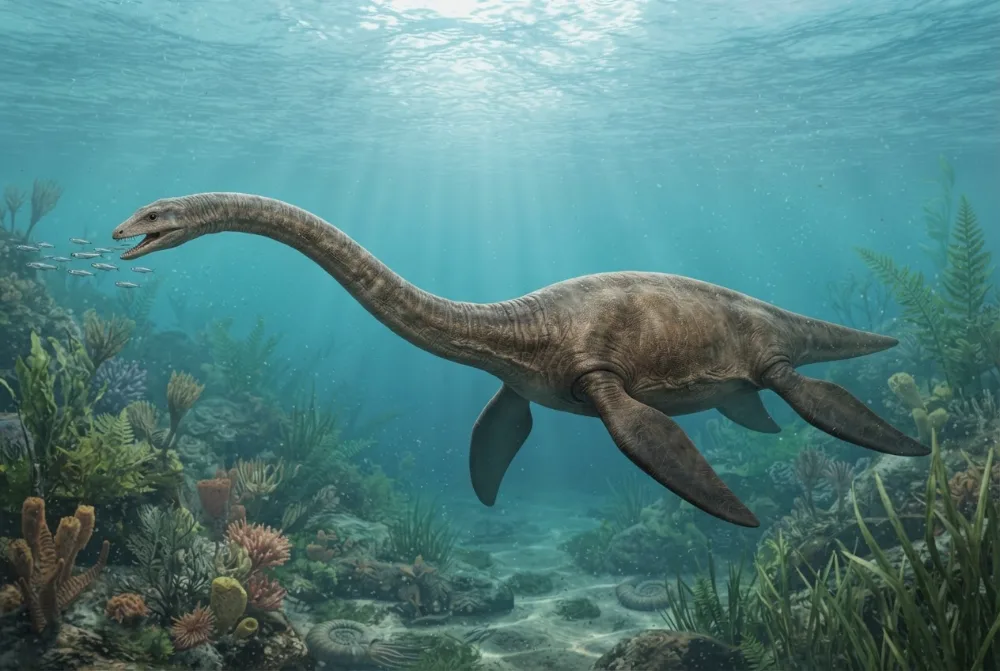
Microcleidus was a long-necked marine reptile that swam in the warm Jurassic seas. It had a small head and a very long neck with 38 to 39 bones. It used its flippers to paddle through the water and catch fish.1
Yabayeho ryari?
Yanganaga ite?
Yari ndende ite?
Yari iremereye ite?
 ndende nk'imbwa 5 zikurikiranye🍌ndende nk'imineke 28 ikurikiranye🍉iremereye nk'imbuto 130 za watermelon🧸iremereye nk'abana 34 bo mu ishuri ry'incuke🎒iremereye nk'abanyeshuri 20🏊yashoboraga koga uburebure bwa pisine nini (50 m) mu masegonda 6,2
Microcleidus yanganaga ite ugereranyije NAWE?
Ni imibare gusa ibarirwa muri mushakisha yawe. Nta kintu kibikwa cyangwa cyoherezwa ahandi.
Yihutaga ite?


Utuntu dushimishije
Microcleidus had a small head only about 23 centimetres (9 inches) long, even though its body could reach over 5 metres.1
Its neck contained 38 to 39 vertebrae, making it a very long-necked plesiosaur.1
Scientists have named at least five species of Microcleidus, including M. homalospondylus and M. macropterus.1
One species, Microcleidus tournemirensis, was once thought to belong to a different genus called Occitanosaurus.5
Microcleidus lived during the Toarcian age of the Jurassic Period, about 184 to 175 million years ago.2
Its fossils have been found in the Alum Shale of England and the Posidonia Shale of Germany.5
The first Microcleidus fossils were originally described as Plesiosaurus homalospondylus by Richard Owen in 1865.1
Ibibazo bibazwa cyane kuri Microcleidus
?How big was Microcleidus?
The largest species, Microcleidus homalospondylus, measured about 5.1 metres (17 feet) long and weighed around 650 kilograms (1,430 pounds). Other species were smaller, like M. tournemirensis at about 4 metres (13 feet) and 300 kilograms (660 pounds).3
?What did Microcleidus eat?
Microcleidus was a carnivore that likely ate fish and other small sea creatures. It used its long neck and small head to snap up prey while swimming.5
Ku bazobereye muri dinozore
- Izina rya siyansi
- Microcleidus
- Yiswe na
- Watson 19095
- Itsinda
- Plesiyozore
- Umuryango / ishami
- Microcleididae5
- Ishyirwa mu byiciro
- Plesiosauria > Sauropterygia5
- Imyaka y'amabuye
- imyaka miliyoni 184 kugeza 175 (Toarcian)5
- Inzego z'amabuye
- Alum Shale, Posidonia Shale5
- Ibihugu
- Ubwongereza, Ubudage, Ubufaransa, Lugizamburu5
- Ibisigazwa byanditswe
- 9 muri The Paleobiology Database5
- Izwi kandi ku izina rya
- Occitanosaurus (amazina ya kera ubu abarwa nk'inyamaswa imwe)5
- Ivumburwa
- The name Microcleidus was given by D. M. S. Watson in 1909 for fossils that had earlier been called Plesiosaurus. The first species, M. homalospondylus, was originally described by Richard Owen in 1865.51
- Biracyagibwaho impaka
- Scientists are not sure whether some species, like Hydrorion brachypterygius, should really be placed in Microcleidus.1
Aho amakuru yakuwe
- Microcleidus, Plesiosaur Directory (plesiosauria.com)
- PBDB Taxon (paleobiodb.org)
- Microcleidus (en.wikipedia.org)
- Microcleidus (en.wikipedia.org)
- Microcleidus in The Paleobiology Database (CC BY 4.0): imyaka, ahantu, inzego z'amabuye, ishyirwa mu byiciro.
Buri kintu kiri kuri uru rupapuro gifite nimero yerekana aho cyakuwe. Niba hari icyo twibeshye, tubabarire, turi abakunzi ba dinozore, ntituri ikinyamakuru cya siyansi. Tubwire kuri [email protected] tuzagikosora.
 Rex arashonje! Dino Wiki ni umushinga wa papa umwe yakoreye umuhungu we ukunda dinozore, ni ubuntu, nta matangazo kandi nta bigukurikirana. Abantu bakuru bashobora guha Rex akantu ko kurya kugira ngo Dino Wiki ikomeze kuboneka kuri interineti.Gaburira Rex
 Elasmosaurus
 Pliosaurus
 Plesiosaurus
 Cimoliasaurus
 Colymbosaurus
 Trinacromerum
 Dilophosaurus
 Stenopterygius
 Dorygnathus
 Lufengosaurus
 Scutellosaurus
 Yunnanosaurus