 Uri dinozore iyihe? Umukino w'ibibazo
 Intambara ya dinozore
 Isiganwa rya dinozore
 Imikino mito ya dinozore
 Alubumu ya sitikeri
 Intonde za TOP za dinozore
 Ntungura!
Petrodactyle
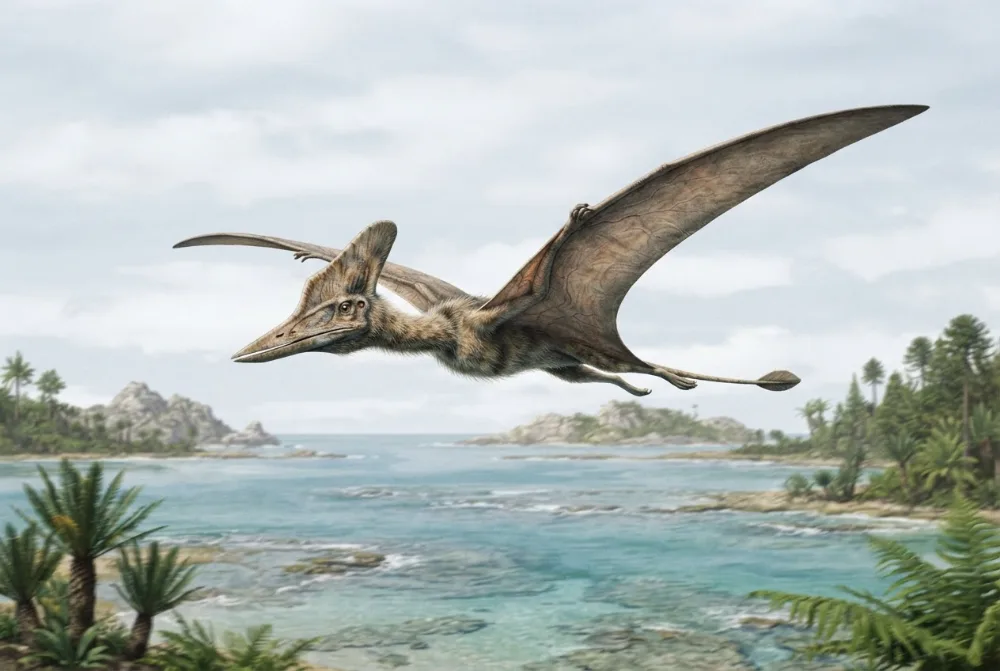
Petrodactyle was a flying reptile that lived in the Late Jurassic period, about 150 million years ago. It had a wingspan of about 2.1 metres (6.9 feet), making it one of the largest pterosaurs from the Solnhofen area of Germany. It also had one of the biggest bony crests on its head of any Jurassic pterosaur.1
Yabayeho ryari?
Yanganaga ite?
Amababa yayo yari arambuye angana iki?
 ndende nk'injangwe 4 zo mu rugo zikurikiranye⚽yashoboraga kuguruka ikambuka ikibuga cyose cy'umupira w'amaguru mu masegonda 7,9
Petrodactyle yanganaga ite ugereranyije NAWE?
Ni imibare gusa ibarirwa muri mushakisha yawe. Nta kintu kibikwa cyangwa cyoherezwa ahandi.
Yihutaga ite?


Utuntu dushimishije
Petrodactyle is one of the largest pterosaurs known from the Jurassic period, with a wingspan of about 2.1 metres (6.9 feet).1
It had a large bony crest on the back of its skull, which helped give it a powerful bite.1
Its teeth were short and spike-like, and only found in the front half of its jaws. This suggests it grabbed prey with a strong grip.1
Petrodactyle had long legs and could probably wade in shallow water to hunt.1
The only known fossil was found in 2010 in a public quarry in Germany. It is a mostly complete skeleton of a subadult.1
The name Petrodactyle means 'stone finger', a nod to the first pterosaur ever named, Pterodactylus.1
Ibibazo bibazwa cyane kuri Petrodactyle
?What did Petrodactyle eat?
Petrodactyle was a carnivore, likely feeding on small fish, crustaceans, and other small prey. Its strong bite and spike-like teeth helped it grab slippery food.1
?How big was Petrodactyle?
Petrodactyle had a wingspan of about 2.1 metres (6.9 feet), making it one of the largest pterosaurs from the Solnhofen area and one of the largest Jurassic pterosaurs.21
?Where did Petrodactyle live?
Petrodactyle lived in what is now Germany about 150 million years ago, during the Late Jurassic. Its fossils were found in the Mörnsheim Formation in Bavaria.23
?Why did Petrodactyle have a crest?
The large bony crest on Petrodactyle's skull likely helped anchor jaw muscles, giving it a stronger bite. It may have also been used for display.1
Ku bazobereye muri dinozore
- Izina rya siyansi
- Petrodactyle
- Yiswe na
- Hone et al. 20234
- Itsinda
- Ibikururanda biguruka
- Umuryango / ishami
- Gallodactylidae4
- Ishyirwa mu byiciro
- Pterosauria > Pterodactyloidea4
- Imyaka y'amabuye
- imyaka miliyoni 149 kugeza 145 (Tithonian)4
- Inzego z'amabuye
- Mörnsheim4
- Ibihugu
- Ubudage4
- Ibisigazwa byanditswe
- 1 muri The Paleobiology Database4
- Ivumburwa
- Petrodactyle was named in 2023 by David Hone, René Lauer, and Frederik Spindler. The only known fossil was found in 2010 in a public quarry in Bavaria, Germany, by Günther Zehetner.1
- Biracyagibwaho impaka
- Scientists are not sure exactly what Petrodactyle ate. It may have been a fish-eater, but its strong bite and worn tooth tips suggest it also ate hard-shelled animals like crustaceans.1
Aho amakuru yakuwe
- A new Solnhofen pterosaur (palaeo-electronica.org)
- Petrodactyle (en.wikipedia.org)
- Jurassic Pterosaur Had Giant Bony Crest on Its Head | Sci.News (sci.news)
- Petrodactyle in The Paleobiology Database (CC BY 4.0): imyaka, ahantu, inzego z'amabuye, ishyirwa mu byiciro.
Buri kintu kiri kuri uru rupapuro gifite nimero yerekana aho cyakuwe. Niba hari icyo twibeshye, tubabarire, turi abakunzi ba dinozore, ntituri ikinyamakuru cya siyansi. Tubwire kuri [email protected] tuzagikosora.
 Rex arashonje! Dino Wiki ni umushinga wa papa umwe yakoreye umuhungu we ukunda dinozore, ni ubuntu, nta matangazo kandi nta bigukurikirana. Abantu bakuru bashobora guha Rex akantu ko kurya kugira ngo Dino Wiki ikomeze kuboneka kuri interineti.Gaburira Rex
 Pteranodon
 Quetzalcoatlus
 Dorygnathus
 Rhamphorhynchus
 Anhanguera
 Pterodactylus
 Brachiosaurus
 Diplodocus
 Allosaurus
 Brontosaurus
 Compsognathus
 Camarasaurus