 Uri dinozore iyihe? Umukino w'ibibazo
 Intambara ya dinozore
 Isiganwa rya dinozore
 Imikino mito ya dinozore
 Alubumu ya sitikeri
 Intonde za TOP za dinozore
 Ntungura!
Saturnalia
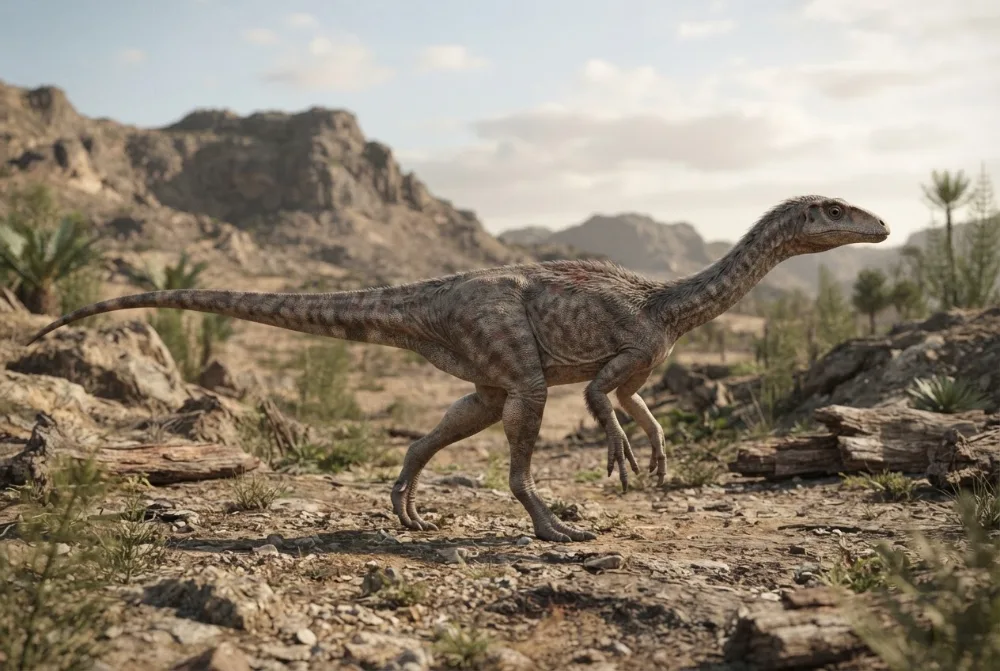
Saturnalia was one of the very first dinosaurs to ever walk the Earth. It was a small, speedy plant-eater that lived in what is now Brazil about 233 million years ago. Scientists have found several skeletons, making it one of the best-known early dinosaurs.1
Yabayeho ryari?
Yanganaga ite?
Yari ndende ite?
Ubutumburuke bwayo bwanganaga iki?
igereranya
Yari iremereye ite?
 ndende nk'injangwe 3 zo mu rugo zikurikiranye🍌ndende nk'imineke 8 ikurikiranye🍌iremereye nk'imineke 92🏃yashoboraga kwiruka metero 100 mu masegonda 13 (umuntu wihuta kurusha abandi akenera 9,6)
Saturnalia yanganaga ite ugereranyije NAWE?
Ni imibare gusa ibarirwa muri mushakisha yawe. Nta kintu kibikwa cyangwa cyoherezwa ahandi.
Yihutaga ite?


Utuntu dushimishije
Saturnalia was only about 1.5 metres (4.9 feet) long, about the size of a large dog.1
Its skull was only about 10 centimetres (3.9 inches) long, giving it a tiny head compared to its body.1
Saturnalia had a long neck made of nine or ten vertebrae, which was about half the length of its trunk.1
It lived at the same time as the meat-eating dinosaur Staurikosaurus, which may have hunted it.1
Saturnalia is one of the oldest dinosaurs ever found, dating back to about 233 million years ago.1
The fossils were collected during the Brazilian Carnival, which is why scientists named it after the Roman festival Saturnalia.1
Gusenya ibinyoma
Ibivugwa: Saturnalia was a plant-eater like later sauropodomorphs.
Ukuri: Scientists now think Saturnalia was probably an omnivore or carnivore, eating insects and small animals, based on its teeth and skull shape.1
Ku bazobereye muri dinozore
- Izina rya siyansi
- Saturnalia
- Yiswe na
- Langer et al. 19992
- Itsinda
- Izifite amajosi maremare
- Umuryango / ishami
- Saturnaliidae2
- Ishyirwa mu byiciro
- Sauropodomorpha2
- Imyaka y'amabuye
- imyaka miliyoni 237 kugeza 227 (Carnian)2
- Inzego z'amabuye
- Santa Maria, Pebbly Arkose2
- Ibihugu
- Burezili, Zimbabwe2
- Ibisigazwa byanditswe
- 3 muri The Paleobiology Database2
- Ivumburwa
- Saturnalia was named in 1999 by Max Cardoso Langer and his team, based on three skeletons found in the Santa Maria Formation of Brazil during the 1998 Carnival.1
- Biracyagibwaho impaka
- Scientists still debate whether Saturnalia was a true sauropodomorph or more closely related to theropods, because it has a mix of features from both groups.1
Aho amakuru yakuwe
- Saturnalia tupiniquim (en.wikipedia.org)
- Saturnalia in The Paleobiology Database (CC BY 4.0): imyaka, ahantu, inzego z'amabuye, ishyirwa mu byiciro.
Buri kintu kiri kuri uru rupapuro gifite nimero yerekana aho cyakuwe. Niba hari icyo twibeshye, tubabarire, turi abakunzi ba dinozore, ntituri ikinyamakuru cya siyansi. Tubwire kuri [email protected] tuzagikosora.
 Rex arashonje! Dino Wiki ni umushinga wa papa umwe yakoreye umuhungu we ukunda dinozore, ni ubuntu, nta matangazo kandi nta bigukurikirana. Abantu bakuru bashobora guha Rex akantu ko kurya kugira ngo Dino Wiki ikomeze kuboneka kuri interineti.Gaburira Rex
 Brachiosaurus
 Diplodocus
 Brontosaurus
 Argentinosaurus
 Camarasaurus
 Morosaurus
 Nothosaurus
 Coelophysis
 Podokesaurus
 Simosaurus
 Eudimorphodon
 Herrerasaurus