 Uri dhino ripi? Kwizi
 Hondo yemadhino
 Mujaho wemadhino
 Mitambo midiki yemadhino
 Arubhamu yemasitika
 Rondedzero dzeTOP dzemadhino
 Ndishamise!
Rairarama rini?

Raiva hombe sei?
Rairema zvakadii?
Avisaurus raiva hombe sei kana richienzaniswa NEWE?
Masvomhu chete mubrowser yako. Hapana chinochengetwa kana kutumirwa kupi zvako.
Raimhanya zvakadii?


Zvinonakidza
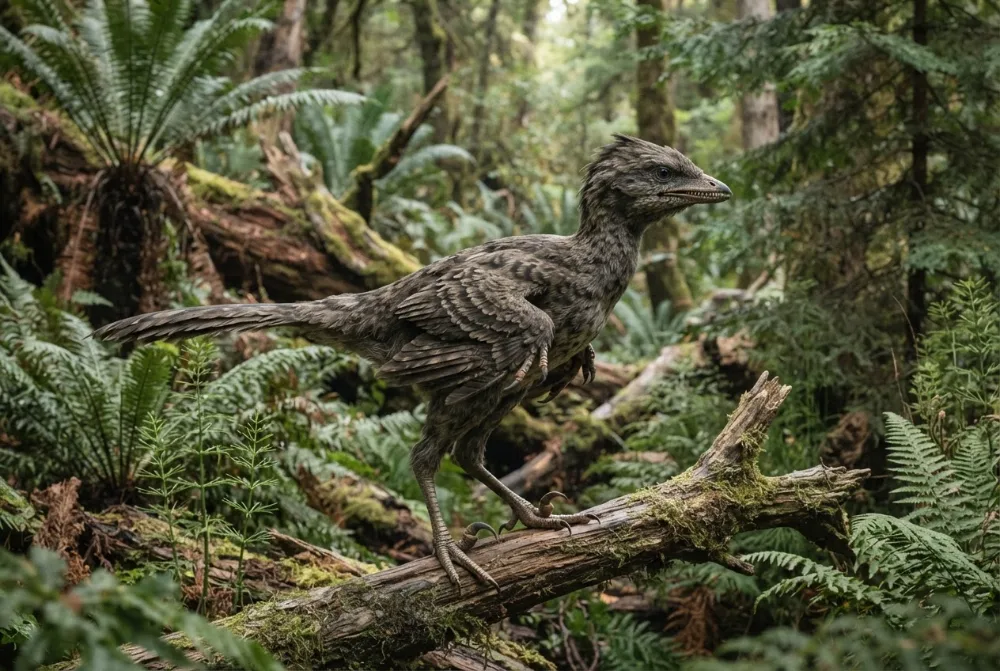
Avisaurus lived about 68 to 66 million years ago, right before the dinosaurs went extinct.1
It was one of the largest enantiornithine birds, weighing up to 1.7 kilograms (3.7 pounds).1
The first fossil of Avisaurus was a single foot bone called a tarsometatarsus, found in Montana in 1975.1
Scientists first thought Avisaurus was a non-avian dinosaur, but later realized it was an ancient bird.1
Avisaurus had curved claws on its feet, similar to those of raptor dinosaurs, which helped it catch prey.1
It lived in swamps and river basins along the western shore of a huge sea that split North America.1
Mibvunzo inonyanya kubvunzwa nezve Avisaurus
?Was Avisaurus a dinosaur?
Yes, Avisaurus was a dinosaur. All birds are members of the dinosaur group, and Avisaurus was an enantiornithine bird.1
?How big was Avisaurus?
Avisaurus was a large enantiornithine bird. Avisaurus darwini weighed up to 1.2 kilograms (2.6 pounds), and Avisaurus archibaldi weighed up to 1.7 kilograms (3.7 pounds).1
?What did Avisaurus eat?
Avisaurus was a predator that likely ate other vertebrates. Its curved claws and foot bones suggest it could catch and carry prey, similar to modern hawks and owls.12
?When did Avisaurus live?
Avisaurus lived about 68 to 66 million years ago, during the Late Cretaceous period. It was one of the last enantiornithine birds before the non avian dinosaurs went extinct.1
?Where was Avisaurus found?
Avisaurus fossils have been found in the Hell Creek Formation of Montana, USA. The first fossil was a single foot bone collected in 1975 in Garfield County.1
Mubvisi wengano
Ngano: Avisaurus was a dinosaur.
Chokwadi: Avisaurus was actually an ancient bird, part of a group called enantiornithines. It was a bird-like dinosaur, but not a non-avian dinosaur.1
Zvevanyanzvi vemadhino
- Zita resainzi
- Avisaurus
- Akaripa zita:
- Brett-Surman and Paul 19854
- Boka
- Shiri dzekutanga
- Mhuri / boka
- Avisauridae4
- Kurongwa kwemhuka
- Theropoda > Avialae4
- Zera rematombo
- makore mamiriyoni 72 kusvika 66 (Maastrichtian)4
- Mapoka ematombo
- Hell Creek4
- Nyika
- Amerika4
- Zvinyorwa zvemafosiri
- 2 mu The Paleobiology Database4
- Kuwanikwa
- Avisaurus was named in 1985 by paleontologists Brett-Surman and Paul. The first fossil, a foot bone, was found in 1975 by J. David Archibald in the Hell Creek Formation of Montana.14
- Zvichiri kupokanwa
- Scientists are not sure exactly how Avisaurus used its claws, whether for hunting or climbing.1
Kunobva chokwadi
- Avisaurus (en.wikipedia.org)
- Predatory birds from the same fossil formation as SUE the T. rex - Field Museum (fieldmuseum.org)
- New enantiornithine diversity in the Hell Creek Formation and the functional morphology of the avisaurid tarsometatarsus (pmc.ncbi.nlm.nih.gov)
- Avisaurus in The Paleobiology Database (CC BY 4.0): zera, nzvimbo, mapoka ematombo, kurongwa kwemhuka.
Chokwadi chega chega papeji ino chine nhamba inoratidza kwachakabva. Kana takakanganisa chimwe chinhu, ruregerero, tiri vanoda madhino, kwete magazini yesainzi. Tiudze pa [email protected] tichazvigadzirisa.
 Rex ane nzara! Dino Wiki ipurojekiti yababa yemwanakomana wavo anoda madhino, mahara, pasina kushambadza uye pasina zvinokutevera. Vakuru vanogona kupa Rex chekudyadya kuti vabatsire kuchengeta saiti iri pamhepo.Fudza Rex
 Archaeopteryx
 Hesperornis
 Ichthyornis
 Baptornis
 Jurapteryx
 Gobipteryx
 Tyrannosaurus
 Triceratops
 Velociraptor
 Spinosaurus
 Ankylosaurus
 Parasaurolophus