 Uri dhino ripi? Kwizi
 Hondo yemadhino
 Mujaho wemadhino
 Mitambo midiki yemadhino
 Arubhamu yemasitika
 Rondedzero dzeTOP dzemadhino
 Ndishamise!
Dunhuangia
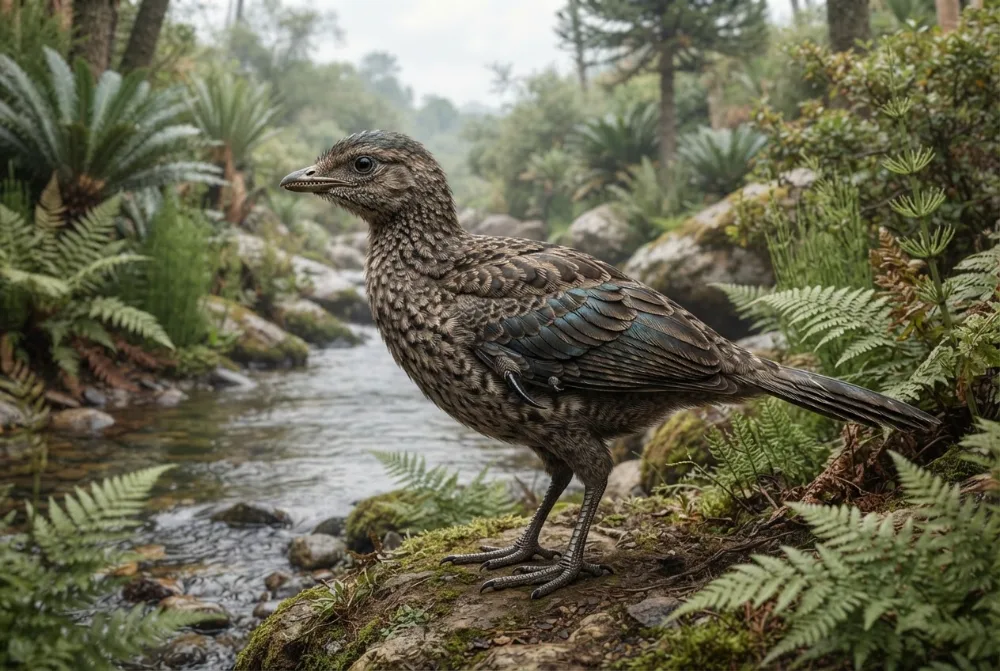
Dunhuangia was a bird that lived during the Early Cretaceous, about 121 to 113 million years ago. It was a medium-sized enantiornithine bird, a group that was very common during the time of dinosaurs. Dunhuangia had special bones in its chest that made it different from other birds.21
Rairarama rini?
Raimhanya zvakadii?


Zvinonakidza
Dunhuangia is only the second enantiornithine bird species ever named from the Changma Basin in China.1
Its fossil includes parts of the forelimbs, shoulder girdle, and breastbone, but the skull is missing.3
The end of its breastbone had a deep notch with two side projections, a feature that helps scientists tell it apart from other enantiornithine birds.1
Dunhuangia lived alongside many other animals, including fish, salamanders, turtles, and other birds like Gansus.1
The Changma Basin where Dunhuangia was found is one of the few places where more advanced ornithuromorph birds outnumbered enantiornithines like Dunhuangia.1
Scientists think Dunhuangia was a ground-dwelling bird that could fly actively.2
Zvevanyanzvi vemadhino
- Zita resainzi
- Dunhuangia
- Akaripa zita:
- Wang et al. 20154
- Boka
- Shiri dzekutanga
- Mhuri / boka
- Enantiornithes4
- Kurongwa kwemhuka
- Theropoda > Avialae4
- Zera rematombo
- makore mamiriyoni 121 kusvika 113 (Aptian)4
- Mapoka ematombo
- Xiagou4
- Nyika
- China4
- Zvinyorwa zvemafosiri
- 1 mu The Paleobiology Database4
- Kuwanikwa
- Dunhuangia was named and described in 2015 by Wang Min, Li Daqing, Jingmai Kathleen O'Connor, Zhou Zhonghe, and You Hailu. The species name cuii honors Cui Guihai, who prepared many bird fossils from the Changma Basin.31
- Zvichiri kupokanwa
- Scientists are still debating whether the Changma avifauna represents a transitional stage in the dominance of ornithuromorph birds over enantiornithines like Dunhuangia.1
Kunobva chokwadi
- Second species of enantiornithine bird from the Lower Cretaceous Changma Basin, northwestern China with implications for the taxonomic diversity of the Changma avifauna (sciencedirect.com)
- PBDB Taxon (paleobiodb.org)
- Dunhuangia (en.wikipedia.org)
- Dunhuangia in The Paleobiology Database (CC BY 4.0): zera, nzvimbo, mapoka ematombo, kurongwa kwemhuka.
Chokwadi chega chega papeji ino chine nhamba inoratidza kwachakabva. Kana takakanganisa chimwe chinhu, ruregerero, tiri vanoda madhino, kwete magazini yesainzi. Tiudze pa [email protected] tichazvigadzirisa.
 Rex ane nzara! Dino Wiki ipurojekiti yababa yemwanakomana wavo anoda madhino, mahara, pasina kushambadza uye pasina zvinokutevera. Vakuru vanogona kupa Rex chekudyadya kuti vabatsire kuchengeta saiti iri pamhepo.Fudza Rex
 Archaeopteryx
 Hesperornis
 Ichthyornis
 Baptornis
 Jurapteryx
 Gobipteryx
 Stegosaurus
 Iguanodon
 Giganotosaurus
 Microraptor
 Deinonychus
 Baryonyx