 Uri dhino ripi? Kwizi
 Hondo yemadhino
 Mujaho wemadhino
 Mitambo midiki yemadhino
 Arubhamu yemasitika
 Rondedzero dzeTOP dzemadhino
 Ndishamise!
Gobihadros
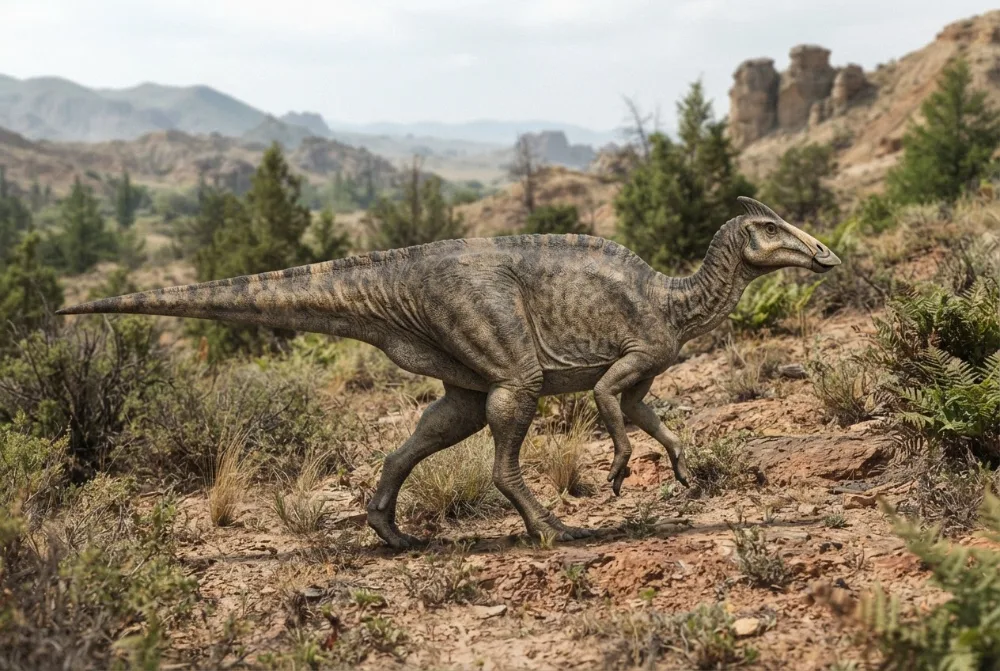
Gobihadros was a small, plant-eating dinosaur that lived in what is now Mongolia. It had a beak like a duck and could walk on two legs or all fours. Scientists found a nearly complete skeleton, so we know a lot about its body.1
Rairarama rini?
Raiva hombe sei?
Raiva refu zvakadii?
Raiva rakakwirira zvakadii?
fungidziro
 kureba seimbwa 8 kubva pamhino kusvika kumuswe🍌kureba semabhanana 42 akatevedzana🏃raigona kumhanya mamita 100 mumasekonzi 12 (munhu anomhanya kupfuura vose anoda 9.6)
Gobihadros raiva hombe sei kana richienzaniswa NEWE?
Masvomhu chete mubrowser yako. Hapana chinochengetwa kana kutumirwa kupi zvako.
Raimhanya zvakadii?


Zvinonakidza
Gobihadros is the first non-hadrosaurid hadrosauroid from the Late Cretaceous of central Asia known from a complete, articulated skull and skeleton.1
It had up to three functional teeth in each tooth position in its lower jaw, which is unusual for a hadrosauroid.1
The upper jaw of Gobihadros had a 'double-layer' oral margin, a feature also seen in later hadrosaurids.1
Its ilium (hip bone) had a sigmoidal (S-shaped) upper outline and a fan-shaped rear process, which helped scientists identify it as a new species.1
Gobihadros had a spike-like thumb claw on its hand, which it may have used for defense or digging.1
The fossils were collected by a joint Mongolian-Japanese expedition between 1993 and 2004.1
Mibvunzo inonyanya kubvunzwa nezve Gobihadros
?How big was Gobihadros?
About 7.5 metres (25 feet) long for the largest fully grown individuals, though some specimens were smaller, like 3 metres (9.8 feet) for an immature one.3
?What did Gobihadros eat?
It was a plant-eater. It had a beak like a duck and up to three functional teeth in each spot in its lower jaw to chew plants.3
?Did Gobihadros have a thumb spike?
Yes, it had a conical, spike-like claw on its first finger, which it may have used for defense or digging.3
?When did Gobihadros live?
It lived during the Late Cretaceous period, about 100 to 84 million years ago (Cenomanian to Santonian stages).3
Zvevanyanzvi vemadhino
- Zita resainzi
- Gobihadros
- Akaripa zita:
- Tsogtbaatar et al. 20194
- Boka
- Vanodya miriwo vane miromo
- Mhuri / boka
- Hadrosauroidea4
- Kurongwa kwemhuka
- Ornithischia > Ornithopoda > Iguanodontia4
- Zera rematombo
- makore mamiriyoni 100 kusvika 84 (Cenomanian / Santonian)4
- Mapoka ematombo
- Baynshire4
- Nyika
- Mongolia4
- Zvinyorwa zvemafosiri
- 6 mu The Paleobiology Database4
- Kuwanikwa
- Gobihadros was named in 2019 by Khishigjav Tsogtbaatar, David B. Weishampel, David C. Evans, and Mahito Watabe. The type specimen, a nearly complete skeleton, was found at Bayshin Tsav in the Gobi Desert, Mongolia.41
- Zvichiri kupokanwa
- Scientists are not sure whether Gobihadros was a direct ancestor of later hadrosaurids or just a close cousin.1
Kunobva chokwadi
- journals.plos.org (journals.plos.org)
- PBDB Taxon (paleobiodb.org)
- Gobihadros (en.wikipedia.org)
- Gobihadros in The Paleobiology Database (CC BY 4.0): zera, nzvimbo, mapoka ematombo, kurongwa kwemhuka.
Chokwadi chega chega papeji ino chine nhamba inoratidza kwachakabva. Kana takakanganisa chimwe chinhu, ruregerero, tiri vanoda madhino, kwete magazini yesainzi. Tiudze pa [email protected] tichazvigadzirisa.
 Rex ane nzara! Dino Wiki ipurojekiti yababa yemwanakomana wavo anoda madhino, mahara, pasina kushambadza uye pasina zvinokutevera. Vakuru vanogona kupa Rex chekudyadya kuti vabatsire kuchengeta saiti iri pamhepo.Fudza Rex
 Iguanodon
 Tenontosaurus
 Thescelosaurus
 Zalmoxes
 Camptosaurus
 Rhabdodon
 Tyrannosaurus
 Triceratops
 Velociraptor
 Spinosaurus
 Ankylosaurus
 Parasaurolophus