 Uri dhino ripi? Kwizi
 Hondo yemadhino
 Mujaho wemadhino
 Mitambo midiki yemadhino
 Arubhamu yemasitika
 Rondedzero dzeTOP dzemadhino
 Ndishamise!
Imparavis
Imparavis was a tiny, toothless bird that lived about 120 million years ago in what is now China. It was one of the first of its kind to lose its teeth, and it had strong wings that might have let it flap really fast, like a modern quail or puffin.2
Rairarama rini?
Raiva hombe sei?
Raiva refu zvakadii?
Raiva rakakwirira zvakadii?
fungidziro
Imparavis raiva hombe sei kana richienzaniswa NEWE?
Masvomhu chete mubrowser yako. Hapana chinochengetwa kana kutumirwa kupi zvako.
Raimhanya zvakadii?


Zvinonakidza
Imparavis is the earliest known toothless bird from a group called enantiornithines, or 'opposite birds'. Scientists used to think toothlessness in this group appeared only about 72 million years ago, but Imparavis pushes that back by 48 to 50 million years.2
Its name means 'odd bird' in Latin, and it was named after the famous naturalist Sir David Attenborough.1
Imparavis had a large bony crest on its upper arm bone where muscles attached. This might have let it flap its wings with extra power, similar to modern birds like puffins or quails.2
The fossil was found by an amateur collector and donated to the Shandong Tianyu Museum of Nature in China.2
Imparavis lived alongside many other early birds and dinosaurs in the Early Cretaceous period, about 120 million years ago.13
Unlike most other enantiornithines, which lived mainly in trees, Imparavis might have spent time on the ground foraging for food, like a modern robin.2
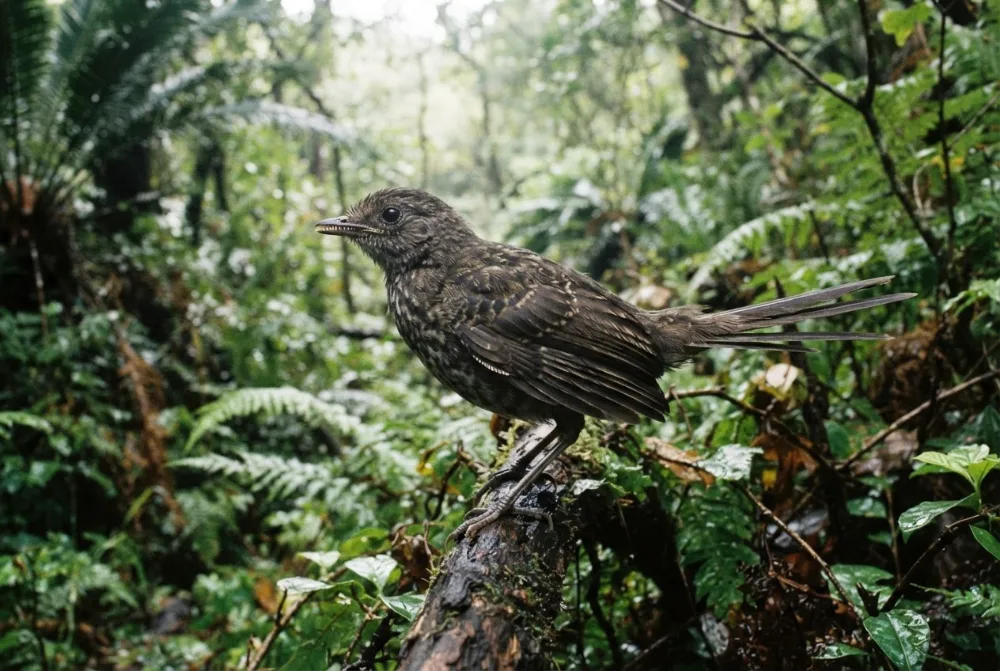
Mubvisi wengano
Ngano: All early birds had teeth.
Chokwadi: Imparavis shows that some early birds, like enantiornithines, lost their teeth much earlier than scientists thought. It was toothless about 120 million years ago.2
Zvevanyanzvi vemadhino
- Zita resainzi
- Imparavis
- Akaripa zita:
- Wang et al. 20244
- Boka
- Shiri dzekutanga
- Mhuri / boka
- Enantiornithes4
- Kurongwa kwemhuka
- Theropoda > Avialae4
- Zera rematombo
- makore mamiriyoni 121 kusvika 120 (Aptian)4
- Mapoka ematombo
- Jiufotang4
- Nyika
- China4
- Zvinyorwa zvemafosiri
- 1 mu The Paleobiology Database4
- Kuwanikwa
- Imparavis was named in 2024 by Wang and colleagues. The fossil was found by an amateur collector near Toudaoyingzi village in China and later studied by scientists at the Field Museum and Shandong Tianyu Museum.12
- Zvichiri kupokanwa
- Scientists are still debating why Imparavis lost its teeth and what it ate, since its toothless beak and lack of a gizzard make its diet unclear.2
Kunobva chokwadi
- Imparavis (en.wikipedia.org)
- Fossil named “Attenborough’s strange bird” was the first of its kind without teeth - Field Museum (fieldmuseum.org)
- PBDB Taxon (paleobiodb.org)
- Imparavis in The Paleobiology Database (CC BY 4.0): zera, nzvimbo, mapoka ematombo, kurongwa kwemhuka.
Chokwadi chega chega papeji ino chine nhamba inoratidza kwachakabva. Kana takakanganisa chimwe chinhu, ruregerero, tiri vanoda madhino, kwete magazini yesainzi. Tiudze pa [email protected] tichazvigadzirisa.
 Rex ane nzara! Dino Wiki ipurojekiti yababa yemwanakomana wavo anoda madhino, mahara, pasina kushambadza uye pasina zvinokutevera. Vakuru vanogona kupa Rex chekudyadya kuti vabatsire kuchengeta saiti iri pamhepo.Fudza Rex
 Archaeopteryx
 Hesperornis
 Ichthyornis
 Baptornis
 Jurapteryx
 Gobipteryx
 Stegosaurus
 Iguanodon
 Giganotosaurus
 Microraptor
 Deinonychus
 Baryonyx