 Uri dhino ripi? Kwizi
 Hondo yemadhino
 Mujaho wemadhino
 Mitambo midiki yemadhino
 Arubhamu yemasitika
 Rondedzero dzeTOP dzemadhino
 Ndishamise!
Rairarama rini?

Raimhanya zvakadii?


Zvinonakidza
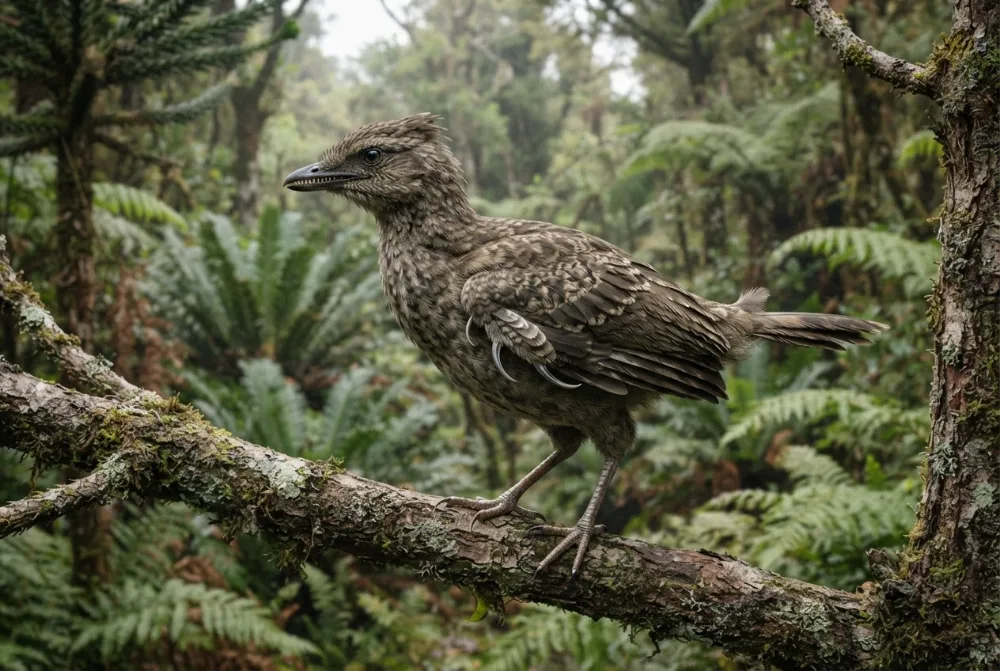
The fossil of Linyiornis is preserved in three dimensions, not squashed flat like many other ancient birds. This let scientists see details that are usually hidden.1
Traces of ovarian follicles were found in the fossil, showing that this individual was a female. These are the structures that would have become eggs.1
Linyiornis had a very strong bump on its upper arm bone for muscle attachment. This suggests it had powerful wing muscles.1
Unlike some later birds, Linyiornis did not have a special pit on its thigh bone for a ligament. This is one clue that helps scientists tell different ancient birds apart.1
Linyiornis lived around 121 to 113 million years ago, during the Early Cretaceous period. That was the time of many dinosaurs.2
The name Linyiornis means 'Linyi bird', named after Linyi University in China, where one of the scientists worked.1
Zvevanyanzvi vemadhino
- Zita resainzi
- Linyiornis
- Akaripa zita:
- Wang et al. 20163
- Boka
- Shiri dzekutanga
- Mhuri / boka
- Enantiornithes3
- Kurongwa kwemhuka
- Theropoda > Avialae3
- Zera rematombo
- makore mamiriyoni 121 kusvika 113 (Aptian)3
- Mapoka ematombo
- Jiufotang3
- Nyika
- China3
- Zvinyorwa zvemafosiri
- 1 mu The Paleobiology Database3
- Kuwanikwa
- Linyiornis was named by Yan Wang and colleagues in 2016. The fossil was found in the Jiufotang Formation in northeastern China.12
- Zvichiri kupokanwa
- Scientists are still debating exactly how Linyiornis is related to other ancient birds, because some features on its bones look different depending on how the fossil was preserved.1
Kunobva chokwadi
- A new Jehol enantiornithine bird with three-dimensional preservation and ovarian follicles: Journal of Vertebrate Paleontology: Vol 36 , No 2 - Get Access (tandfonline.com)
- PBDB Taxon (paleobiodb.org)
- Linyiornis in The Paleobiology Database (CC BY 4.0): zera, nzvimbo, mapoka ematombo, kurongwa kwemhuka.
Chokwadi chega chega papeji ino chine nhamba inoratidza kwachakabva. Kana takakanganisa chimwe chinhu, ruregerero, tiri vanoda madhino, kwete magazini yesainzi. Tiudze pa [email protected] tichazvigadzirisa.
 Rex ane nzara! Dino Wiki ipurojekiti yababa yemwanakomana wavo anoda madhino, mahara, pasina kushambadza uye pasina zvinokutevera. Vakuru vanogona kupa Rex chekudyadya kuti vabatsire kuchengeta saiti iri pamhepo.Fudza Rex
 Archaeopteryx
 Hesperornis
 Ichthyornis
 Baptornis
 Jurapteryx
 Gobipteryx
 Stegosaurus
 Iguanodon
 Giganotosaurus
 Microraptor
 Deinonychus
 Baryonyx