 Uri dhino ripi? Kwizi
 Hondo yemadhino
 Mujaho wemadhino
 Mitambo midiki yemadhino
 Arubhamu yemasitika
 Rondedzero dzeTOP dzemadhino
 Ndishamise!
Orienantius
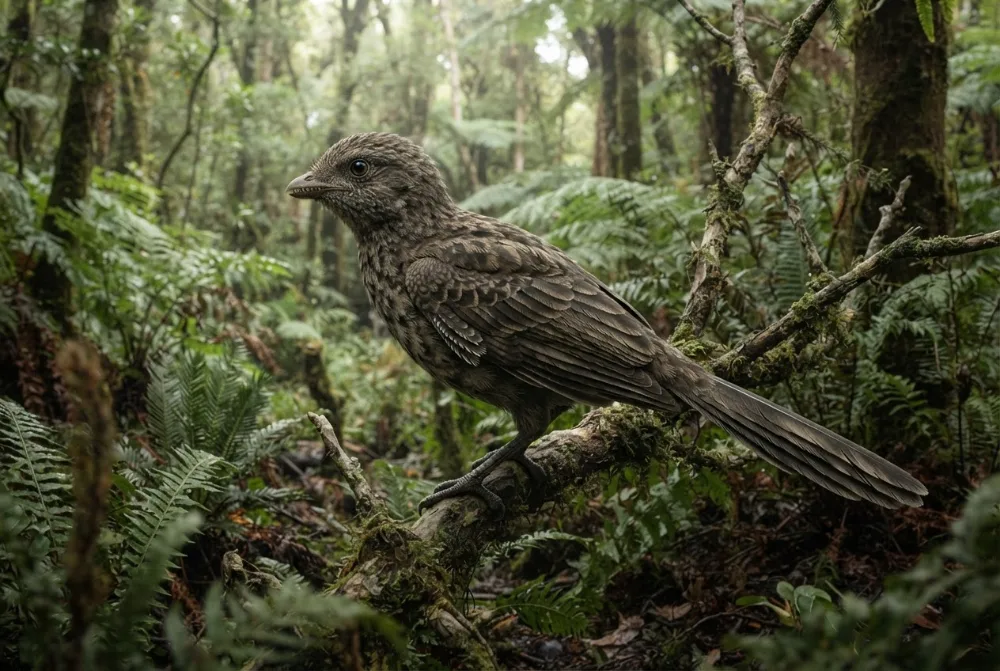
Orienantius was a tiny bird that lived about 130 million years ago in what is now China. It had feathers and could fly, but it was not like modern birds, it belonged to an ancient group called enantiornithines, which had a different way of flying.21
Rairarama rini?
Raimhanya zvakadii?


Zvinonakidza
Orienantius is known from two nearly complete skeletons that still have feathers and even soft tissues like wing skin preserved.12
It was about the size of a modern Eurasian Skylark, a small songbird.1
Orienantius could fly with high maneuverability and used a flap-gliding style, like some birds today.2
The holotype (main specimen) was not fully grown when it died, some of its bones had not yet fused together.1
Its name comes from Latin and Greek words meaning 'east' and 'opposite', referring to its discovery in East Asia and its group Enantiornithes.1
Orienantius lived during the Early Cretaceous, making it one of the oldest known enantiornithine birds.2
Zvevanyanzvi vemadhino
- Zita resainzi
- Orienantius
- Akaripa zita:
- Liu et al. 20193
- Boka
- Shiri dzekutanga
- Mhuri / boka
- Enantiornithes3
- Kurongwa kwemhuka
- Theropoda > Avialae3
- Zera rematombo
- makore mamiriyoni 133 kusvika 126 (Hauterivian)3
- Mapoka ematombo
- Huajiying3
- Nyika
- China3
- Zvinyorwa zvemafosiri
- 1 mu The Paleobiology Database3
- Kuwanikwa
- Orienantius was named in 2019 by Di Liu and colleagues based on two fossils from the Huajiying Formation in Hebei, China. The species name ritteri honors German scientist Johann Wilhelm Ritter.12
- Zvichiri kupokanwa
- Scientists are still debating exactly how Orienantius and other early enantiornithines evolved their flight abilities, since they show features of both primitive and advanced birds.2
Kunobva chokwadi
- Orienantius (en.wikipedia.org)
- Soft tissue preservation in two new enantiornithine specimens (Aves) from the Lower Cretaceous Huajiying Formation of Hebei Province, China (sciencedirect.com)
- Orienantius in The Paleobiology Database (CC BY 4.0): zera, nzvimbo, mapoka ematombo, kurongwa kwemhuka.
Chokwadi chega chega papeji ino chine nhamba inoratidza kwachakabva. Kana takakanganisa chimwe chinhu, ruregerero, tiri vanoda madhino, kwete magazini yesainzi. Tiudze pa [email protected] tichazvigadzirisa.
 Rex ane nzara! Dino Wiki ipurojekiti yababa yemwanakomana wavo anoda madhino, mahara, pasina kushambadza uye pasina zvinokutevera. Vakuru vanogona kupa Rex chekudyadya kuti vabatsire kuchengeta saiti iri pamhepo.Fudza Rex
 Archaeopteryx
 Hesperornis
 Ichthyornis
 Baptornis
 Jurapteryx
 Gobipteryx
 Stegosaurus
 Iguanodon
 Giganotosaurus
 Microraptor
 Deinonychus
 Baryonyx