 Uri dhino ripi? Kwizi
 Hondo yemadhino
 Mujaho wemadhino
 Mitambo midiki yemadhino
 Arubhamu yemasitika
 Rondedzero dzeTOP dzemadhino
 Ndishamise!
Rairarama rini?

Raiva hombe sei?
Raiva refu zvakadii?
Raiva rakakwirira zvakadii?
fungidziro
Rairema zvakadii?
 kureba seimbwa 2.5 kubva pamhino kusvika kumuswe🍌kureba semabhanana 14 akatevedzana
 kurema sekatsi dzemumba 12🍉kurema semanwiwa 10🧸kurema sevana vekireshi 2.5🎒kurema sevana vechikoro 1.5🏃raigona kumhanya mamita 100 mumasekonzi 8 (munhu anomhanya kupfuura vose anoda 9.6)
Orodromeus raiva hombe sei kana richienzaniswa NEWE?
Masvomhu chete mubrowser yako. Hapana chinochengetwa kana kutumirwa kupi zvako.
Raimhanya zvakadii?


Zvinonakidza
Orodromeus was discovered at a site called Egg Mountain, which was a nesting colony of the much larger dinosaur Maiasaura.1
The first fossils were found by Robert Makela, and the dinosaur was named after him: Orodromeus makelai.1
Some eggs once thought to belong to Orodromeus are now believed to be from a troodontid dinosaur, like Stenonychosaurus.1
Orodromeus embryos had well-developed bones and teeth, suggesting the babies could walk and feed themselves soon after hatching.1
This dinosaur may have dug burrows, like its relative Oryctodromeus, because its bones have been found in places where they would not normally be scattered.1
Orodromeus lived alongside predators like Daspletosaurus and the horned dinosaur Einiosaurus.1
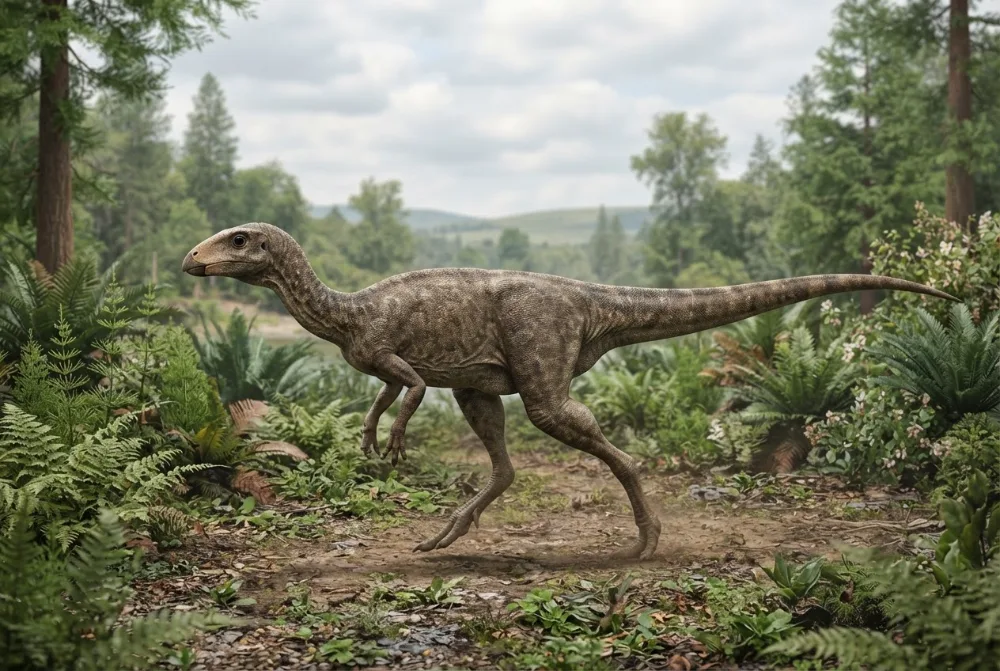
Mibvunzo inonyanya kubvunzwa nezve Orodromeus
?How big was Orodromeus?
About 2.5 metres (8.2 feet) long. That is roughly the size of a large dog.12
?What did Orodromeus eat?
It was a plant-eater. It used its horny beak and grinding cheek teeth to eat tough plant material, and it probably fed on plants no higher than 1 metre (3.3 feet) off the ground.12
?When did Orodromeus live?
It lived during the Late Cretaceous Period, about 75 million years ago, in what is now Montana, USA.12
?How fast could Orodromeus run?
Nobody knows for sure, but its name means 'mountain runner' and it was built for running on two legs. It was probably very quick.12
?Did Orodromeus dig burrows?
Maybe. Scientists think it may have dug burrows like its relative Oryctodromeus, because its bones are sometimes found packed together in ways that suggest burrowing.1
Zvevanyanzvi vemadhino
- Zita resainzi
- Orodromeus
- Akaripa zita:
- Horner and Weishampel 19883
- Boka
- Vanodya miriwo vane miromo
- Mhuri / boka
- Thescelosauridae3
- Kurongwa kwemhuka
- Ornithischia3
- Zera rematombo
- makore mamiriyoni 84 kusvika 66 (Campanian / Maastrichtian)3
- Mapoka ematombo
- Two Medicine, Hell Creek, Judith River3
- Nyika
- Amerika3
- Zvinyorwa zvemafosiri
- 9 mu The Paleobiology Database3
- Kuwanikwa
- Orodromeus was named by Jack Horner and David Weishampel in 1988. The first fossils were found by Robert Makela in Teton County, Montana, during an excavation of the Egg Mountain site.1
- Zvichiri kupokanwa
- Scientists are not sure if Orodromeus really dug burrows, because the evidence is not yet strong.1
Kunobva chokwadi
- Orodromeus (en.wikipedia.org)
- Orodromeus (nhm.ac.uk)
- Orodromeus in The Paleobiology Database (CC BY 4.0): zera, nzvimbo, mapoka ematombo, kurongwa kwemhuka.
Chokwadi chega chega papeji ino chine nhamba inoratidza kwachakabva. Kana takakanganisa chimwe chinhu, ruregerero, tiri vanoda madhino, kwete magazini yesainzi. Tiudze pa [email protected] tichazvigadzirisa.
 Rex ane nzara! Dino Wiki ipurojekiti yababa yemwanakomana wavo anoda madhino, mahara, pasina kushambadza uye pasina zvinokutevera. Vakuru vanogona kupa Rex chekudyadya kuti vabatsire kuchengeta saiti iri pamhepo.Fudza Rex
 Iguanodon
 Tenontosaurus
 Thescelosaurus
 Zalmoxes
 Camptosaurus
 Rhabdodon
 Tyrannosaurus
 Triceratops
 Velociraptor
 Spinosaurus
 Ankylosaurus
 Parasaurolophus