 Uri dhino ripi? Kwizi
 Hondo yemadhino
 Mujaho wemadhino
 Mitambo midiki yemadhino
 Arubhamu yemasitika
 Rondedzero dzeTOP dzemadhino
 Ndishamise!
Oryctodromeus
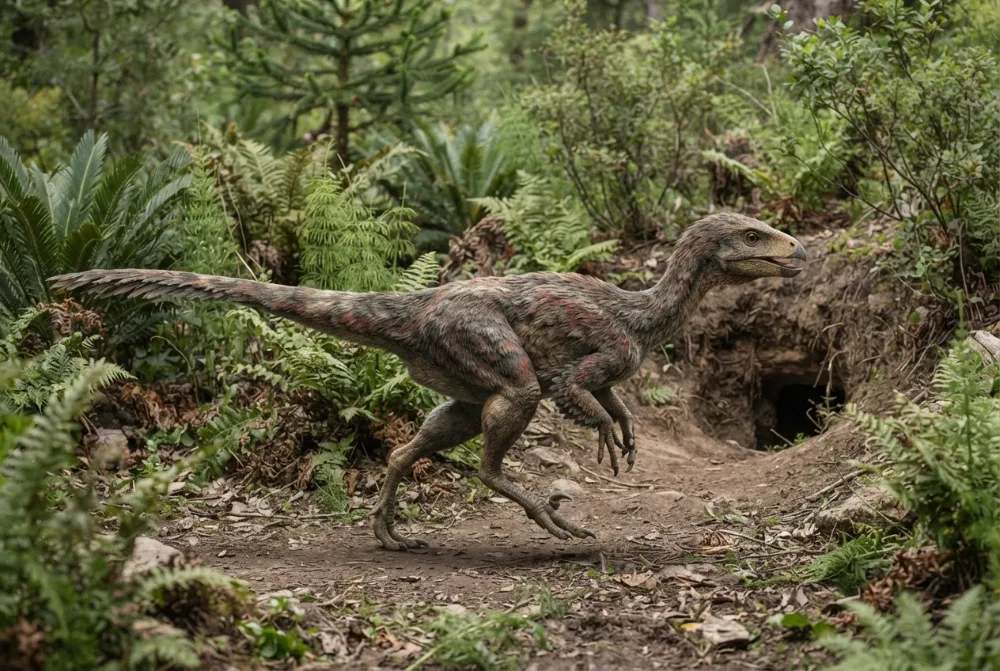
Oryctodromeus was a small, fast dinosaur that dug burrows to live in. It is the first non-bird dinosaur ever found with proof that it lived underground. An adult, two babies, and their burrow were all fossilized together.1
Rairarama rini?
Raiva hombe sei?
Raiva refu zvakadii?
Raiva rakakwirira zvakadii?
fungidziro
Rairema zvakadii?
 kureba sekatsi dzemumba 4 kubva pamhino kusvika kumuswe🍌kureba semabhanana 12 akatevedzana🍉kurema semanwiwa 6🏃raigona kumhanya mamita 100 mumasekonzi 8.8 (munhu anomhanya kupfuura vose anoda 9.6)
Oryctodromeus raiva hombe sei kana richienzaniswa NEWE?
Masvomhu chete mubrowser yako. Hapana chinochengetwa kana kutumirwa kupi zvako.
Raimhanya zvakadii?


Zvinonakidza
Oryctodromeus means 'digging runner' because it could both dig burrows and run fast on two legs.1
Its burrow was about 2 meters (6.6 feet) long and 70 centimeters (2.3 feet) wide, with two turns.1
The adult Oryctodromeus was about 2.1 meters (6.9 feet) long and weighed between 22 and 32 kilograms (50 to 70 pounds).1
Two baby Oryctodromeus were found with the adult, showing that parents cared for their young in the burrow.1
Its strong shoulders and arms helped it dig, but it was not as specialized for digging as a mole or wombat.1
Oryctodromeus was named the state dinosaur of Idaho in 2023.1
The burrow was filled with sand and turned into sandstone, which preserved the bones inside.1
Mibvunzo inonyanya kubvunzwa nezve Oryctodromeus
?How did Oryctodromeus dig?
It used its strong shoulders, arms, and broad snout to scratch and move soil. It was not as specialized for digging as a mole or wombat, but more like a rabbit or hyena.13
?What did Oryctodromeus eat?
It was a plant-eater, or herbivore.2
?When did Oryctodromeus live?
It lived during the mid-Cretaceous Period, about 105 to 96 million years ago.1
Zvevanyanzvi vemadhino
- Zita resainzi
- Oryctodromeus
- Akaripa zita:
- Varricchio et al. 20074
- Boka
- Vanodya miriwo vane miromo
- Mhuri / boka
- Thescelosauridae4
- Kurongwa kwemhuka
- Ornithischia4
- Zera rematombo
- makore mamiriyoni 106 kusvika 94 (Albian / Cenomanian)4
- Mapoka ematombo
- Wayan, Blackleaf4
- Nyika
- Amerika4
- Zvinyorwa zvemafosiri
- 9 mu The Paleobiology Database4
- Kuwanikwa
- Oryctodromeus was named in 2007 by David Varricchio, Anthony Martin, and Yoshihiro Katsura. They found an adult and two juveniles inside a fossilized burrow in Montana.14
- Zvichiri kupokanwa
- Scientists are not sure if its close relatives Orodromeus and Zephyrosaurus also dug burrows, though they have similar features.1
Kunobva chokwadi
- Oryctodromeus (en.wikipedia.org)
- Oryctodromeus | Natural History Museum (nhm.ac.uk)
- First trace and body fossil evidence of a burrowing, denning dinosaur (pmc.ncbi.nlm.nih.gov)
- Oryctodromeus in The Paleobiology Database (CC BY 4.0): zera, nzvimbo, mapoka ematombo, kurongwa kwemhuka.
Chokwadi chega chega papeji ino chine nhamba inoratidza kwachakabva. Kana takakanganisa chimwe chinhu, ruregerero, tiri vanoda madhino, kwete magazini yesainzi. Tiudze pa [email protected] tichazvigadzirisa.
 Rex ane nzara! Dino Wiki ipurojekiti yababa yemwanakomana wavo anoda madhino, mahara, pasina kushambadza uye pasina zvinokutevera. Vakuru vanogona kupa Rex chekudyadya kuti vabatsire kuchengeta saiti iri pamhepo.Fudza Rex
 Iguanodon
 Tenontosaurus
 Thescelosaurus
 Zalmoxes
 Camptosaurus
 Rhabdodon
 Tyrannosaurus
 Triceratops
 Velociraptor
 Spinosaurus
 Ankylosaurus
 Parasaurolophus