 Uri dhino ripi? Kwizi
 Hondo yemadhino
 Mujaho wemadhino
 Mitambo midiki yemadhino
 Arubhamu yemasitika
 Rondedzero dzeTOP dzemadhino
 Ndishamise!
Sinornis
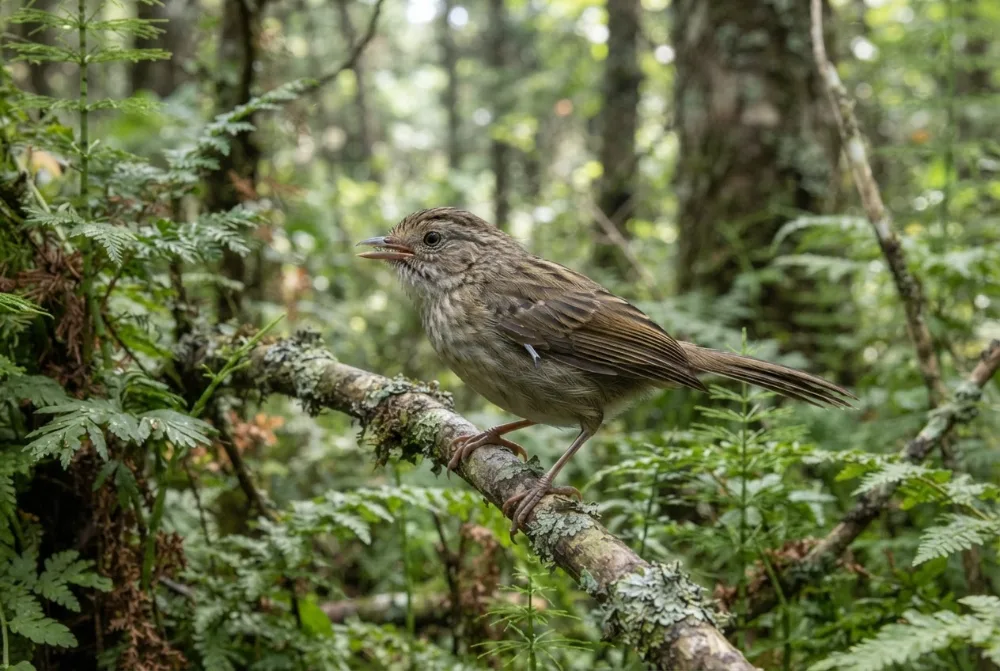
Sinornis was a tiny bird that lived about 120 million years ago in what is now China. It was about the size of a sparrow and could fly and perch just like modern birds. Its fossils helped scientists understand how birds evolved from dinosaurs.21
Rairarama rini?
Raimhanya zvakadii?


Zvinonakidza
Sinornis had a special wrist bone with a groove that let it bend its wrist sharply, tucking its wings tightly during flight or rest.1
Unlike modern birds, Sinornis had separate finger bones with small claws on its first and second digits.1
Sinornis had a fully opposable hallux (back toe) with a large claw, which helped it perch on branches.1
Its breastbone and shoulder structures were built for strong flight muscles, similar to birds today.1
Sinornis still had some primitive features like a flexible hand, a footed pubis, and stomach ribs (gastralia), which it shared with the early bird Archaeopteryx.21
The fossil of Sinornis was discovered by a Chinese farmer before 1992, and scientists Paul Sereno and Rao Chenggang named and described it.1
Mibvunzo inonyanya kubvunzwa nezve Sinornis
?How big was Sinornis?
About the size of a sparrow. Its skeleton was sparrow-sized, so it was a very small bird.12
?Could Sinornis fly?
Yes. It had a broad sternum and shoulder structures for strong flight muscles, and a special wrist bone that let it tuck its wings, so it could fly like modern birds.1
?Did Sinornis have teeth?
Yes. Its skull had a short, toothed snout, similar to the early bird Archaeopteryx.1
?When did Sinornis live?
It lived about 120 million years ago, during the Early Cretaceous period.1
Zvevanyanzvi vemadhino
- Zita resainzi
- Sinornis
- Akaripa zita:
- Sereno and Rao 19923
- Boka
- Shiri dzekutanga
- Mhuri / boka
- Enantiornithes3
- Kurongwa kwemhuka
- Theropoda > Avialae3
- Zera rematombo
- makore mamiriyoni 121 kusvika 113 (Aptian)3
- Mapoka ematombo
- Jiufotang3
- Nyika
- China3
- Zvinyorwa zvemafosiri
- 1 mu The Paleobiology Database3
- Kuwanikwa
- Sinornis was named by Paul Sereno and Rao Chenggang in 1992. The fossil was found in the Jiufotang Formation in Liaoning, China, and was originally thought to be 135 million years old, but later research showed it is about 120 million years old.12
- Zvichiri kupokanwa
- Scientists still debate whether another bird from the same area, Cathayornis, is actually the same species as Sinornis or a different one.1
Kunobva chokwadi
- Sinornis (en.wikipedia.org)
- Early Evolution of Avian Flight and Perching: New Evidence from the Lower Cretaceous of China | Science (science.org)
- Sinornis in The Paleobiology Database (CC BY 4.0): zera, nzvimbo, mapoka ematombo, kurongwa kwemhuka.
Chokwadi chega chega papeji ino chine nhamba inoratidza kwachakabva. Kana takakanganisa chimwe chinhu, ruregerero, tiri vanoda madhino, kwete magazini yesainzi. Tiudze pa [email protected] tichazvigadzirisa.
 Rex ane nzara! Dino Wiki ipurojekiti yababa yemwanakomana wavo anoda madhino, mahara, pasina kushambadza uye pasina zvinokutevera. Vakuru vanogona kupa Rex chekudyadya kuti vabatsire kuchengeta saiti iri pamhepo.Fudza Rex
 Archaeopteryx
 Hesperornis
 Ichthyornis
 Baptornis
 Jurapteryx
 Gobipteryx
 Stegosaurus
 Iguanodon
 Giganotosaurus
 Microraptor
 Deinonychus
 Baryonyx