 Uri dhino ripi? Kwizi
 Hondo yemadhino
 Mujaho wemadhino
 Mitambo midiki yemadhino
 Arubhamu yemasitika
 Rondedzero dzeTOP dzemadhino
 Ndishamise!
Sinornithomimus
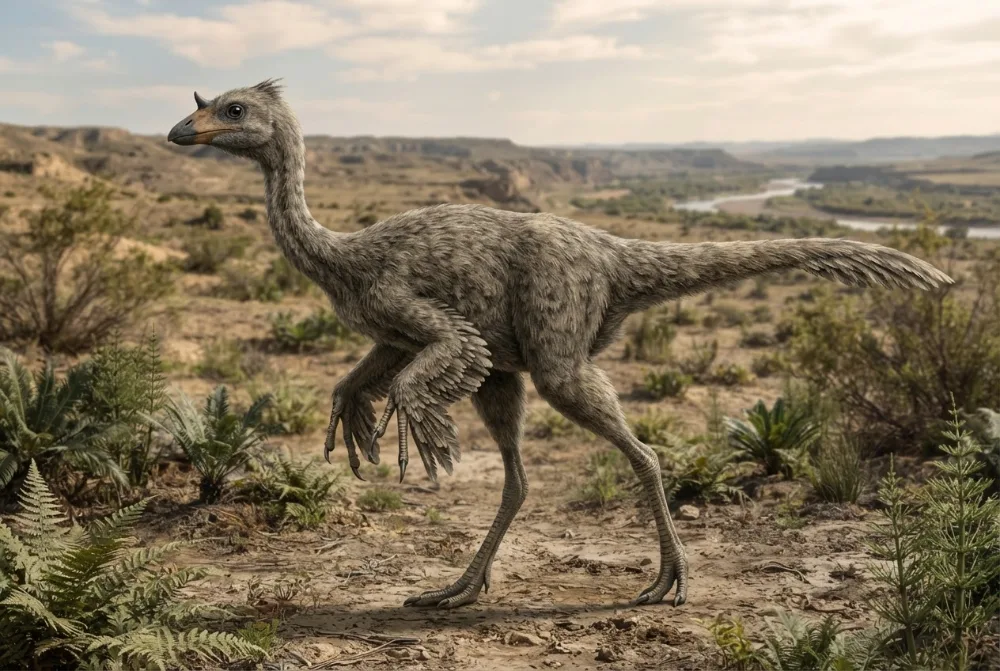
Sinornithomimus was a small, fast dinosaur that looked a bit like an ostrich. It lived in what is now China during the Late Cretaceous Period, about 92 to 90 million years ago. Scientists found many skeletons together, showing that these dinosaurs probably lived in herds.12
Rairarama rini?
Raiva hombe sei?
Raiva refu zvakadii?
Raiva rakakwirira zvakadii?
fungidziro
Rairema zvakadii?
 kureba seimbwa 2.5 kubva pamhino kusvika kumuswe🍌kureba semabhanana 14 akatevedzana🍉kurema semanwiwa 18🧸kurema sevana vekireshi 5🎒kurema sevana vechikoro 3🏃raigona kumhanya mamita 100 mumasekonzi 5.5 (munhu anomhanya kupfuura vose anoda 9.6)
Sinornithomimus raiva hombe sei kana richienzaniswa NEWE?
Masvomhu chete mubrowser yako. Hapana chinochengetwa kana kutumirwa kupi zvako.
Raimhanya zvakadii?


Zvinonakidza
At least fourteen skeletons of Sinornithomimus were found together in one spot, and most of them were young dinosaurs. This suggests they lived in groups, maybe to protect each other from predators.21
Sinornithomimus had gastroliths, or stomach stones, that helped it grind up tough plants. This is rare among bird-like dinosaurs and shows it was a plant-eater.1
The first fossils of Sinornithomimus were discovered in 1997 by Chinese paleontologist Dong Zhiming during the Mongol Highland International Dinosaur Project.1
Sinornithomimus was about 2.5 meters (8.2 feet) long and weighed around 91 kilograms (201 pounds). That is about as heavy as a large adult human.1
Adult Sinornithomimus had longer lower legs compared to their upper legs than juveniles did. This means they could run faster as they grew up.21
A second herd of thirteen young Sinornithomimus was found in 2001. They probably died together after getting stuck in the mud of a drying waterhole.1
Mibvunzo inonyanya kubvunzwa nezve Sinornithomimus
?What did Sinornithomimus eat?
It ate plants. Scientists found gastroliths (stomach stones) in its fossils that helped grind up tough plant food.1
?How fast could Sinornithomimus run?
Nobody knows exactly, but it was a fast runner. Adults had longer lower legs than juveniles, which made them even faster.1
Zvevanyanzvi vemadhino
- Zita resainzi
- Sinornithomimus
- Akaripa zita:
- Kobayashi and Lü 20035
- Boka
- Madhino eostrich
- Mhuri / boka
- Ornithomimidae5
- Kurongwa kwemhuka
- Theropoda > Ornithomimosauria5
- Zera rematombo
- makore mamiriyoni 94 kusvika 90 (Turonian)5
- Mapoka ematombo
- Ulansuhai5
- Nyika
- China5
- Zvinyorwa zvemafosiri
- 1 mu The Paleobiology Database5
- Kuwanikwa
- Sinornithomimus was named and described by Yoshitsugu Kobayashi and Lü Junchang in 2003. The name means 'Chinese bird mimic' and honors Dong Zhiming, who found the first fossils in 1997.12
- Zvichiri kupokanwa
- Scientists are not sure whether the herds of Sinornithomimus were family groups with adults protecting young, or if the young lived separately from adults while the adults were busy nesting.1
Kunobva chokwadi
- Sinornithomimus (en.wikipedia.org)
- A new ornithomimid dinosaur with gregarious habits from the Late Cretaceous of China - Acta Palaeontologica Polonica (app.pan.pl)
- PBDB Taxon (paleobiodb.org)
- Young dinosaurs roamed together, died together | University of Chicago News (news.uchicago.edu)
- Sinornithomimus in The Paleobiology Database (CC BY 4.0): zera, nzvimbo, mapoka ematombo, kurongwa kwemhuka.
Chokwadi chega chega papeji ino chine nhamba inoratidza kwachakabva. Kana takakanganisa chimwe chinhu, ruregerero, tiri vanoda madhino, kwete magazini yesainzi. Tiudze pa [email protected] tichazvigadzirisa.
 Rex ane nzara! Dino Wiki ipurojekiti yababa yemwanakomana wavo anoda madhino, mahara, pasina kushambadza uye pasina zvinokutevera. Vakuru vanogona kupa Rex chekudyadya kuti vabatsire kuchengeta saiti iri pamhepo.Fudza Rex
 Gallimimus
 Ornithomimus
 Struthiomimus
 Deinocheirus
 Dromiceiomimus
 Archaeornithomimus
 Tyrannosaurus
 Triceratops
 Velociraptor
 Spinosaurus
 Ankylosaurus
 Parasaurolophus