 Uri dhino ripi? Kwizi
 Hondo yemadhino
 Mujaho wemadhino
 Mitambo midiki yemadhino
 Arubhamu yemasitika
 Rondedzero dzeTOP dzemadhino
 Ndishamise!
Xiangornis
Xiangornis was an ancient bird that lived about 120 million years ago. It had a mix of features from two big groups of early birds, making it a mysterious and special creature. Its wing bones were already fused together like in modern birds, which helped it fly strongly.12
Rairarama rini?
Raimhanya zvakadii?


Zvinonakidza
Xiangornis belongs to a group called Enantiornithes, which were the most common birds during the Cretaceous period.31
Its wing bones (carpometacarpus) were completely fused together, both near the body and far from it, just like in modern birds.12
Xiangornis had a large extensor process on its wing, a bony bump that helped attach muscles and ligaments for strong flight.12
This bird shows that some features thought to belong only to modern birds actually evolved earlier and separately in enantiornithines.12
Xiangornis lived during the Aptian age, about 121 to 113 million years ago, in what is now Liaoning, China.3
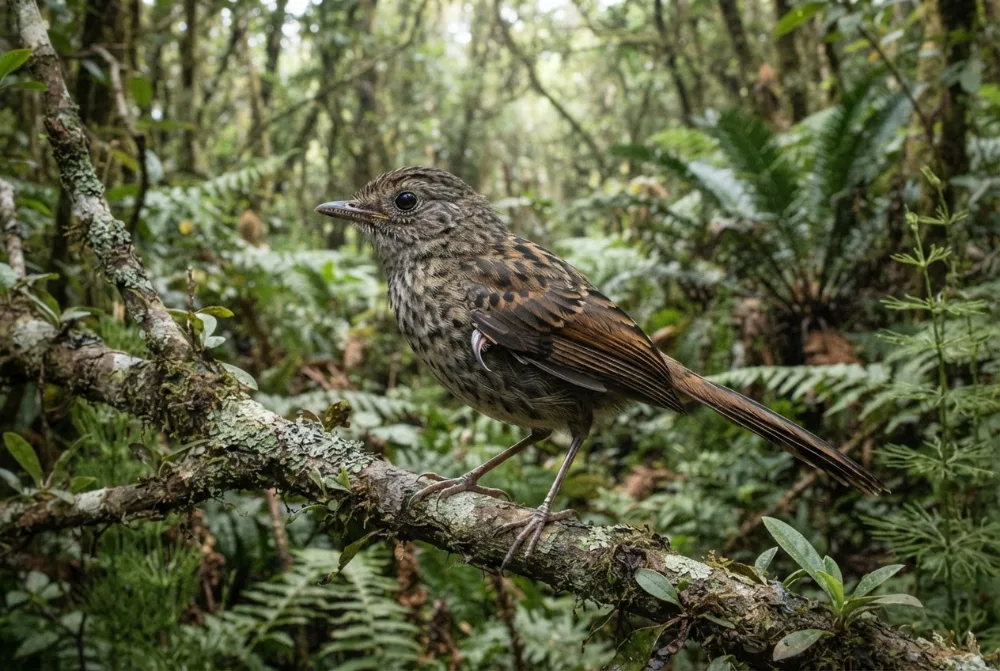
Zvevanyanzvi vemadhino
- Zita resainzi
- Xiangornis
- Akaripa zita:
- Hu et al. 20124
- Boka
- Shiri dzekutanga
- Mhuri / boka
- Enantiornithes4
- Kurongwa kwemhuka
- Theropoda > Avialae4
- Zera rematombo
- makore mamiriyoni 121 kusvika 113 (Aptian)4
- Mapoka ematombo
- Jiufotang4
- Nyika
- China4
- Zvinyorwa zvemafosiri
- 1 mu The Paleobiology Database4
- Kuwanikwa
- Xiangornis was named by Hu and colleagues in 2012 based on a partial skeleton found in the Jiufotang Formation of Liaoning, China. The fossil includes wing and shoulder bones.31
- Zvichiri kupokanwa
- Scientists are still debating whether Xiangornis is truly an enantiornithine or if it blurs the line between enantiornithines and ornithuromorphs (the group that includes modern birds).12
Kunobva chokwadi
- A new enantiornithine bird from the Lower Cretaceous of Western Liaoning, China, and its implications for early avian evolution (tandfonline.com)
- A new enantiornithine bird from the Lower Cretaceous of Western Liaoning, China, and its implications for early avian evolution (ivpp.cas.cn)
- PBDB Taxon (paleobiodb.org)
- Xiangornis in The Paleobiology Database (CC BY 4.0): zera, nzvimbo, mapoka ematombo, kurongwa kwemhuka.
Chokwadi chega chega papeji ino chine nhamba inoratidza kwachakabva. Kana takakanganisa chimwe chinhu, ruregerero, tiri vanoda madhino, kwete magazini yesainzi. Tiudze pa [email protected] tichazvigadzirisa.
 Rex ane nzara! Dino Wiki ipurojekiti yababa yemwanakomana wavo anoda madhino, mahara, pasina kushambadza uye pasina zvinokutevera. Vakuru vanogona kupa Rex chekudyadya kuti vabatsire kuchengeta saiti iri pamhepo.Fudza Rex
 Archaeopteryx
 Hesperornis
 Ichthyornis
 Baptornis
 Jurapteryx
 Gobipteryx
 Stegosaurus
 Iguanodon
 Giganotosaurus
 Microraptor
 Deinonychus
 Baryonyx