 Uri dhino ripi? Kwizi
 Hondo yemadhino
 Mujaho wemadhino
 Mitambo midiki yemadhino
 Arubhamu yemasitika
 Rondedzero dzeTOP dzemadhino
 Ndishamise!
Rairarama rini?

Raimhanya zvakadii?


Zvinonakidza
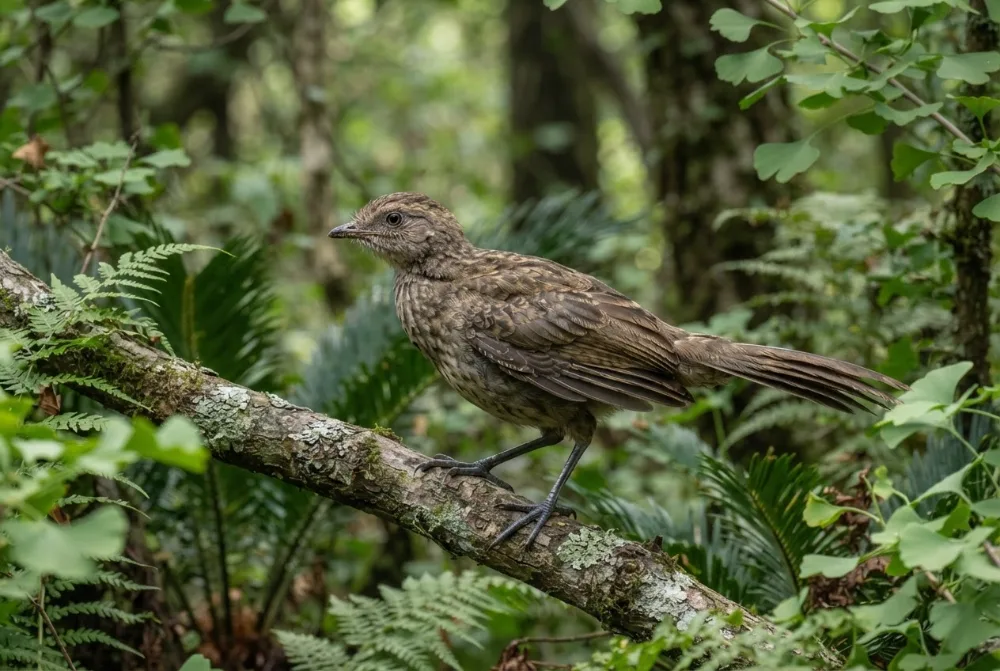
Yuornis is one of the most complete Late Cretaceous enantiornithine birds ever found, with a three-dimensionally preserved skull.1
Unlike most enantiornithines, Yuornis had no teeth. Its skull looked a lot like modern birds because it lost several bones, like the lacrimal and postorbital.1
The name Yuornis comes from 'Yu', the one-character abbreviation for Henan province in China, where it was discovered.1
Yuornis lived about 72 to 66 million years ago, during the very end of the Age of Dinosaurs.3
Its closest relative might be Gobipteryx, another toothless bird from the Late Cretaceous, but scientists are not sure because tooth loss evolved many times.1
Zvevanyanzvi vemadhino
- Zita resainzi
- Yuornis
- Akaripa zita:
- Xu et al. 20213
- Boka
- Shiri dzekutanga
- Mhuri / boka
- Enantiornithes3
- Kurongwa kwemhuka
- Theropoda > Avialae3
- Zera rematombo
- makore mamiriyoni 72 kusvika 66 (Maastrichtian)3
- Mapoka ematombo
- Qiupa3
- Nyika
- China3
- Zvinyorwa zvemafosiri
- 1 mu The Paleobiology Database3
- Kuwanikwa
- Yuornis was named in 2021 by Xu Li and colleagues. The species name junchangi honors paleontologist Lü Junchang. The fossil was found in the Qiupa Formation of Henan, China.12
- Zvichiri kupokanwa
- Scientists are not sure whether Yuornis belongs to the family Gobipterygidae, because the features linking it to that group are all related to tooth loss, which evolved many times separately.1
Kunobva chokwadi
- Yuornis (en.wikipedia.org)
- PBDB Taxon (paleobiodb.org)
- Yuornis in The Paleobiology Database (CC BY 4.0): zera, nzvimbo, mapoka ematombo, kurongwa kwemhuka.
Chokwadi chega chega papeji ino chine nhamba inoratidza kwachakabva. Kana takakanganisa chimwe chinhu, ruregerero, tiri vanoda madhino, kwete magazini yesainzi. Tiudze pa [email protected] tichazvigadzirisa.
 Rex ane nzara! Dino Wiki ipurojekiti yababa yemwanakomana wavo anoda madhino, mahara, pasina kushambadza uye pasina zvinokutevera. Vakuru vanogona kupa Rex chekudyadya kuti vabatsire kuchengeta saiti iri pamhepo.Fudza Rex
 Archaeopteryx
 Hesperornis
 Ichthyornis
 Baptornis
 Jurapteryx
 Gobipteryx
 Tyrannosaurus
 Triceratops
 Velociraptor
 Spinosaurus
 Ankylosaurus
 Parasaurolophus