 Kwisi: O dinosaure efe?
 Ntwa ya didinosaure
 Peiso ya didinosaure
 Dipapadi tse nyane tsa didinosaure
 Albamo ya ditikara
 Manane a TOP a didinosaure
 Nkgethele!
Abrictosaurus
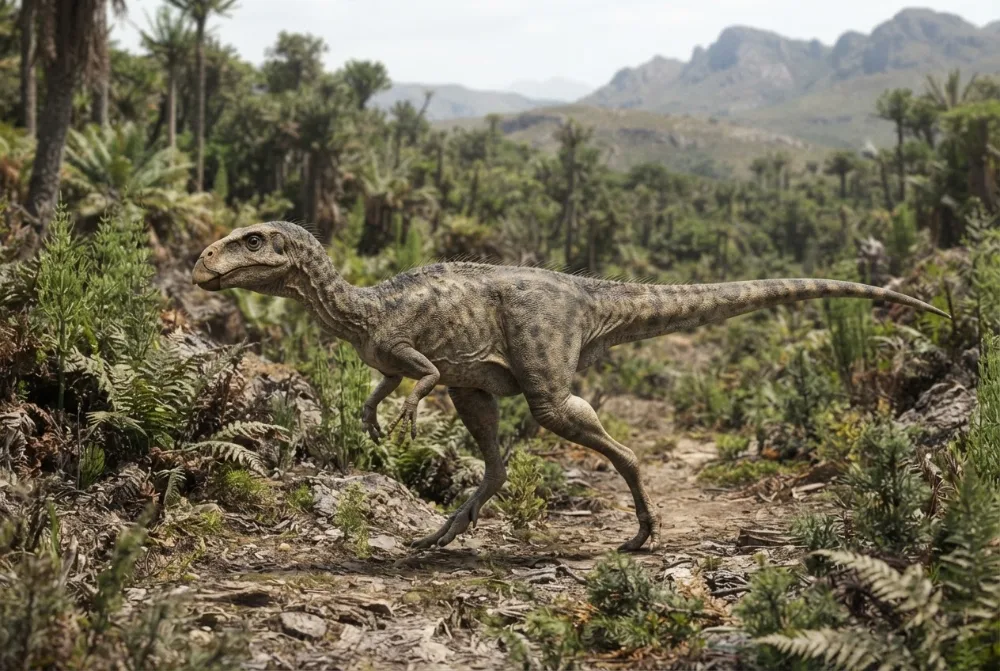
Abrictosaurus was a tiny, speedy dinosaur that munched on plants in the Early Jurassic. It had a beak at the front of its mouth and different kinds of teeth, kind of like we do. Scientists named it 'wakeful lizard' because they disagreed about whether it slept through dry seasons.12
E phetse neng?
E ne e le kgolo hakae?
E ne e le telele hakae?
E ne e phahame hakae?
E ne e le boima hakae?

 telele jwaloka dikatse tsa lapeng tse 2.5 ho tloha nkong ho isa mohatleng🍌telele jwaloka dibanana tse 7 di behilwe ka molaboima jwaloka dikatse tsa lapeng tse 11🍉boima jwaloka mahapu a 9🧸boima jwaloka bana ba kereshe ba 2.5🎒boima jwaloka bana ba sekolo ba 1.5🪑e nyane hoo e ka tsamayang ka tlasa setulo🏃e ne e ka matha dimitara tse 100 ka metsotswana e 9 (motho ya lebelo ka ho fetisisa o hloka 9,6)
Abrictosaurus e ne e le kgolo hakae ha e bapiswa le WENA?
Ke dipalo feela ho browser ya hao. Ha ho letho le bolokwang kapa le romelwang kae kapa kae.
E ne e le lebelo hakae?


Dintlha tse monate
Abrictosaurus is known from only two fossils: a partial skull and skeleton, plus a fragmentary skull.1
Unlike some relatives, its cheek teeth were widely spaced with low crowns, more like early ornithischians.1
One fossil had impressive tusks: an upper one 10.5 mm tall and a lower one 17 mm tall, serrated only on the front edge.1
It lived in a hot, half-dry environment with sand dunes and seasonal floods, alongside dinosaurs like Massospondylus and Heterodontosaurus.1
The first scientist who described it thought the tusks were just in males, so he called the female fossil 'consors', meaning partner or spouse.12
Abrictosaurus had small, weak forelimbs with only four finger bones in the fourth and fifth fingers, fewer than its relative Heterodontosaurus.1
Dipotso tse botswang haholo ka Abrictosaurus
?How big was Abrictosaurus?
About 1.2 metres (3.9 feet) long and weighed less than 45 kilograms (99 pounds). That is about as long as a small bicycle.12
?What did Abrictosaurus eat?
It was a herbivore or omnivore, meaning it mostly ate plants but may have eaten small animals too. It had a beak for cropping plants and different kinds of teeth for chewing.13
?Did Abrictosaurus have tusks?
Yes, one of the two known fossils had impressive tusks: an upper one 10.5 mm tall and a lower one 17 mm tall, serrated only on the front edge. The other fossil lacked tusks, which may mean it was a female or a juvenile.12
?When did Abrictosaurus live?
It lived during the Early Jurassic Period, about 200 to 190 million years ago. That is long before the famous T. rex.1
Mosenyi wa ditshomo
Tshomo: Some people think Abrictosaurus had no tusks because it was female.
Nnete: Abrictosaurus did have tusks. One fossil shows clear upper and lower tusks, but they are serrated only on the front, unlike relatives that have serrations on both sides.1
Bakeng sa ditsebi tsa didinosaure
- Lebitso la saense
- Abrictosaurus
- E rehilwe ke
- Hopson 19754
- Sehlopha
- Dija-dimela tse nang le melomo
- Lelapa / leloko
- Heterodontosauridae4
- Tlhophiso
- Ornithischia > Heterodontosauridae4
- Dilemo tsa mafika
- dilemo tse dimilione tse 201 ho isa ho 193 (Hettangian / Sinemurian)4
- Dibopeho tsa mafika
- Elliot4
- Dinaha
- Lesotho4
- Direkoto tsa difosili
- 1 ho The Paleobiology Database4
- Ho sibollwa
- The first fossil was found in Lesotho and named Lycorhinus consors by Richard Thulborn in 1974. In 1975, James Hopson gave it the new genus name Abrictosaurus after studying another skull from South Africa.12
- E sa ntse e phehwa kgang
- Scientists are still debating whether Abrictosaurus is really a different genus from Lycorhinus and Heterodontosaurus. Some think all three might just be species of Lycorhinus.1
Moo dintlha di tswang teng
- Abrictosaurus (en.wikipedia.org)
- ABRICTOSAURUS : DinoChecker dinosaur archive (dinochecker.com)
- Abrictosaurus — Early Jurassic heterodontosaurid from southern Africa (en.alegsaonline.com)
- Abrictosaurus in The Paleobiology Database (CC BY 4.0): dilemo, dibaka, dibopeho tsa mafika, tlhophiso.
Ntlha e nngwe le e nngwe leqepheng lena e na le nomoro e supang mohlodi wa yona. Haeba re fositse ho hong, re kopa tshwarelo, re balatedi ba didinosaure, ha re koranta ya saense. Re bolelle ho [email protected] mme re tla e lokisa.
 Rex o lapile! Dino Wiki ke projeke ya ntate bakeng sa mora wa hae ya ratang didinosaure, ke mahala, ha ho dipapatso, ha ho disebedi. Batho ba baholo ba ka fepa Rex seneke ho thusa hore e dule e le inthaneteng.Fepa Rex
 Iguanodon
 Tenontosaurus
 Thescelosaurus
 Zalmoxes
 Camptosaurus
 Rhabdodon
 Dilophosaurus
 Stenopterygius
 Dorygnathus
 Lufengosaurus
 Scutellosaurus
 Yunnanosaurus