 Kwisi: O dinosaure efe?
 Ntwa ya didinosaure
 Peiso ya didinosaure
 Dipapadi tse nyane tsa didinosaure
 Albamo ya ditikara
 Manane a TOP a didinosaure
 Nkgethele!
E phetse neng?

E ne e le kgolo hakae?
E ne e le telele hakae?
E ne e phahame hakae?
kakanyo
 telele jwaloka dikatse tsa lapeng tse 4 ho tloha nkong ho isa mohatleng🍌telele jwaloka dibanana tse 12 di behilwe ka mola🏊e ne e ka sesa bolelele ba letamo le leholo la ho sesa (50 m) ka metsotswana e 7.8
Canadaga e ne e le kgolo hakae ha e bapiswa le WENA?
Ke dipalo feela ho browser ya hao. Ha ho letho le bolokwang kapa le romelwang kae kapa kae.
E ne e le lebelo hakae?


Dintlha tse monate
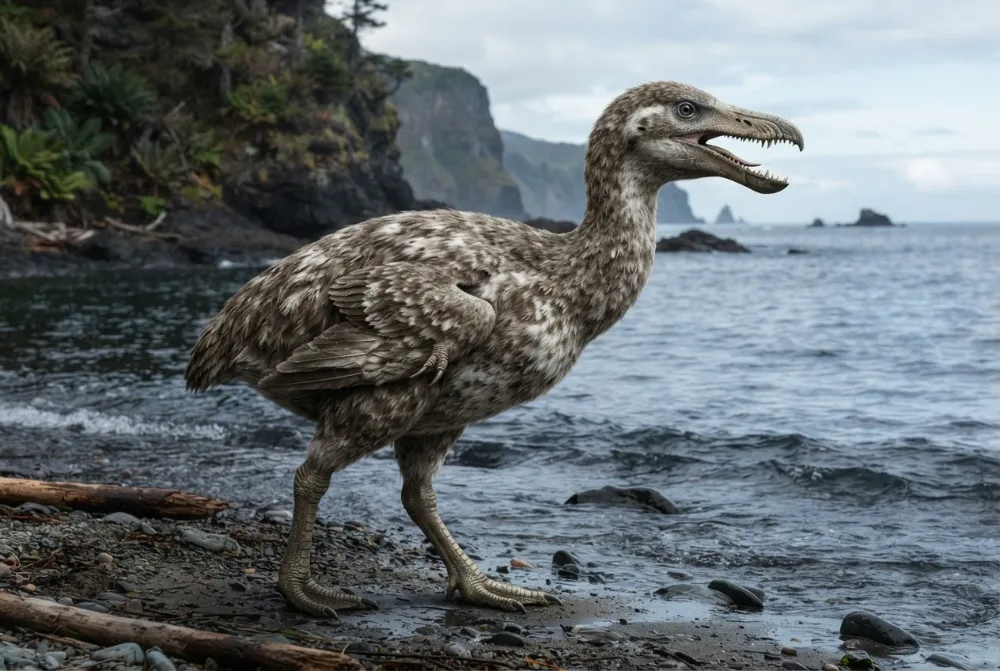
Canadaga is one of the largest known members of its group, reaching about 2.2 metres (7.2 feet) long.1
It lived in the Arctic, which is unusual because most of its relatives lived in warmer waters.1
Canadaga was one of the last of its kind, living about 67 million years ago, just before the dinosaurs went extinct.1
Its fossils were found in rocks from the Kanguk Formation, which is from the Late Cretaceous period.1
Scientists found only a few bones: three neck vertebrae, one tail vertebra, and two thigh bones.1
Canadaga could not fly, but it was a great swimmer, using its legs to push through the water.1
Dipotso tse botswang haholo ka Canadaga
?Was Canadaga a dinosaur?
Yes, Canadaga was a dinosaur. Like all birds, it belongs to the group of dinosaurs called theropods.1
?How big was Canadaga?
Canadaga was about 2.2 metres (7.2 feet) long, making it one of the largest known members of its group.1
?Could Canadaga fly?
No, Canadaga could not fly. It was a flightless bird that used its strong legs to dive and swim in the sea.1
Mosenyi wa ditshomo
Tshomo: Some people think Canadaga was a dinosaur.
Nnete: Canadaga was a bird, not a dinosaur, even though it lived during the age of dinosaurs.1
Bakeng sa ditsebi tsa didinosaure
- Lebitso la saense
- Canadaga
- E rehilwe ke
- Hou 19993
- Sehlopha
- Dinonyana tsa pele
- Lelapa / leloko
- Hesperornithidae3
- Tlhophiso
- Theropoda > Avialae3
- Dilemo tsa mafika
- dilemo tse dimilione tse 84 ho isa ho 66 (Campanian / Maastrichtian)3
- Dibopeho tsa mafika
- Kanguk3
- Dinaha
- Kanada3
- Direkoto tsa difosili
- 2 ho The Paleobiology Database3
- Ho sibollwa
- The fossils were collected from Bylot Island, Canada, and were studied by Chinese scientist Hou Lian-Hai, who named the species Canadaga arctica in 1999.12
- E sa ntse e phehwa kgang
- Scientists are still debating why Canadaga and other large hesperornithids went extinct, with some thinking their large size and special features played a role.2
Moo dintlha di tswang teng
- Canadaga (en.wikipedia.org)
- NEW HESPERORMTHID (AVES) FROM THE CANADIAN ARCTIC (vertpala.ac.cn)
- Canadaga in The Paleobiology Database (CC BY 4.0): dilemo, dibaka, dibopeho tsa mafika, tlhophiso.
Ntlha e nngwe le e nngwe leqepheng lena e na le nomoro e supang mohlodi wa yona. Haeba re fositse ho hong, re kopa tshwarelo, re balatedi ba didinosaure, ha re koranta ya saense. Re bolelle ho [email protected] mme re tla e lokisa.
 Rex o lapile! Dino Wiki ke projeke ya ntate bakeng sa mora wa hae ya ratang didinosaure, ke mahala, ha ho dipapatso, ha ho disebedi. Batho ba baholo ba ka fepa Rex seneke ho thusa hore e dule e le inthaneteng.Fepa Rex
 Archaeopteryx
 Hesperornis
 Ichthyornis
 Baptornis
 Jurapteryx
 Gobipteryx
 Tyrannosaurus
 Triceratops
 Velociraptor
 Spinosaurus
 Ankylosaurus
 Parasaurolophus