 Kwisi: O dinosaure efe?
 Ntwa ya didinosaure
 Peiso ya didinosaure
 Dipapadi tse nyane tsa didinosaure
 Albamo ya ditikara
 Manane a TOP a didinosaure
 Nkgethele!
E phetse neng?

E ne e le kgolo hakae?
E ne e le boima hakae?

Gargantuavis e ne e le kgolo hakae ha e bapiswa le WENA?
Ke dipalo feela ho browser ya hao. Ha ho letho le bolokwang kapa le romelwang kae kapa kae.
E ne e le lebelo hakae?


Dintlha tse monate
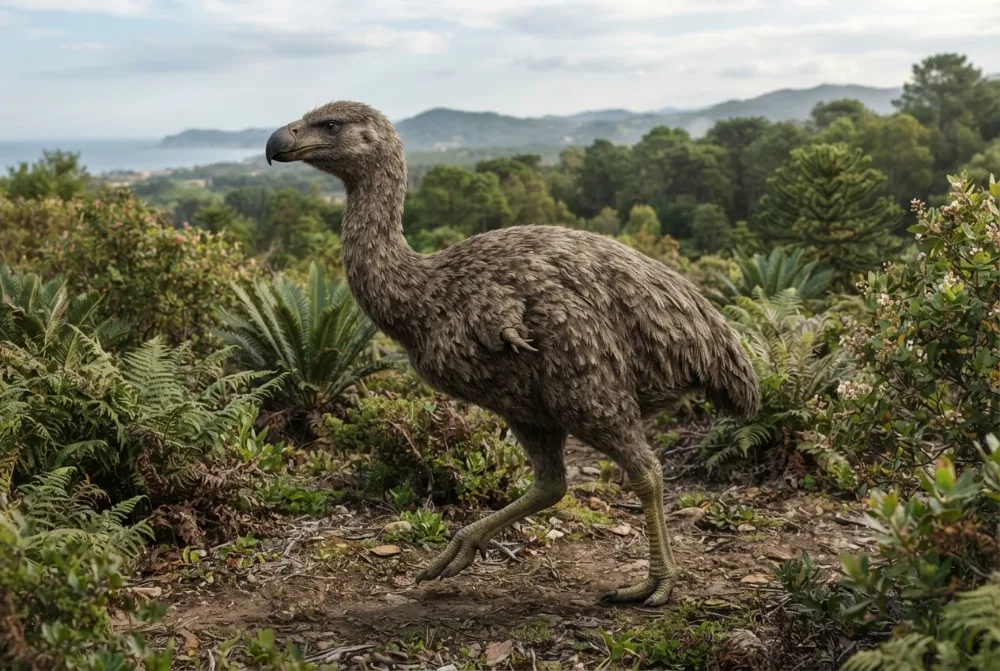
Gargantuavis is the largest known bird from the Mesozoic Era, the time of the dinosaurs.1
Its fossils were first found in 1995 near a vineyard in France, so scientists named it philoinos, which means 'one who likes wine'.1
Gargantuavis lived on islands in Europe when the sea level was higher.1
It had a long, slender neck and probably did not have a big head.1
Gargantuavis grew quickly when young, then took at least 10 years to become fully grown.1
It lived alongside meat-eating dinosaurs like abelisaurids and dromaeosaurids.1
Dipotso tse botswang haholo ka Gargantuavis
?Was Gargantuavis a dinosaur?
Yes, Gargantuavis was a bird, and birds are a type of dinosaur called avialan dinosaurs. So it was a dinosaur.1
?How big was Gargantuavis?
Gargantuavis was about the size of a cassowary to an ostrich, and weighed up to 141 kg (311 lb), as heavy as a large adult.1
?Could Gargantuavis fly?
No, Gargantuavis could not fly. Its legs were strong for walking, but it was not built for running fast.1
?What did Gargantuavis eat?
Nobody knows for sure because no skull bones have been found. Scientists are still studying its diet.1
?When did Gargantuavis live?
Gargantuavis lived about 73.5 to 71.5 million years ago, during the Late Cretaceous period.1
?Where was Gargantuavis found?
Its fossils were found in France, Spain, and Romania. The first one was discovered in 1995 near a vineyard in France.1
Bakeng sa ditsebi tsa didinosaure
- Lebitso la saense
- Gargantuavis
- E rehilwe ke
- Buffetaut and Le Loeuff 19982
- Sehlopha
- Dinonyana tsa pele
- Lelapa / leloko
- Gargantuaviidae2
- Tlhophiso
- Theropoda > Avialae2
- Dilemo tsa mafika
- dilemo tse dimilione tse 84 ho isa ho 66 (Campanian / Maastrichtian)2
- Dibopeho tsa mafika
- Marnes Rouges Inférieures, Grès à Reptiles, Vitoria2
- Dinaha
- Fora, Sepania2
- Direkoto tsa difosili
- 4 ho The Paleobiology Database2
- Ho sibollwa
- The first Gargantuavis fossil was found in 1995 in Var, southeastern France. It was named by Eric Buffetaut and Jean Le Loeuff in 1998.1
- E sa ntse e phehwa kgang
- Scientists are not sure what Gargantuavis ate because no skull has been found.1
Moo dintlha di tswang teng
- Gargantuavis (en.wikipedia.org)
- Gargantuavis in The Paleobiology Database (CC BY 4.0): dilemo, dibaka, dibopeho tsa mafika, tlhophiso.
Ntlha e nngwe le e nngwe leqepheng lena e na le nomoro e supang mohlodi wa yona. Haeba re fositse ho hong, re kopa tshwarelo, re balatedi ba didinosaure, ha re koranta ya saense. Re bolelle ho [email protected] mme re tla e lokisa.
 Rex o lapile! Dino Wiki ke projeke ya ntate bakeng sa mora wa hae ya ratang didinosaure, ke mahala, ha ho dipapatso, ha ho disebedi. Batho ba baholo ba ka fepa Rex seneke ho thusa hore e dule e le inthaneteng.Fepa Rex
 Archaeopteryx
 Hesperornis
 Ichthyornis
 Baptornis
 Jurapteryx
 Gobipteryx
 Tyrannosaurus
 Triceratops
 Velociraptor
 Spinosaurus
 Ankylosaurus
 Parasaurolophus