 Kwisi: O dinosaure efe?
 Ntwa ya didinosaure
 Peiso ya didinosaure
 Dipapadi tse nyane tsa didinosaure
 Albamo ya ditikara
 Manane a TOP a didinosaure
 Nkgethele!
Janavis
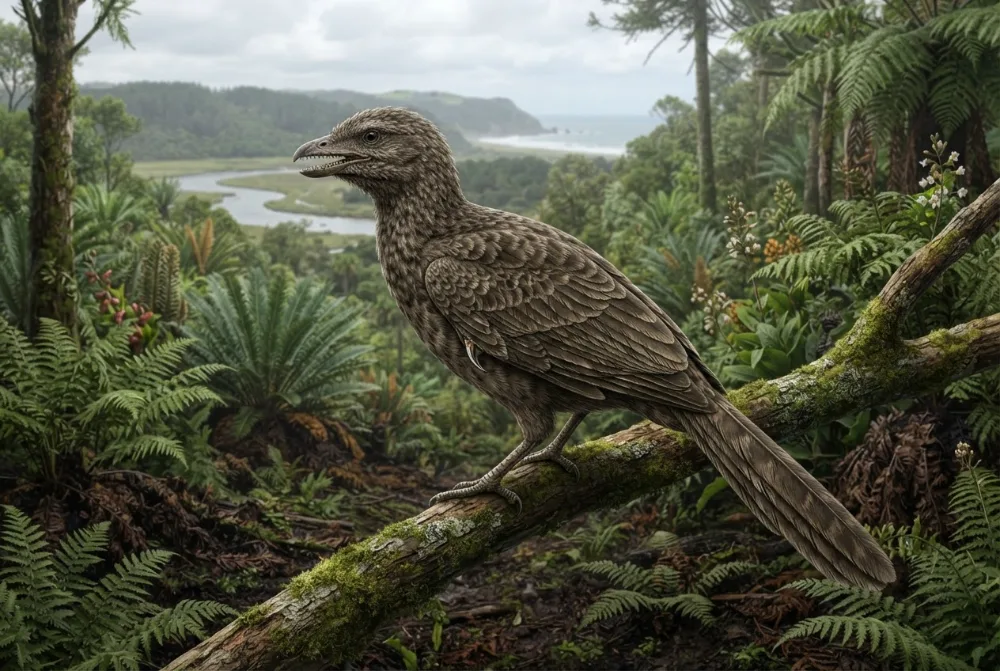
Janavis was a toothed bird that lived right at the end of the Age of Dinosaurs. It was one of the last birds with teeth, and its skull could move like a modern bird's skull.1
E phetse neng?
E ne e le kgolo hakae?
Mapheo a yona a ne a pharaletse hakae?
E ne e le boima hakae?
 telele jwaloka dikatse tsa lapeng tse 3 ho tloha nkong ho isa mohatleng🪶bobebe ho feta katse ya lapeng🍌boima jwaloka dibanana tse 13⚽e ne e ka fofa ho tshela lebala lohle la bolo ya maoto ka metsotswana e 9
Janavis e ne e le kgolo hakae ha e bapiswa le WENA?
Ke dipalo feela ho browser ya hao. Ha ho letho le bolokwang kapa le romelwang kae kapa kae.
E ne e le lebelo hakae?


Dintlha tse monate
Janavis lived about 66.8 million years ago, just 800,000 years before the asteroid that killed the dinosaurs.1
Its wing bones were hollow and filled with air, like modern birds, making it lighter for flying.1
The fossil was found in a Belgian quarry in 2000 by an amateur fossil hunter named Rudi Dortangs.1
Janavis had a skull that could move its upper jaw up and down, a feature of modern birds called neognathous palate.1
Scientists first thought a piece of its skull was a wing bone, until a CT scan in 2021 showed the truth.1
Janavis was bigger than its relative Ichthyornis, with a wingspan of about 1.5 metres (5 feet).1
Dipotso tse botswang haholo ka Janavis
?How big was Janavis?
Janavis was a relatively large bird, with an estimated wingspan of about 1.5 metres (5 feet) and a weight of around 1.5 kilograms (3.3 pounds).12
?Did Janavis have teeth?
Yes, Janavis had teeth. It was one of the last toothed birds to ever live.12
?When did Janavis live?
Janavis lived about 66.8 million years ago, right at the end of the Cretaceous period, just 800,000 years before the asteroid impact.1
?Could Janavis fly?
Yes, Janavis could fly. Its wing bones were hollow and filled with air, like modern birds, making it lighter for flying.1
Mosenyi wa ditshomo
Tshomo: All ancient birds had rigid skulls like dinosaurs.
Nnete: Janavis had a flexible skull like modern chickens and ducks, showing that movable skulls evolved early.1
Bakeng sa ditsebi tsa didinosaure
- Lebitso la saense
- Janavis
- E rehilwe ke
- Benito et al. 20223
- Sehlopha
- Dinonyana tsa pele
- Lelapa / leloko
- Ichthyornithes3
- Tlhophiso
- Theropoda > Avialae3
- Dilemo tsa mafika
- dilemo tse dimilione tse 72 ho isa ho 66 (Maastrichtian)3
- Dibopeho tsa mafika
- Maastricht3
- Dinaha
- Belgium3
- Direkoto tsa difosili
- 1 ho The Paleobiology Database3
- Ho sibollwa
- The fossil was collected in 2000 by amateur palaeontologist Rudi Dortangs in Belgium. It was first reported in 2002, and in 2022 scientists named it Janavis finalidens after CT scans revealed its true identity.1
- E sa ntse e phehwa kgang
- Scientists debate whether Janavis could fly as well as modern birds, because its wing bones were very air-filled but its shoulder blade lacked a normal hook.1
Moo dintlha di tswang teng
- Janavis (en.wikipedia.org)
- Bird beak evolved before dinosaur extinction | University of Cambridge (cam.ac.uk)
- Janavis in The Paleobiology Database (CC BY 4.0): dilemo, dibaka, dibopeho tsa mafika, tlhophiso.
Ntlha e nngwe le e nngwe leqepheng lena e na le nomoro e supang mohlodi wa yona. Haeba re fositse ho hong, re kopa tshwarelo, re balatedi ba didinosaure, ha re koranta ya saense. Re bolelle ho [email protected] mme re tla e lokisa.
 Rex o lapile! Dino Wiki ke projeke ya ntate bakeng sa mora wa hae ya ratang didinosaure, ke mahala, ha ho dipapatso, ha ho disebedi. Batho ba baholo ba ka fepa Rex seneke ho thusa hore e dule e le inthaneteng.Fepa Rex
 Archaeopteryx
 Hesperornis
 Ichthyornis
 Baptornis
 Jurapteryx
 Gobipteryx
 Tyrannosaurus
 Triceratops
 Velociraptor
 Spinosaurus
 Ankylosaurus
 Parasaurolophus