 Kwisi: O dinosaure efe?
 Ntwa ya didinosaure
 Peiso ya didinosaure
 Dipapadi tse nyane tsa didinosaure
 Albamo ya ditikara
 Manane a TOP a didinosaure
 Nkgethele!
E phetse neng?

E ne e le kgolo hakae?
E ne e le telele hakae?
E ne e phahame hakae?
E ne e le boima hakae?
Martinavis e ne e le kgolo hakae ha e bapiswa le WENA?
Ke dipalo feela ho browser ya hao. Ha ho letho le bolokwang kapa le romelwang kae kapa kae.
E ne e le lebelo hakae?


Dintlha tse monate
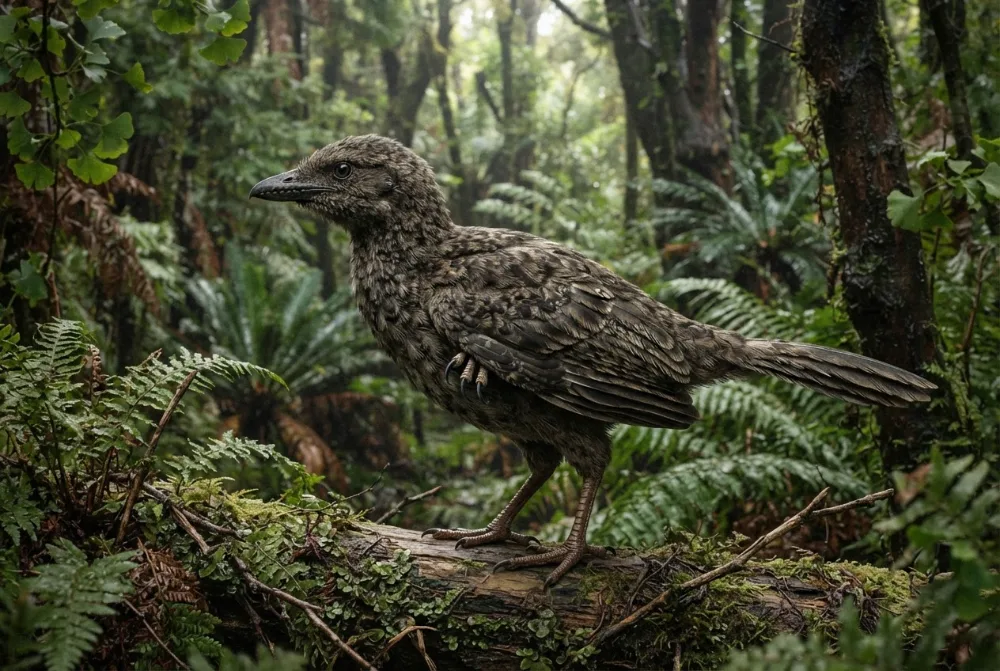
Martinavis is known from only a few arm bones, mostly humeri. Scientists have named five different species based on these bones.1
The largest species, Martinavis vincei, was about 51 cm long and weighed around 1.8 kg. That is as heavy as a big chicken.1
Martinavis belonged to a group of ancient birds called enantiornithines. These birds had teeth and claws on their wings.1
Fossils of Martinavis have been found in France and Argentina. This shows that these birds lived in both Europe and South America during the Late Cretaceous.1
The type species, Martinavis cruzyensis, was named after the village of Cruzy in France where its fossil was found.1
Martinavis lived about 75 to 70 million years ago, during the Campanian and Maastrichtian stages of the Late Cretaceous.1
Bakeng sa ditsebi tsa didinosaure
- Lebitso la saense
- Martinavis
- E rehilwe ke
- Walker et al. 20073
- Sehlopha
- Dinonyana tsa pele
- Lelapa / leloko
- Euenantiornithes3
- Tlhophiso
- Theropoda > Avialae3
- Dilemo tsa mafika
- dilemo tse dimilione tse 84 ho isa ho 66 (Campanian / Maastrichtian)3
- Dibopeho tsa mafika
- Lecho, Grès à Reptiles3
- Dinaha
- Argentina, Fora3
- Direkoto tsa difosili
- 6 ho The Paleobiology Database3
- Ho sibollwa
- Martinavis was named in 2007 by Cyril A. Walker, Eric Buffetaut, and Gareth J. Dyke. The first fossils were found in France and Argentina.1
- E sa ntse e phehwa kgang
- Scientists are not sure if some Martinavis bones actually belong to other enantiornithine birds from the same fossil sites, like Yungavolucris or Soroavisaurus.1
Moo dintlha di tswang teng
- Martinavis (en.wikipedia.org)
- PBDB Taxon (paleobiodb.org)
- Martinavis in The Paleobiology Database (CC BY 4.0): dilemo, dibaka, dibopeho tsa mafika, tlhophiso.
Ntlha e nngwe le e nngwe leqepheng lena e na le nomoro e supang mohlodi wa yona. Haeba re fositse ho hong, re kopa tshwarelo, re balatedi ba didinosaure, ha re koranta ya saense. Re bolelle ho [email protected] mme re tla e lokisa.
 Rex o lapile! Dino Wiki ke projeke ya ntate bakeng sa mora wa hae ya ratang didinosaure, ke mahala, ha ho dipapatso, ha ho disebedi. Batho ba baholo ba ka fepa Rex seneke ho thusa hore e dule e le inthaneteng.Fepa Rex
 Archaeopteryx
 Hesperornis
 Ichthyornis
 Baptornis
 Jurapteryx
 Gobipteryx
 Tyrannosaurus
 Triceratops
 Velociraptor
 Spinosaurus
 Ankylosaurus
 Parasaurolophus