 Kwisi: O dinosaure efe?
 Ntwa ya didinosaure
 Peiso ya didinosaure
 Dipapadi tse nyane tsa didinosaure
 Albamo ya ditikara
 Manane a TOP a didinosaure
 Nkgethele!
Microcleidus
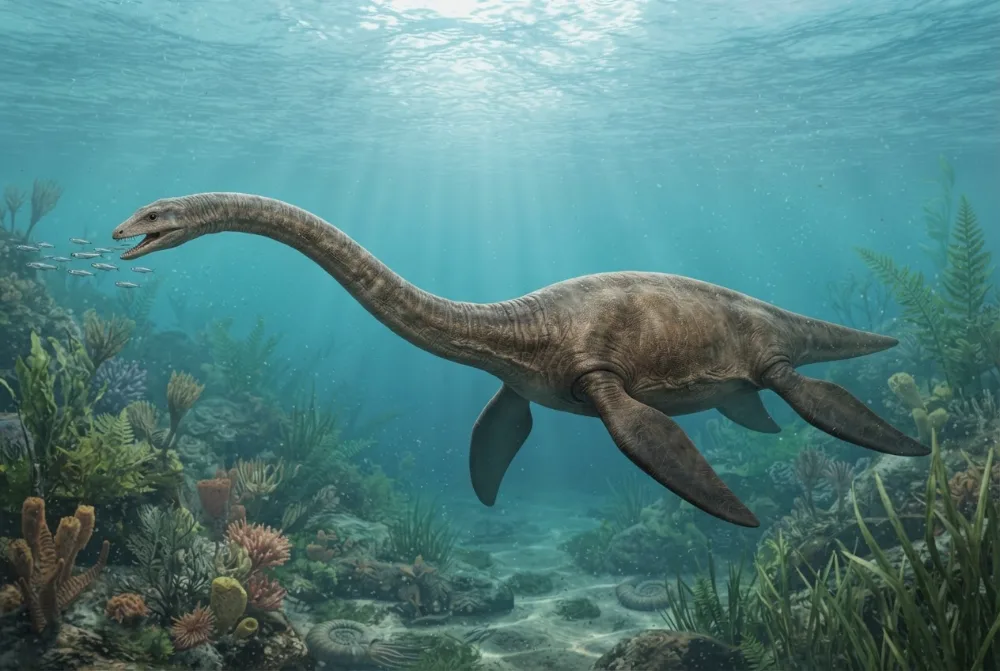
Microcleidus was a long-necked marine reptile that swam in the warm Jurassic seas. It had a small head and a very long neck with 38 to 39 bones. It used its flippers to paddle through the water and catch fish.1
E phetse neng?
E ne e le kgolo hakae?
E ne e le telele hakae?
E ne e le boima hakae?
 telele jwaloka dintja tse 5 ho tloha nkong ho isa mohatleng🍌telele jwaloka dibanana tse 28 di behilwe ka mola🍉boima jwaloka mahapu a 130🧸boima jwaloka bana ba kereshe ba 34🎒boima jwaloka bana ba sekolo ba 20🏊e ne e ka sesa bolelele ba letamo le leholo la ho sesa (50 m) ka metsotswana e 6.2
Microcleidus e ne e le kgolo hakae ha e bapiswa le WENA?
Ke dipalo feela ho browser ya hao. Ha ho letho le bolokwang kapa le romelwang kae kapa kae.
E ne e le lebelo hakae?


Dintlha tse monate
Microcleidus had a small head only about 23 centimetres (9 inches) long, even though its body could reach over 5 metres.1
Its neck contained 38 to 39 vertebrae, making it a very long-necked plesiosaur.1
Scientists have named at least five species of Microcleidus, including M. homalospondylus and M. macropterus.1
One species, Microcleidus tournemirensis, was once thought to belong to a different genus called Occitanosaurus.5
Microcleidus lived during the Toarcian age of the Jurassic Period, about 184 to 175 million years ago.2
Its fossils have been found in the Alum Shale of England and the Posidonia Shale of Germany.5
The first Microcleidus fossils were originally described as Plesiosaurus homalospondylus by Richard Owen in 1865.1
Dipotso tse botswang haholo ka Microcleidus
?How big was Microcleidus?
The largest species, Microcleidus homalospondylus, measured about 5.1 metres (17 feet) long and weighed around 650 kilograms (1,430 pounds). Other species were smaller, like M. tournemirensis at about 4 metres (13 feet) and 300 kilograms (660 pounds).3
?What did Microcleidus eat?
Microcleidus was a carnivore that likely ate fish and other small sea creatures. It used its long neck and small head to snap up prey while swimming.5
Bakeng sa ditsebi tsa didinosaure
- Lebitso la saense
- Microcleidus
- E rehilwe ke
- Watson 19095
- Sehlopha
- Diplesiosaure
- Lelapa / leloko
- Microcleididae5
- Tlhophiso
- Plesiosauria > Sauropterygia5
- Dilemo tsa mafika
- dilemo tse dimilione tse 184 ho isa ho 175 (Toarcian)5
- Dibopeho tsa mafika
- Alum Shale, Posidonia Shale5
- Dinaha
- United Kingdom, Jeremane, Fora, Luxembourg5
- Direkoto tsa difosili
- 9 ho The Paleobiology Database5
- E boetse e tsejwa e le
- Occitanosaurus (mabitso a kgale jwale a balwa e le phoofolo e le nngwe)5
- Ho sibollwa
- The name Microcleidus was given by D. M. S. Watson in 1909 for fossils that had earlier been called Plesiosaurus. The first species, M. homalospondylus, was originally described by Richard Owen in 1865.51
- E sa ntse e phehwa kgang
- Scientists are not sure whether some species, like Hydrorion brachypterygius, should really be placed in Microcleidus.1
Moo dintlha di tswang teng
- Microcleidus, Plesiosaur Directory (plesiosauria.com)
- PBDB Taxon (paleobiodb.org)
- Microcleidus (en.wikipedia.org)
- Microcleidus (en.wikipedia.org)
- Microcleidus in The Paleobiology Database (CC BY 4.0): dilemo, dibaka, dibopeho tsa mafika, tlhophiso.
Ntlha e nngwe le e nngwe leqepheng lena e na le nomoro e supang mohlodi wa yona. Haeba re fositse ho hong, re kopa tshwarelo, re balatedi ba didinosaure, ha re koranta ya saense. Re bolelle ho [email protected] mme re tla e lokisa.
 Rex o lapile! Dino Wiki ke projeke ya ntate bakeng sa mora wa hae ya ratang didinosaure, ke mahala, ha ho dipapatso, ha ho disebedi. Batho ba baholo ba ka fepa Rex seneke ho thusa hore e dule e le inthaneteng.Fepa Rex
 Elasmosaurus
 Pliosaurus
 Plesiosaurus
 Cimoliasaurus
 Colymbosaurus
 Trinacromerum
 Dilophosaurus
 Stenopterygius
 Dorygnathus
 Lufengosaurus
 Scutellosaurus
 Yunnanosaurus